
Exclusive interview: Megan Tremethick
- Interview
 Peter Campbell
- 4
- 16 minutes read
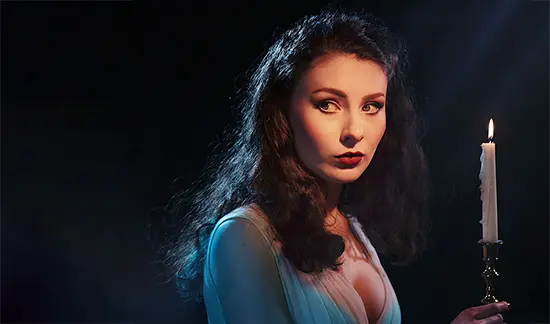
Cornish actress, filmmaker, and rising horror auteur Megan Tremethick is no stranger to dark tales. Whether summoning sinister spells as the sorceress Nemain in The Slave and the Sorcerer or exploring cosmic dread in her acclaimed Lovecraftian shorts, she’s carved out a distinctive space within the UK indie horror scene – one shaped by bold performance, emotional depth, and meticulous world-building. But with Spoiling You, her psychological horror feature debut, Tremethick steps into something even more vulnerable: the disquieting intimacy of ASMR.
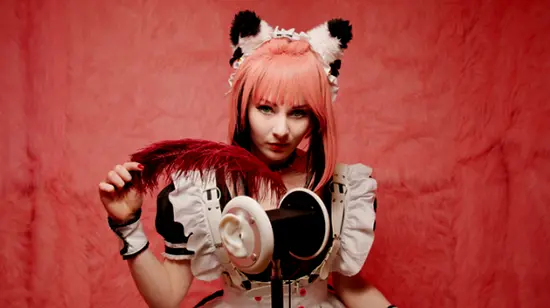
Drawing inspiration from the disarming world of whisper videos and roleplay performances, Spoiling You introduces us to Miss Mutter – a soft-spoken, seductive ASMRtist whose gentle demeanour masks something far more fractured. Directed, written by, and starring Tremethick herself, the film is a uniquely haunting blend of J-horror elements, performative obsession, and identity disintegration.
We caught up with Megan to talk about the eerie origins of Miss Mutter, navigating dual roles as director and lead, and how Spoiling You became her most personal, and unsettling, film to date. She also shares insight into upcoming projects including The Slave and the General, Mr. Whispers, and Black Chariot, and reflects on the creative lessons learned from working alongside horror legends like Laurence R. Harvey and Nicholas Vince.
Exclusive interview: Megan Tremethick
Love Horror: Let’s start with Spoiling You – your directorial feature debut. What inspired you to explore the world of ASMR through the lens of psychological horror, and how did the idea for Miss Mutter take shape?
Megan Tremethick: I have been watching ASMR videos on YouTube on and off for nearly ten years now. The very first ASMR video I ever watched was by VeniVidiVulpes, and while it was relaxing, I also remember feeling slightly on edge. There was something about the intimacy of it that felt unusual, like someone was connecting with me in a way I had only really experienced with my closest friends. At the time, I did not analyse it too deeply, but that feeling stayed with me.
Over the years, ASMR became something I would turn to during sleepless nights, and I kept noticing the same contradiction: feeling soothed while also occasionally unsettled by just how personal some of the videos felt. Some creators leaned into that intimacy more than others, and I think it was inevitable that the idea of an ASMR-based horror film grew naturally from that. It probably also helped that I am deeply immersed in horror anyway, through my work with British Horror Studio.
Miss Mutter herself is harder to pin down. She is a mixture of influences rather than one direct reference. I have watched and enjoyed a huge range of ASMRtists over the years, including Maria GentleWhispering, Ephemeral Rift, Emma’s MySpace, Karuna Satori, GibiASMR, Amy Kay ASMR and GoodnightMoon, and it is impossible that little elements of each of them did not filter into the character. They shaped how I experienced ASMR.
I was also fascinated by the performative, almost theatrical side of ASMR. The costumes, the roleplay, and the meticulous attention to detail. Many creators treat their videos like miniature (or not so miniature) performances, sometimes with wigs, contact lenses, fake nails and elaborate personas. That directly fed into Miss Mutter’s identity, including her signature French maid outfit. She wants her viewers to feel indulged, noticed and special. I also used to cosplay when I was younger, so it was probably inevitable that part of that world crept into the character too.
The film blends J-horror influences with horror anime – both styles known for their emotional intensity and eerie stillness. How did you go about translating those visual and tonal cues into your own storytelling voice?
I wouldn’t say Spoiling You is directly inspired by horror anime (however the look of Miss Mutter very much is), but I am very drawn to some of the qualities associated with it, particularly how emotion and atmosphere are allowed to lead the narrative. I was interested in creating a similar sense of intimacy and tension, where tone and visual language carry as much weight as plot, and where things unfold instinctively rather than being over-explained.
That said, the film is absolutely inspired by J-horror, particularly from the late 1990s and early 2000s. What I respond to most in those films is their patience. The confidence to let dread build slowly and to allow emotional weight to settle before anything overt happens. Translating that into my own work meant focusing on rhythm and restraint, trusting atmosphere and the audience’s imagination rather than relying on constant escalation.
I have also always loved the more unconventional, sometimes startling qualities of J-horror. Those moments that feel slightly off-kilter or unexpected, but never random. I wanted to allow space for similar eccentricities in the film, but always used very deliberately, as part of the emotional language rather than for shock value or novelty. That balance between control and unpredictability was key to finding the film’s voice.
You’ve previously directed several shorts inspired by Lovecraft’s work. Did Spoiling You feel like a natural evolution of your interests as a filmmaker, or was it a deliberate pivot into more personal, character-driven horror?
Out of everything I have made so far, Spoiling You definitely feels the most personal and the most ‘me’. While I was still stylistically inspired by filmmakers like Takashi Miike and his approach to extreme horror, I wanted to use those influences as a foundation rather than a complete blueprint. The aim was always to create something that felt true to my own voice.
The deeper themes of the film are very personal, even if I did not fully realise that at first. The more I reflect on certain aspects of it, the more they seem to echo parts of my own life in unexpected ways. That probably sounds a bit cryptic, but I think that is often how the most honest work reveals itself.
As well as directing, you also play Miss Mutter. How did you find balancing such an intense on-screen performance with your responsibilities behind the camera? Did one side of the process challenge you more than the other?
It was definitely a challenge balancing both responsibilities. I had some experience acting and directing at the same time on short films, but this was a completely different level. Miss Mutter has a lot of screen time and a lot of dialogue. I knew preparation was going to be crucial, so I did as much groundwork as possible in advance, both as a director and as an actor.
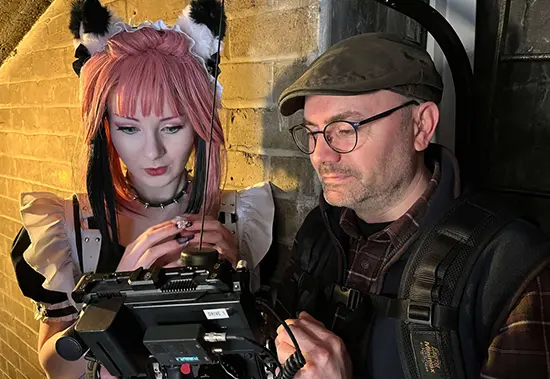
Out of everything I have made so far, Spoiling You definitely feels the most personal and the most ‘me’.
Luckily, I was able to direct scenes I was not acting in first, which helped me settle into the rhythm of the shoot. Miss Mutter herself was something I was quite nervous about. She is such an unusual character, and it would have been very easy for her to tip into something that didn’t work. I wanted her to feel limitless in her own reality, but still grounded in a very specific internal logic. Her logic.
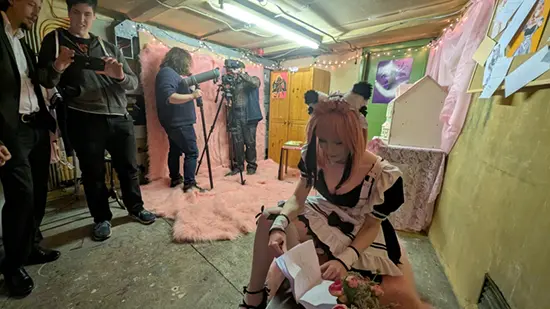
The costume helped enormously. The contact lenses, the long fake nails and the overall transformation all contributed to finding her physicality and presence. Before filming, I spent an evening alone filming short ASMR videos in full costume, which helped me piece together her mannerisms, voice, reactions and sense of being. By the end of that night, I felt genuinely ready.
On the tougher days where I was both directing and performing, I gave myself small rituals to shift gears, including asking my wonderful 1st AD, Callum “Caz” Paul, to count down from ten before action. That pause gave me time to put the director brain aside and fully step into Miss Mutter’s unpredictable, otherworldly mindset.
The Slave and the Sorcerer was a love letter to 1980s sword and sorcery cinema. What was it like stepping into the role of Nemain, and how did that world of fantasy horror compare to the more psychological tone of other roles you have played?
So much fun! We all immersed ourselves in classic 1980s sword and sorcery films like Conan, Excalibur, Deathstalker, Beastmaster and The Sword and the Sorcerer, as well as adjacent fantasy like Krull and Flash Gordon. Those films really shaped the performance style across the board.

For me as Nemain, my biggest inspirations were Dame Helen Mirren’s Morgana Le Fay in Excalibur and Ornella Muti’s Princess Aura in Flash Gordon. The main adjustment was embracing a much more presentational style of performance than I was used to, which The Slave and The Sorcerer absolutely required and our director, Lawrie Brewster, had requested.
You’ve just wrapped The Slave and the General, the follow-up to The Slave and the Sorcerer. Without giving too much away, how does this next instalment evolve the world and characters fans have come to love?
The Slave and the General definitely raises the stakes from The Slave and the Sorcerer. It feels more confident and expansive, with a deeper emotional undercurrent, and somehow it is also even more outrageous and fun. I genuinely do not know how Lawrie Brewster and the team managed that balance, but they absolutely did.
The characters feel much tighter as a group this time. They are more fully realised, their relationships are stronger, and they are thrown into far wilder situations. That camaraderie makes everything land harder.
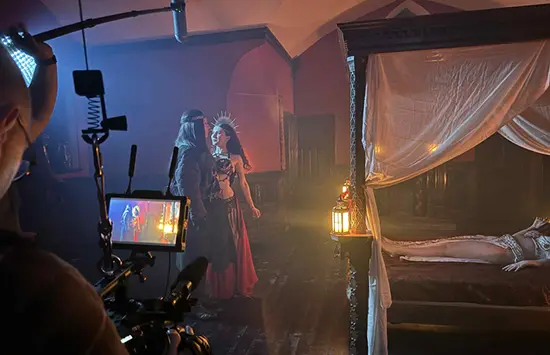
Coming back as Nemain was an absolute joy. She leans even further into her seductive, mischievous side. More spells, more manipulation and moments so outrageous I struggled not to corpse. At the same time, she is given more dramatic material, which was incredibly satisfying. That balance between heightened comedy and richer character work applies to everyone, and it makes the world feel bigger, bolder and even more fun to inhabit.
Mr. Whispers and Black Chariot are both set to premiere early next year – what can you share about your characters in those films, and how they challenged you as a performer?
In the 1950s set Black Chariot, I play Nell, a young woman who begins the film in an extremely vulnerable position and whose presence continues to shape the story in unexpected ways. What drew me to the role was the sense of transformation and the chance to work in a very physical, precise register. It challenged me to communicate fear and intent through deliberate, controlled choices, trusting the film’s atmosphere to carry much of the storytelling.
Mr. Whispers, set in the 1990s, was almost the opposite. Katheryn Hale is a documentary filmmaker who is driven, ambitious and endlessly curious, with a slightly offbeat energy that makes her feel very alive. She is a natural leader and deeply committed to her work, and I loved exploring her warmth and quirks while keeping her grounded. The role demanded stamina and momentum and pushed me in a completely different direction as a performer, which I loved.

You’ve worked with some iconic names in horror, including Nicholas Vince and Laurence R. Harvey. How has that experience shaped your own creative voice, both as a performer and behind the camera?
Working with actors who have such a strong legacy in horror has been genuinely formative for me, both as a performer and behind the camera.
Jane Merrow, who starred in the Hammer classic Hands of the Ripper, was an absolute joy to work with on In the Grip of Terror. Watching her work felt like a masterclass in presence and precision, and she is also incredibly kind, fascinating and generous with her experience. Nicholas Vince was astonishing to watch on The Haunter of the Dark. Seeing him deliver a substantial monologue with such calm confidence and absolutely nail it reinforced the power of preparation and trust in the work. I have also been incredibly lucky to work extensively with Laurence R. Harvey across several projects. He has a brilliantly dark sense of humour and a fearless commitment to his craft that constantly raises the bar on set. I cannot wait for audiences to see his work across all of these films, and I will admit I am especially excited for people to see what he does in Spoiling You. It is truly one of a kind. All of these experiences have shaped how I work, both as a performer and as a filmmaker, and deepened my love for collaborative, actor-focused storytelling.
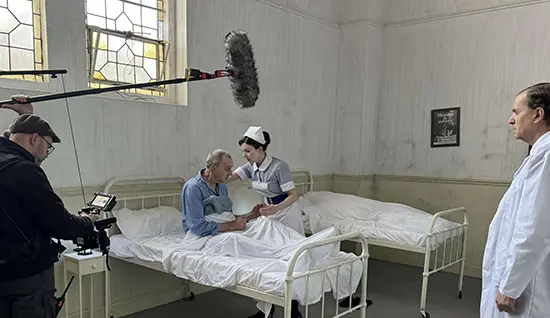
Ghost Crew remains a notable highlight from your earlier work. What do you remember most fondly about making that film, and what impact has it had on your career since?
Ghost Crew stands out because it was the first time I felt genuinely transformed by a role. The collaboration with Lawrie Brewster and the team was incredibly intense, and the precise, detailed blocking pushed me both technically and emotionally.
My character, Sandy, appeared light and carefree on the surface, but carried deep trauma underneath. Playing that required a great deal of sensitivity and empathy, and it showed me how powerful horror can be when it engages with real human pain as well as cinematic horror. That experience shaped the kind of work I want to keep doing. Characters with what feels like infinite layers, resilience and emotional truth.
You’re someone who has successfully worn multiple hats across your projects: acting, writing, directing and producing. Do you see yourself continuing to do it all, or are there aspects of the craft you’re especially drawn to developing next?
I love being deeply creatively involved in the projects I am part of. It is incredibly rewarding and endlessly inspiring. That said, acting will always be my first love and the craft I feel most connected to. I do tend to become very emotionally invested in projects I conceive, like Spoiling You, so the next idea I fully pour myself into would need to feel just as special.

For the near future, I see myself focusing primarily on acting, but I would absolutely embrace opportunities to direct if they arise. I am also passionate about supporting other creatives and continuing to contribute to the visions of British Horror Studio and The B-Team in any way I can.
You can keep up with Megan’s latest projects and behind-the-scenes glimpses over on Instagram. To support her ongoing work and the wider world of indie horror, visit the British Horror Studio Patreon and help bring more bold, original visions to life.



4 Comments
This film is Tremethick’s own story. It addresses her dark, hidden, angry side, wanting to tie a guy to a chair with facial hair who looks like…eh…anyway…
[…] through the unsettling lens of ASMR culture. The film marks the feature directorial debut of Megan Tremethick and will receive its world premiere at the Romford Horror Film Festival later this […]
[…] and directed by Megan Tremethick, who co-wrote the screenplay with Lawrie Brewster, Spoiling You delves into the dark side of […]
[…] Megan Tremethick, who also co-directs, stands out for grounding some of the Amicus stylisation with something a bit more instinctive. There’s a strong sense she’s in on the joke without undercutting it. […]