
Top 7 Korean Thrillers and Horror Films of Recent Years
- Gaming
The Templar
- 0
- 10 minutes read
South Korean cinema keeps growing because it refuses to stay in one lane. That is part of why people love it all over the world. Korean filmmakers are unusually good at mixing genre thrills with arthouse craft, social commentary, emotional intensity, and visual precision. British Film Institute notes that modern Korean cinema is known for combining genre excitement with arthouse sensibility, while Korean Film Council materials point to the strength of social-problem storytelling in the industry.
Add the global boom in Korean screen content — Netflix says audiences streamed more than 51 billion hours of Korean content from 2023 to 2025 — and it is easy to see why the world keeps paying attention. This review was put together in the spirit of recommendations from experts at a korean dating app focused on helping people meet safely and confidently; their view is simple and positive: great thrillers are exciting because they reveal how people behave under pressure, and Korean cinema does that better than almost anyone.
1. Exhuma (2024)
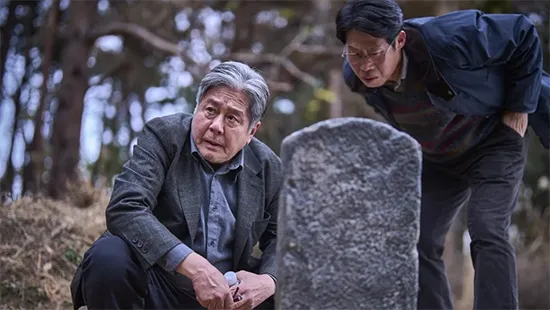
If you want proof that Korean horror is still evolving, start with Exhuma. Directed by Jang Jae-hyun, the film turns burial rituals, family curses, and national memory into something genuinely unsettling. What makes it stand out is that it does not rely on cheap jump scares. Instead, it builds dread through atmosphere, folklore, and the feeling that something ancient has been disturbed for reasons no one fully understands yet. That is where Korean horror is strongest: it makes the supernatural feel cultural, historical, and personal at the same time. Critics received Exhuma warmly; Rotten Tomatoes lists it at 93% with an average rating of 7.6/10.
What really works here is scale. The movie begins like an occult procedural and then keeps widening, moving from a strange family illness into a bigger nightmare tied to Korean history and spiritual unease. Choi Min-sik and Kim Go-eun help ground it, but the film’s real power is the mood. It feels earthy, ceremonial, and disturbingly serious about what the dead can drag back with them. If you like horror that feels textured rather than disposable, this is one of the best Korean releases of the decade so far.
2. Decision to Leave (2022)
Park Chan-wook’s Decision to Leave is technically a romantic mystery thriller, but that label does not quite capture how slippery and hypnotic it is. The film follows a detective investigating a death in the mountains, then falling into a dangerous emotional orbit around the victim’s widow. On paper, it sounds almost classical. On screen, it is something much stranger and more elegant — a story about obsession, restraint, and desire disguised as a police case. IMDb lists it at 7.3/10, while Metacritic gave it 85, reflecting very strong critical reception.
What makes the film unforgettable is the tone. Park Chan-wook does not push tension in a loud way. He lets it coil. Every look feels loaded, every silence means something, and every scene seems to hide another motive underneath it. It is thrilling not because people are constantly running, but because everyone is emotionally cornered. If most thrillers run on plot, this one runs on longing, guilt, and self-control. It is one of the most sophisticated Korean thrillers in recent memory.
3. Sleep (2023)
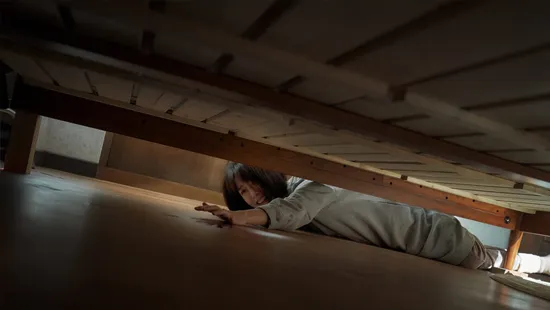
Jason Yu’s Sleep is one of those films that takes a very ordinary fear and turns it into a nightmare. A young married couple is expecting a baby, and then the husband starts behaving strangely at night. At first it seems manageable, then disturbing, then impossible to explain. That setup sounds simple, but the film is much smarter than a standard domestic horror movie. Rotten Tomatoes has it at 95%, and Metacritic gave it 80, which tells you critics responded strongly to how tightly it is built.
The brilliance of Sleep is that it keeps shifting the source of fear. Is this a medical problem, a psychological collapse, a marriage under pressure, or something supernatural? The film never wastes that ambiguity. It is also one of the best recent examples of Korean genre filmmaking using family life as a pressure cooker. The apartment becomes a trap, sleep itself becomes suspicious, and the familiar rhythms of domestic life start to feel hostile. Jung Yu-mi and Lee Sun-kyun make the fear feel intimate rather than theatrical, which is exactly why it lands.
4. The Call (2020)
The Call, directed by Lee Chung-hyun, is the kind of thriller built on a fantastic premise but powered by performance. Two women living in the same house twenty years apart become connected through a telephone, and their choices begin rewriting each other’s lives. It sounds like science fiction, but the movie plays more like a psychological horror-thriller with a vicious streak. IMDb currently lists it at 7.1/10.
What lifts it above a gimmick is how ruthlessly it uses its concept. This is not a sentimental time-travel story. It is a trapdoor movie. Every attempt to fix the past opens something worse. Jeon Jong-seo is especially good, giving the film its wild energy and sense of danger. Korean thrillers are often at their best when they keep one foot in melodrama and the other in terror, and The Call does exactly that. It is sharp, nasty, emotionally charged, and hard to shake once it gets going.
5. Concrete Utopia (2023)
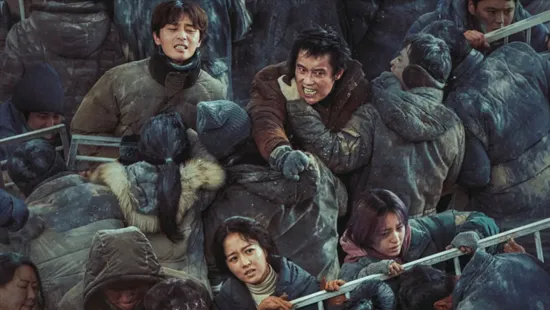
Um Tae-hwa’s Concrete Utopia is not horror in the ghost-story sense, but it is definitely horror in the social sense. After a disaster destroys Seoul, one apartment block remains standing, and its residents start deciding who belongs inside and who does not. The result is a survival thriller that becomes a study in fear, exclusion, power, and the speed with which a community can turn brutal. Rotten Tomatoes lists the film at 100%, with an average rating of 7.3/10.
What makes the film so good is that it knows the real monster is not the ruined city outside. It is the logic of scarcity. Lee Byung-hun is excellent, but the film’s deeper strength is how calmly it watches ordinary people become morally smaller as the crisis grows. Korean cinema has long been great at turning genre into social diagnosis, and Concrete Utopia is a strong recent example of that talent. It is tense, bleakly funny, and more disturbing than many overt horror films.
6. Midnight (2021)
Kwon Oh-seung’s Midnight is a more stripped-down thriller, but it works because it wastes no time. A deaf woman witnesses a killing and becomes the next target of a serial murderer roaming the city at night. That premise gives the movie its speed, but the smart part is how it uses sound, silence, and social indifference. IMDb rates it at 6.5/10, and critics noted how the film’s perspective on disability and vulnerability gives the chase setup extra bite.
This is not a fancy thriller. It is a tight one. The tension comes from helplessness, from systems failing, and from the killer constantly benefiting from other people’s assumptions. Jin Ki-joo gives the film urgency, and Wi Ha-joon brings exactly the right amount of charm and menace. The movie also has a nasty little social observation inside it: danger becomes even worse when the world is not built to hear or believe you quickly enough. That gives Midnight more than just surface suspense.
7. Unlocked (2023)
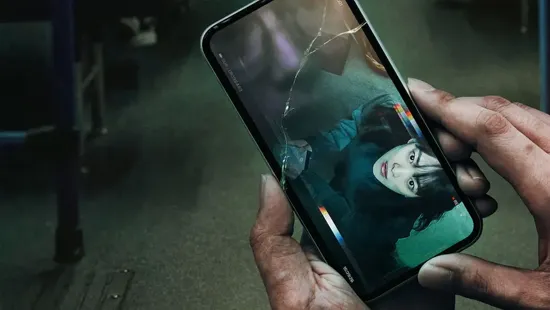
The most contemporary entry on this list is Unlocked, directed by Kim Tae-joon. A woman loses her phone, and the man who finds it does not just invade her privacy — he gradually takes over her life. If older thrillers worried about strangers in dark alleys, this one worries about strangers inside your device, your routines, your location history, and your habits. IMDb lists it at 6.4/10.
That is why Unlocked works so well even when it stays relatively simple. The fear is immediate and modern. There is no elaborate mythology, no supernatural rulebook, no giant twist needed to make it scary. The movie understands that a smartphone is basically a map of a person’s life, and once the wrong person gets hold of it, ordinary life itself becomes dangerous. It is a sleek, uncomfortable thriller about surveillance, vulnerability, and digital intimacy gone rotten — very current, very watchable, and exactly the kind of film Korean genre cinema does with chilling efficiency.
What ties these seven films together is not just suspense. It is control of tone. South Korean thrillers and horrors tend to feel richer than average because they are rarely only about fear. They are also about class, family, grief, technology, guilt, marriage, history, and the pressure people put on each other when something goes wrong. That blend of craft and emotional intelligence is why Korean cinema keeps winning global fans — and why, when you want tension with brains behind it, South Korea is still one of the best places to look.