
Isa Mazzei on reinventing ‘Faces of Death’ for an internet generation
- Interview
 Jasmine Clarke
- 0
- 7 minutes read
Not many horror films have a reputation quite as unsettling as Faces of Death. Released in 1978 and passed between curious viewers for decades afterwards, the notorious pseudo-documentary traded on one tantalising question: what if the death you were watching was real? Almost half a century later, screenwriter Isa Mazzei believes the question remains frighteningly relevant. The difference is that audiences no longer need to hunt down a forbidden VHS tape to ask it.
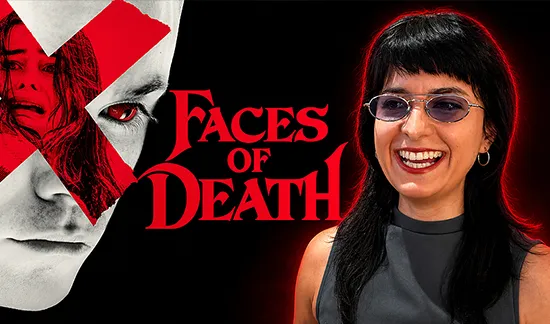
For Mazzei, co-writer of the new Faces of Death alongside director Daniel Goldhaber, the internet has effectively become the modern equivalent.
The pair, who previously collaborated on the acclaimed psychological horror Cam, faced an unusual problem when approaching a film whose reputation arguably matters more than its conventional storytelling. Rather than reproduce the original, their solution was to examine what Faces of Death actually represented to the generation that first encountered it.
“You can’t really adapt Faces of Death. There’s no plot, there’s no story,” Mazzei tells Love Horror. “And so it was really about, okay, what is the spirit of this? And how do we kind of capture that and stay true to that and, and make it fun and exciting for what an audience wants in 2026.”
That question ultimately led Mazzei and Goldhaber away from recreating the structure of the 1978 film and towards something rooted firmly in the way disturbing imagery is consumed today.
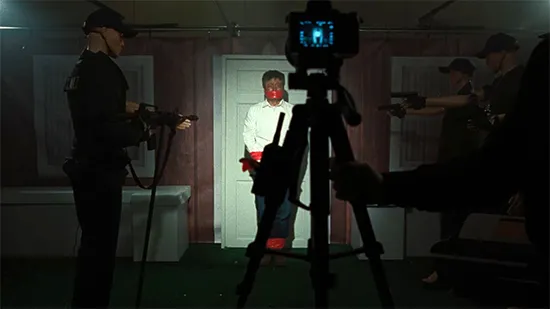
“For us, it was very much about looking at what the original actually did to a culture, what it was trying to say at the time,” she explains.
For many of the original film’s viewers, Faces of Death represented an encounter with something they believed they were never supposed to see. Mazzei’s generation did not necessarily have to seek out a notorious piece of underground cinema to experience the same thing.
“I think for a lot of people that I talked to, it was kind of their first encounter with real death or supposed real death,” she says. “And so for us, it was a very easy conversation. Well, where did we first encounter death? And for us it was online. It was growing up and seeing beheadings and suicides and mass shootings that were streamed on Facebook.”
That became the crucial bridge between the two films.
“And so that was kind of our entry point into it. And their very naturally became a film about faces of death rather than kind of a remake of the original.”
The resulting film stars Barbie Ferreira as Margot Romero, a content moderator working for a video platform called Kino. Spending her days filtering disturbing material from users’ feeds, Margot encounters footage of increasingly horrific deaths and begins to suspect that what she is seeing may not be staged.
In other words, Faces of Death has transformed from something audiences deliberately sought out into something that might unexpectedly find them. That idea has arguably become even more potent during the lengthy journey from screenplay to screen. The film was conceived before the current explosion of generative artificial intelligence, deepfakes and synthetic online content made questioning the authenticity of an image an everyday concern.
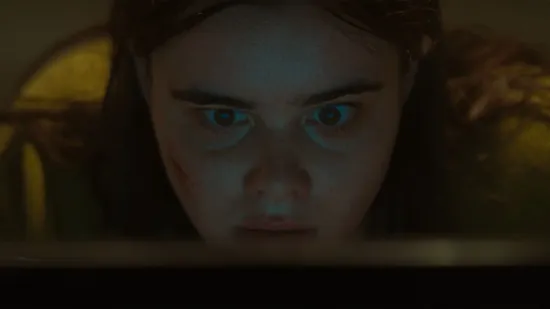
“Well, I’m just so glad we made this film before AI came out, because it would be an entirely different film if that, because people would be asking, is this AI as it’s not AI?” Mazzei says.
Yet rather than making the finished film feel dated, the arrival of AI has intensified one of its central ideas: the increasingly uneasy relationship between audiences and what they see online.
“I think that that, that, that kind of psychosis of questioning everything you’re seeing online is only becoming more relevant now with AI,” Mazzei explains. “And so I think watching the film, it feels incredibly rooted in that kind of paranoia we all have when we view something where we’re saying, is this a real fact? Is this a fake fact? Is this a scam?”
“And just the uncertainty about how we’re supposed to take the media that we’re digesting every day?”
Getting Faces of Death in front of those audiences, however, proved to be an unusually protracted process.
“I mean, it was just an incredibly long process. Of all my films, this one took the longest, I believe we first sold it in 2019,” Mazzei says. “So it’s been about seven years from making from writing the script to production was in 2023 and then another three years before we actually premiered. So I think the biggest challenge is this the longevity of the process.”
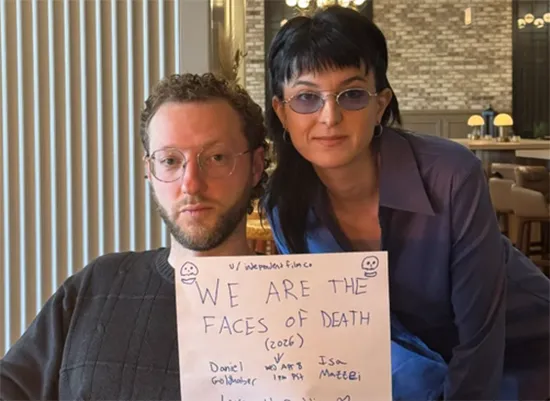
Unsurprisingly for a project that spent around seven years travelling from conception to release, elements evolved along the way. The fundamental idea, however, remained remarkably consistent.
“A lot changed. But the core of the story is the same. We always knew we wanted it to be about a content moderator,” Mazzei says.
“We always knew we wanted it to be about someone who’s viewing violence online every day. And we always knew that there was going to be a killer who was kind of recreating Faces of Death after he finds out, you know, that they weren’t real. And so those kind of core tenets remain the same across all seven years.”
Mazzei’s career has repeatedly explored the uncomfortable meeting point between technology, identity and spectatorship. Her screenplay for Cam, loosely informed by her own experiences as a camgirl, turned online identity into psychological horror, while Faces of Death expands that fascination into a world where almost anything can be recorded, uploaded, manipulated and consumed.
It also makes this particular resurrection feel unusually appropriate. The power of the original Faces of Death depended upon audiences being unsure whether they could trust their own eyes. In 2026, that uncertainty no longer belongs exclusively to horror movies.
It is part of opening an app.
Watch our full interview with Isa Mazzei below as she discusses bringing Faces of Death into the internet age, the film’s lengthy journey to the screen and the challenges of reinventing one of horror’s most notorious titles for a generation raised on online violence.
Isa Mazzei Faces of Death interview