
Anthony DiBlasi on Turning Clive Barker’s Most Personal Nightmare Into Reality
- Interview
 Peter Campbell
- 0
- 6 minutes read
When Dread premiered at FrightFest in 2009, it wasn’t just another Barker adaptation. This was something else entirely. Rooted in trauma and slowly simmering with existential tension, Anthony DiBlasi’s feature debut took one of Barker’s rare non-supernatural short stories and pulled it into focus, transforming it into a harrowing meditation on fear, obsession, and the ways unresolved trauma corrodes the human psyche.
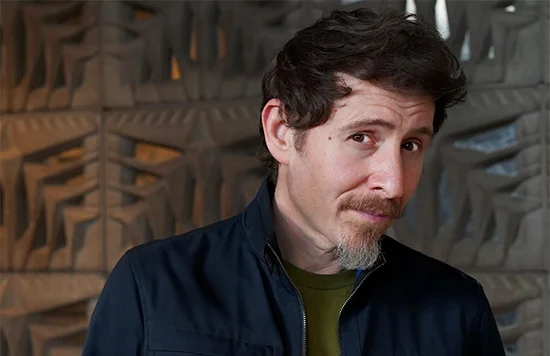
Now, nearly 15 years later, DiBlasi’s Dread returns to UK screens via horror platform NYX, and with it comes a chance to re-examine a film that feels eerily more relevant with age. Adapted from a short story in Barker’s Books of Blood, the narrative follows a group of students as they embark on a fear study—interviewing people about their phobias in an attempt to “understand” dread. But what begins as a curious psychological experiment slowly mutates into something far more invasive, and far more dangerous.
It was precisely the lack of supernatural elements that first drew DiBlasi to the material. “It was Clive’s only non-supernatural story that he’d written up till that point,” he explains, “and I was very close to the age of these characters when I adapted it. I knew their voice and what they were going through.” That familiarity – both emotional and generational – shaped DiBlasi’s approach. Rather than reframing the story to suit genre conventions, he expanded it organically, embedding himself into the narrative. “Steven’s history in the short story became Joshua’s. And Steven’s history became mine.”

In many ways, Dread was DiBlasi’s exorcism. At sixteen, he was involved in a serious car crash, an experience he channels into the emotional architecture of the film. It’s this blend of personal history and literary fidelity that gives Dread its disarming potency. “It wasn’t just about making a bleak story,” he says. “It was about the aftermath of trauma. What happens when a victim doesn’t get the right kind of help?”
To convey those deeper questions, DiBlasi relied on immersive rehearsal methods that allowed his cast to live inside their characters. He brought the actors together for lengthy improvisation sessions—unscripted moments where he’d gently steer conversations mid-flow, whispering directions in real-time. “One session can go for forty-five minutes or an hour,” he says, “and they never break character. It became a shared history between them all.”
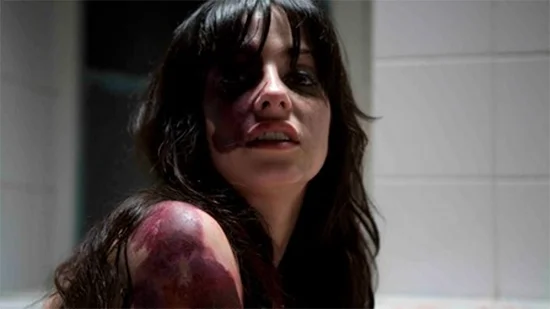
Technically, Dread is no less ambitious. While the story remains intimate and character-focused, DiBlasi insisted on some big swings—literally. The film’s infamous axe murder required a custom-built twenty-five-foot rig that allowed a camera to be physically attached to the weapon. “The whole house was a build, thankfully,” he laughs, “so it could accommodate the rig inside it.” It’s the kind of labour-intensive setup that today could be replicated with a GoPro or iPhone, but DiBlasi wanted something more tactile. More dangerous. More real.
It helped that he had an ace up his sleeve: cinematographer Sam McCurdy, fresh from The Descent. Together, they crafted a look DiBlasi describes as “nicotine-stained,” shooting on the now-retired Viper digital camera, which gives the film its gritty, sickly pallor. The result is a visual language that feels stained by dread – claustrophobic, rotting at the edges.
Despite the darkness at the film’s core, DiBlasi recalls the shoot fondly. “I only have good memories of the experience,” he says. And none more so than the night Dread premiered at FrightFest. “It was the biggest theatre I’ve ever stepped into with an audience—the Empire in Leicester Square. And most of the cast were seeing the film for the first time. That’s something I’ll never forget.”
Having worked with Barker for over a decade, DiBlasi is keen to note that their creative relationship has always been grounded in trust and respect. “Most of my favourite memories with Clive are outside of film,” he reflects. “Travelling with him on book tours, watching him with fans. That humbles you as a creator. He poured so much energy into each person he met.” That generosity, so present in Barker’s work, echoes through Dread too, albeit in twisted form. It’s a film about what happens when empathy erodes and trauma curdles into control.
DiBlasi isn’t done with horror, or with Barker. The two are currently developing a new project together, though details remain tightly under wraps. Until then, Dread stands tall as a fascinating, fractured first feature, one that swapped Barker’s usual hellscapes for something quieter, but no less terrifying. Something that looks a lot like real life.
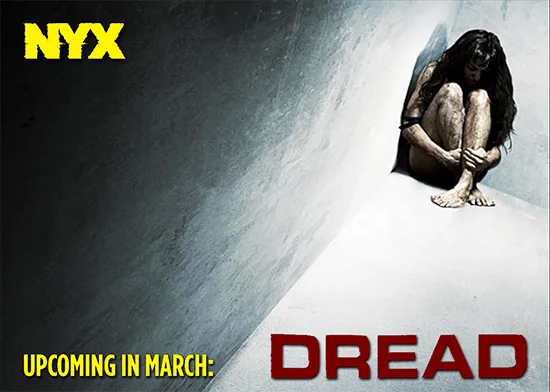
DREAD airs on NYX UK on Friday March 29 at 11:15pm
Watch via Freeview Channel 271, the Channelbox App, Distro TV or TCL smart TVs.