

Huesera: The Bone Woman (2022) Review
- Horror Film Reviews
Michael J. McMorrow
- 2
- 5 minutes read

Is motherhood a path to joy — and is it something needed for women to reach fulfillment?
Huesara: The Bone Woman is a psychological childbirth drama in a slow-burning art-house style. Director and co-writer Michelle Garza Cervera creates an eerie, tension-filled mood, using horror movie tropes and folklore to illustrate Valeria’s scary pregnancy and post-partum period.
The title refers to a Mexican folktale about a powerful woman who collects bones in the desert and sings life into the skeletons of wolves. The wolves run away, then turn into women running free towards the sun. While you won’t find any bone collectors or wolves in the film, the plot does revolve around female aspirations and the expectations of family and culture.

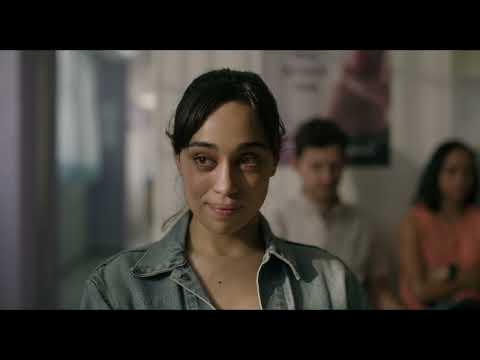
Reaching the top of a winding outdoor staircase, Valeria (Natalia Solian) leaves an offering to the Virgin Mary. Then her mother makes the sign of the cross over her daughter’s uterus. Thus begins a Mexican woman’s descent into a nightmarish pregnancy.
There’s more to the Mother’s gesture than just ritual. Valeria’s family is frightened by the prospect of her having a child.
 Emotionally disturbing moments from her youth seem to stick to Valeria. A long-ago accident from a babysitting assignment is a constant source of shame that her family picks at constantly. She also is racked with guilt over leaving her teenage lover years ago to go off to college.
In Valeria, Garza Cervera and writing partner Abia Castillo create a very oppositional force. Her family has viewed her as a rebel since her teen punk rock lesbian days. Now she is married to an educated professional man, but she has little interest in the typical feminine pursuits of her mother and sister. Instead, she maintains a carpentry workshop at home and loves making furniture.
She is trying to fit into family expectations but fighting a lifetime of not meeting them. Even if she succeeds at motherhood, her educational and business aspirations defy class and gender structures.
As the pregnancy progresses and the family pressure increases, Valeria becomes depressed, having paranoid moments and seeing strange people and things no one else sees. Feeling lost, she is drawn to revisit her punk rock days and the girlfriend she left behind.
While her obstetrician offers standard remedies and reassurance about the pregnancy, the freaked-out Valeria feels she needs much more help. Can the traditional folk healers her black sheep aunt recommends save the troubled woman?

Huesera feels at times like a horror movie, but is it more a horror of the mind? In an interview with Filmmaker, Garza Cervera reveals that the horror facets were added to the story, and became essential. While the visual impact of the supernatural elements is profound, there is enough ambiguity to interpret them as simply the result of mental illness. Valeria’s often unexplainable actions are more horrifying than those of any shadowy entity.
Beyond the psychological aspects, the character of Valeria is an instrument to explore women’s place in the family and society, bodily autonomy, and how crushing expectations and unfulfilled aspirations can destroy a person and her relationships.

The punk rock subculture featured in the film is a familiar one to Garza Cervera, who continues to play in punk bands. She feels that punk gave her “the tools to start questioning everything.”
Huesera is Garza Cervera’s first feature after making several shorts that found success on the festival circuit. The film won a slew of festival nominations and awards in 2022 and garnered critical praise for its story and direction. Huesera was released to theaters and VOD in February 2023 and will eventually be found on the Shudder platform.
| Movie Rating: |   |
Trailer:
Notes:
Interview with Michelle Garza Cervera: https://filmmakermagazine.com/119776-interview-michelle-garza-cervera-huesera/#.Y_w6PT3MKL8





2 Comments
[…] you’re looking for a bone-chilling film, Huesera: The Bone Woman will premiere on May 12th. Starring Sonia Couoh, Alfonso Dosal, and Mayra Batalla, the film follows […]
[…] Huesera takes inspiration from the Mexican folklore figure of the same name and addresses women’s issues in a mix of ancient and modern horrors. The creepy imagery and sounds of “The Bone Woman” are almost as unsettling as the depths of postpartum depression Valeria (Natalia Solián) goes through. Among the deterioration of her own mind, she also struggles to come to terms with her sexuality, values and wants. The loss of self and desperate measures she takes to regain control result in a spellbinding climax that leads to an unexpected yet satisfying end. […]