Unusual Themes For Horror Movies
- Gaming
The Templar
- 0
- 9 minutes read
When we think of horror, certain images spring to mind: haunted houses, ravenous vampires, gruesome slashers. Yet genre filmmakers have long experimented with blending horror with unexpected themes, producing films that linger not just in your nightmares – but your thoughts too. This willingness to fuse the everyday with the terrifying has led to some truly imaginative and unsettling cinema. Here are several bold combinations that work in surprising ways, showing how horror can thrive in the most unexpected places.
Bingo Halls & Gentrification – Bingo Hell (2021)
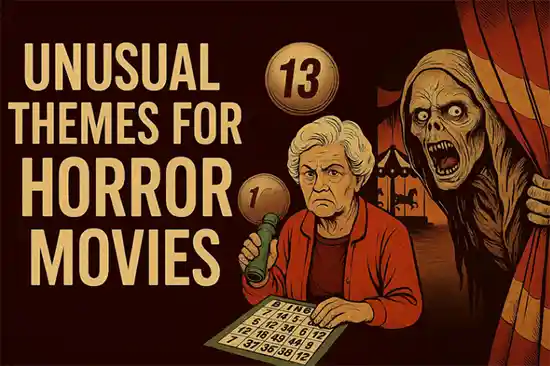
In Bingo Hell, the quaint, cosy community pastime of bingo becomes the battleground for much darker forces. The film is set in a tightly knit neighbourhood where elderly residents gather in the bingo hall, a place of routine, social bonding, and comfort. But this familiar safe haven becomes corrupted when the sinister Mr. Big takes over, promising glamour, big prizes, and prosperity. His gleaming new version of the hall draws people in, only to exploit their desires and greed, eventually consuming them in gruesome ways.
What makes Bingo Hell so unusual is how it reframes the image of elderly women—the stereotypical sweet grandmother clutching her bingo card—into unexpected heroes. Instead of being victims, these women fight back against the encroaching supernatural evil, reclaiming their community through resilience and determination. Thematically, the film is also a metaphor for the horrors of gentrification. The predatory forces that seek to “modernise” or “improve” the neighbourhood are presented as soul-stealing demons, stripping away not just buildings but also identity, tradition, and belonging. In this way, Bingo Hell uses horror to dramatise a social issue often discussed in political or economic terms, giving it blood, teeth, and a truly monstrous face.
Carnivals & Family Repression – The Funhouse (1981)
Tobe Hooper’s The Funhouse swaps suburban suburbia for the uncanny corridors of a carnival ride, and in doing so, he taps into a primal cultural fear. Carnivals are traditionally associated with joy, colour, and thrills, but Hooper turns that energy on its head, showing how carnival attractions can mask true horrors lurking underneath. A teenage thrill-seeking trip quickly turns into a nightmarish ordeal, where every laugh and painted smile feels grotesque. The carnival, with its flashing lights and distorted mirrors, becomes a surreal labyrinth of fear.
Beyond the surface thrills, however, The Funhouse is also about repression and family dysfunction. Hooper was fascinated by the idea that beneath the appearance of stability, families often harbour dark secrets and suppressed emotions. In this film, the carnival’s monstrous characters and eerie funhouse mirrors reflect that buried darkness, suggesting that the horrors outside are simply an extension of what festers within. The funhouse isn’t just a set of physical traps—it’s a metaphor for societal expectations that ensnare youth, for parents who attempt to control and suppress individuality, and for the inevitability of those hidden tensions erupting into chaos.
Folk Belief & Isolation – Folk Horror
Few subgenres capture the strangeness of horror quite like folk horror. Exemplified by classics such as The Wicker Man and reinvigorated by recent hits like The Witch and Midsommar, folk horror thrives on the unsettling power of tradition. These films often place modern outsiders into isolated communities steeped in ritual, pagan belief, and superstition. The tension arises not from supernatural creatures, but from the sheer alienness of belief systems that defy modern logic.
What makes folk horror so effective is its ability to highlight cultural estrangement. A protagonist, usually rational and urban, finds themselves trapped in a world where “old ways” dictate life, love, and death. The more they try to resist, the more they realise that their perspective has no weight in this environment. Horror here is not about the jump scare—it is about the creeping dread that comes from recognising you cannot control or even understand the forces shaping your fate. It’s not evil lurking in the shadows; it’s the very weight of centuries-old tradition, pressing down with terrifying inevitability.
Analog Nostalgia & Psychological Terror – Skinamarink
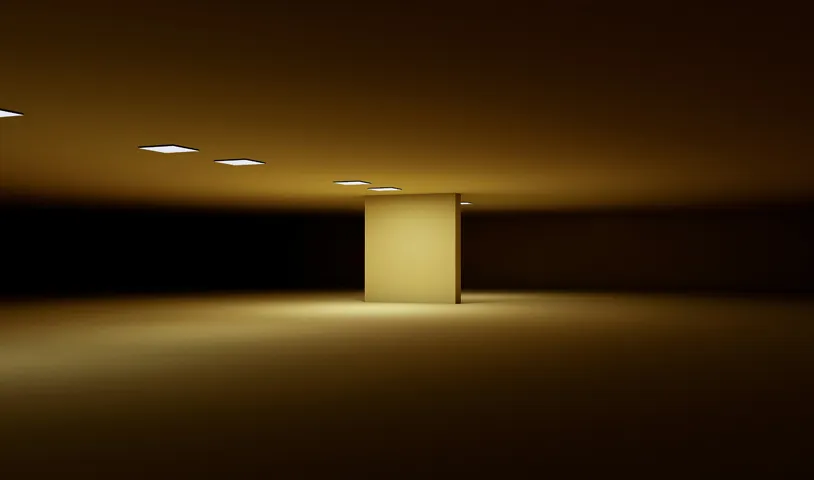
Skinamarink is one of the most unusual horror films in recent years, and much of its impact comes from its use of analogue nostalgia. Rather than focusing on plot or even characters, the film creates unease through its aesthetic: battered VHS-style visuals, distorted sound, and the flickering glow of CRT television screens. These elements conjure the uncanny disorientation of childhood memory, where the familiar bedroom, hallway, or toy suddenly feels strange in the middle of the night.
The horror here is not explicit. Instead of monsters, we are given absence—parents who vanish, voices that echo, walls and doors that shift in impossible ways. By using the texture of outdated technology, Skinamarink plays with how memory and media can fracture reality. The VHS quality doesn’t just look spooky; it reminds us of how fragile and unreliable our own recollections are. This is horror that works on a psychological level, dissolving the line between safety and threat, between the comforting glow of a night-light and the endless darkness that surrounds it.
Grotesque Ritual & Existential Disturbance – The Beyond (1981)
Lucio Fulci’s The Beyond is a film soaked in surreal nightmare logic, and its unusual power lies in how it mixes grotesque ritual with existential dread. Unlike straightforward slashers, Fulci’s film does not rely on linear storytelling. Instead, it builds a fever dream of gore, madness, and supernatural horror. A cursed book, a haunted hotel, and a series of inexplicable deaths come together to suggest that the world itself is unstable, fragile, and governed by forces far beyond human comprehension.
The gore is extreme—Fulci was famous for it—but The Beyond is not merely about shock value. The mutilations, the blind seer, and the crumbling spaces all point to deeper themes: purgatory, divine justice, and the futility of resisting cosmic fate. Watching the film feels like descending into a vision of hell where nothing is certain, and that loss of narrative clarity is itself part of the horror. In The Beyond, the rituals of blood and sacrifice open not just wounds, but portals to a greater, unknowable doom.
Abstract Surrealism & Primal Fear – Begotten
Few films are as challenging or unusual as Begotten. Shot in stark, distressed black-and-white, with images scratched and damaged to resemble ancient footage, the film abandons narrative clarity almost entirely. What unfolds is a disturbing cycle of death, rebirth, and ritual, all depicted through primal, wordless imagery. There is no dialogue, no conventional characters, and no clear setting—only archetypes and violent acts rendered in hypnotic abstraction.
Begotten operates like a waking nightmare, where nothing is explained and everything is experienced on a visceral level. Its unusual power lies in how it bypasses rational thought altogether. By stripping away narrative and dialogue, it forces the viewer to engage with horror instinctively, in the gut rather than the brain. Some viewers find it unwatchable, others find it mesmerising, but none can deny that it pushes horror into the realm of pure surrealism.
Queer Identity & Monster Allegory – Nightbreed
Clive Barker’s Nightbreed is perhaps one of the most celebrated examples of horror being used to explore marginalised identity. At first glance, the film appears to be about monsters—strange, tattooed, leather-clad beings who live in a hidden underground city. But Barker flips the perspective, presenting these “monsters” not as villains, but as victims of persecution. The true monsters of the story are the humans who seek to destroy them.
This inversion makes Nightbreed a powerful allegory for queer identity and alternative family structures. Released in the early 1990s, during a time when LGBTQ+ people faced intense stigma, the film uses its creatures to embody difference and otherness, but in a celebratory way. Tattoos, costumes, and coded visual language mark these characters as queer, and Barker positions their community as one of love, loyalty, and acceptance—qualities that the so-called “normal” world cannot tolerate. In doing so, Nightbreed transforms horror into a space of empowerment, challenging the genre’s history of punishing difference and instead celebrating it.
Why Unusual Themes Elevate Horror
These unexpected themes do more than surprise—they resonate deeply with audiences. A bingo hall becomes an arena for community resistance (Bingo Hell). A distorted home video aesthetic unsettles memory and childhood perception (Skinamarink). Folk horrors force us to question our own cultural blind spots and the fragility of modern rationality. Films like Begotten or The Beyond remind us that horror can abandon logic altogether and still be profoundly disturbing, while Nightbreed shows how horror can serve as allegory and activism, turning the monstrous into the misunderstood.
Some of these approaches—like folk horror or queer allegory—have existed for decades. Others—like analog horror—are more recent, shaped by the digital age and nostalgia for older media. Together they showcase horror’s capacity to evolve, to recycle the familiar into something disquieting and profound. Ultimately, horror thrives not just on blood and scares, but on the uncanny collision of the everyday with the unimaginable. That is what makes these unusual themes so powerful—they remind us that horror is not confined to haunted houses and killers in masks. Horror can emerge anywhere, even in the places we least expect, waiting to twist the ordinary into something terrifying.