
28 Years Later (2025) Review
- Horror Film Reviews Infection Zombies
 Tom Atkinson
- 3
- 6 minutes read
There are few cinematic returns more bracing, more unexpectedly moving, than 28 Years Later. Danny Boyle and Alex Garland’s latest entry in the rage-virus saga doesn’t just revisit the bleak terrain they first explored in 28 Days Later, it expands it, sharpens it, and then leaves it bleeding on the floor. If the first film felt like a scream into the void and 28 Weeks Later a chaotic, militarised echo, then this third instalment is something else entirely. It’s a harrowing, hallucinatory fable about decay – biological and national – that somehow finds poetry in the rot.

The story begins with a twisted lullaby… a group of children watching Teletubbies in eerie calm before an inevitable blood-soaked intrusion. It’s a macabre juxtaposition that sets the tone early with innocence torn apart by infection. But after this overture, we jump forward to a crumbling Britain, now quarantined from the rest of the world and patrolled by NATO forces who treat the island as if it’s radioactive. Technology has regressed. Myths are beginning to form in the rubble.
At the centre of the story is Spike, a 12-year-old boy raised on Holy Island, a fortified outpost with a causeway accessible only at low tide. Alfie Williams gives a strikingly natural performance, full of innocence and stubborn courage. His father Jamie (Aaron Taylor-Johnson) is a rugged survivalist, haunted by grief and guilt, who takes Spike across the mainland on a hunting expedition to teach him to kill. It’s his mother Isla (Jodie Comer), fading fast from a mysterious illness, who drives the film’s emotional momentum. When Spike believes there’s a chance to save her, he sets off in search of a fabled doctor living deep in the infected zones. That’s when the real journey begins.
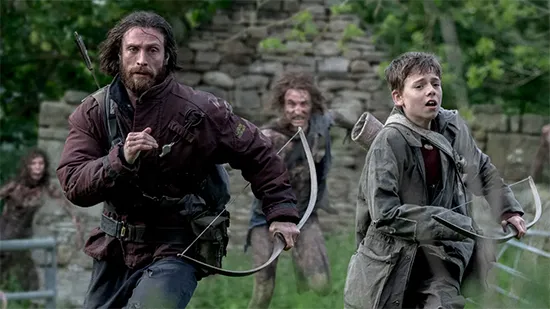
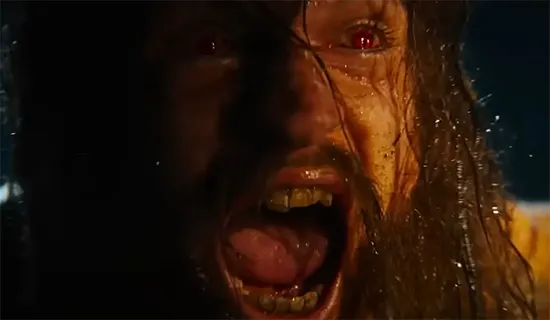
The world has changed. So have the infected. The grotesque, fast-moving zombies of old have mutated into even more horrifying forms: bloated, ground-crawling scavengers and towering “alphas” who are not only more powerful, but disturbingly purposeful. But the real horror, as ever, lies in the human response.
The kills are visceral and unflinching, with one sequence involving ‘despining’ sure to trigger a wince or two from horror fans. As with the first film, there is innovation in the cinematography. The trademark frantic high-frame rate sequences are garnished with a bullet-time-esque POV when arrows fly. The result is immersive and adrenaline-inducing.
Yet it’s the film’s quieter moments that linger. The sight of overgrown landmarks, a broken Shell garage sign missing its first letter, fields reclaiming motorways – all captured in ravishing widescreen by Anthony Dod Mantle – lend the apocalypse a terrible beauty. The past is everywhere. And it won’t let go.
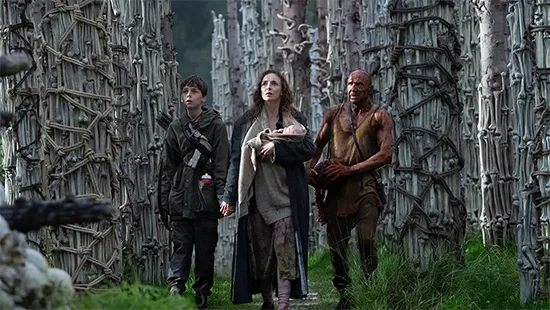
Ralph Fiennes is a standout as Dr Kelson. Upon his arrival the film shifts into something almost metaphysical. Kelson is part monk, part madman, drenched in iodine and dwelling in a temple made from human bones. He embodies the film’s fascination with death, not as a scare tactic, but as something more abstract, inevitable and oddly reverent. Fiennes plays him with a hushed solemnity that’s strangely moving, offering a counterpoint to the film’s frenzied set-pieces.
There’s also an undercurrent of satire, a sharp critique of Britain’s post-Brexit isolationism woven into the fabric of the narrative, with references both subtle and stark. This film has layers: emotion, tension, commentary, philosophy and an almost prophetic element which makes the experience all the more tangible.
28 Years Later works well as a direct sequel to either of the two films before it. For those that didn’t enjoy the superficial tempo shift that Juan Carlos Fresnadillo delivered with 28 Weeks, it can be disregarded. For those that long for back-to-basics masterful storytelling, grounded performances and emotionality, 28 Years Later won’t disappoint. It’s more complex, more engaging and of a higher production quality than the original. Does this mean 28 Years is the best film in the franchise so far? Maybe, and probably.
Bleak, beautiful and occasionally brilliant, it’s a rare horror film that earns this level of emotion. Blood-soaked, sorrowful, and searingly relevant, it is a staggering achievement.
| Movie Rating: |   |
28 Years Later trailer




3 Comments
[…] of Talk to Me from Second Sight Films! Horror Legends Invade Welsh Coast at Rhyller Thriller 3 28 Years Later (2025) Review 28 Weeks Later (2007) […]
[…] series. Directed by Nia DaCosta and written by Alex Garland, the film continues the story begun in 28 Years Later earlier this year and will arrive in cinemas on 16 January […]
[…] in January as part of a double bill with 28 Years Later, The Bone Temple has grossed $57.9 million worldwide to date. Though its US opening fell short of […]