
28 Weeks Later (2007) Review
- Horror Film Reviews Infection Zombies
 Tom Atkinson
- 1
- 5 minutes read
Sequels are a tricky business. For every Aliens, there’s a Speed 2. So when 28 Weeks Later arrived five years after Danny Boyle’s genre-redefining 28 Days Later, scepticism was understandable. Now, years later, and ahead of the release of the next film in the series, there seems to be more of an appreciation for the second part. One could argue that Juan Carlos Fresnadillo’s follow-up doesn’t just survive the comparison with the first film, it thrives on it, delivering a film that’s sharper, leaner, and in some ways even more brutal than its predecessor.
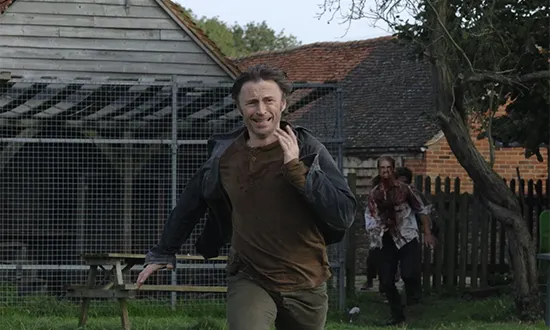
From the moment the opening sequence throws us into a rural farmhouse siege, it’s clear Fresnadillo understands what made the first film so potent: urgency. But where 28 Days Later built terror out of silence and isolation, 28 Weeks Later trades in chaos. Robert Carlyle’s Don, caught between a horde of infected and a split-second moral choice, becomes the film’s symbol of moral failure. His cowardice sets the tone for a narrative that isn’t interested in heroism so much as consequence.
Set six months after the outbreak, the UK is under NATO occupation, with a quarantine zone established on the Isle of Dogs. It’s a false calm. The infected are believed to have died out, the military has reasserted control, and resettlement has begun. Among the first civilians to return are Don’s children, Tammy (Imogen Poots) and Andy (Mackintosh Muggleton), whose presence reintroduces a fragile sense of family, and, ultimately, the virus itself. Their mother, played with eerie restraint by Catherine McCormack, is discovered to be a carrier who remains asymptomatic. The moment Don kisses her in an act of guilt-ridden affection is not only tragic but also narratively explosive. It reawakens the virus and sets the film on an unstoppable downward spiral.
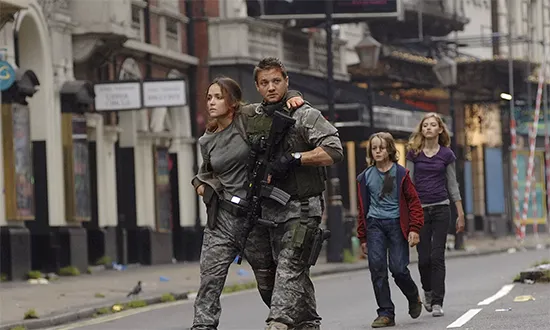
Where the first film ruminated on human connection and emotional repair, 28 Weeks Later is much colder. It’s about failure. The military fails to contain the outbreak. Scientists fail to anticipate consequences. Families fracture. Trust collapses. There’s no Jim here to offer a hopeful ending. Instead, Fresnadillo crafts a descent into institutional breakdown. Jeremy Renner’s Sgt. Doyle and Rose Byrne’s Major Scarlet emerge as reluctant protectors of the children, but even their efforts are rendered futile against the combined forces of rage-infected monsters and misguided military protocol.
The set pieces are horrifying not just in their execution but in their implications. A scene where civilians are penned in darkness while soldiers open fire blindly is harrowing in ways that resonate far beyond the film’s genre trappings. The iconic helicopter sequence, where Harold Perrineau’s pilot turns rotor blades into a makeshift weapon, borders on comic-book absurdity… but it lands because the film has earned that moment of excess. The gore is relentless but never gratuitous; it’s rooted in panic, not spectacle.
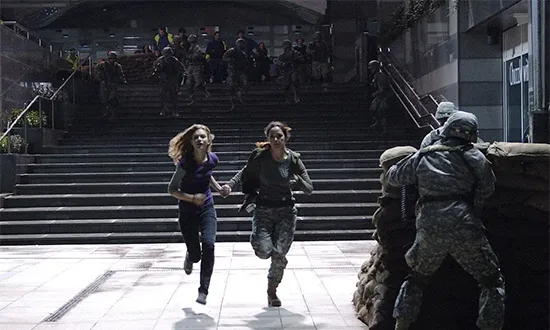
John Murphy’s returning score pulses with dread, while the camera work emulates Boyle’s gritty aesthetic, creating an atmosphere that feels unstable even in quieter scenes. The final shot, hinting that Paris has fallen, is both inevitable and grimly effective.
There are flaws that caused issues for fans on the films release. The seemingly laser-guided tracking ability that Don has on his children being the most frustrating. But as long as you can take this instalment as more of an action-packed romp than a sharp political allegory like the first film, these issues can be forgiven.
28 Weeks Later is not a comforting film, nor should it be. It expands the mythology with purpose, interrogates our faith in authority, and paints a bleak portrait of survival. And we really can’t wait to see what happens in the next chapter.
| Movie Rating: |    |
28 Weeks Later trailer





1 Comment
[…] Years Later (2025) Review 28 Weeks Later (2007) Review ‘The Dark Fantastic’ to Dazzle Raindance Audiences Lockdown Horror Comes Alive in […]