
28 Years Later: The Bone Temple (2026) Review
- Horror Film Reviews Infection
 Tom Atkinson
- 0
- 6 minutes read
28 Years Later: The Bone Temple, directed by Nia DaCosta and written again by Alex Garland, sits in that awkward position every middle chapter knows too well. It needs to expand the mythology, deepen the world, and point towards something larger still waiting over the horizon. The result here is a film that is frequently fascinating but not always totally coherent.

We return to Britain, long since ravaged by the rage virus. The infected still roam, still terrifying in bursts, but the more unsettling development is what the survivors have become in the intervening decades. Civilisation, it turns out, doesn’t simply vanish. It mutates – arguably into something worse than the infected.
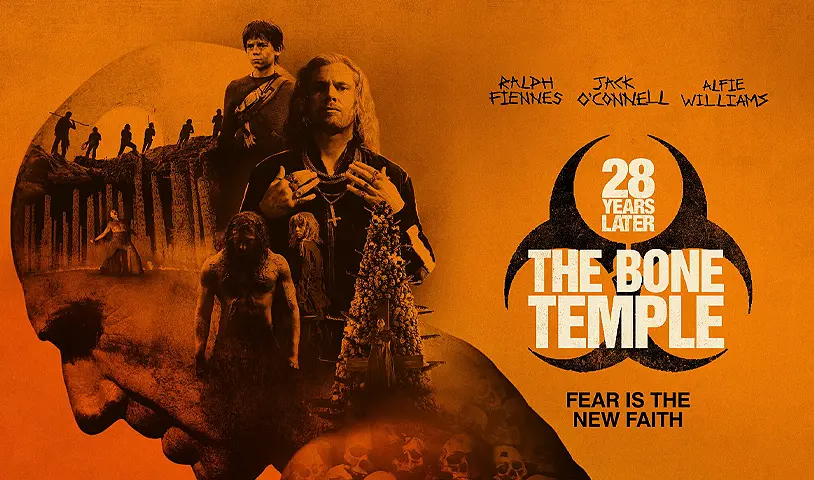
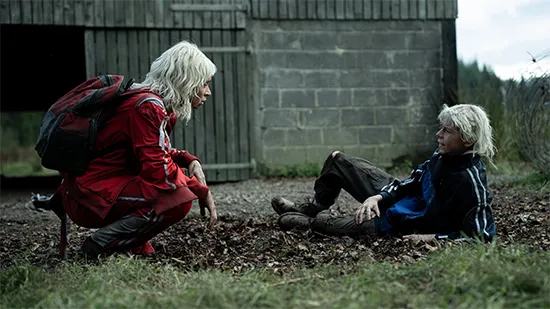
Enter Sir Jimmy, played with spooky unpredictability by Jack O’Connell, who has had a productive couple of years being part of two very hot horror properties in Sinners and this franchise. Jimmy leads a strange band of followers in the form of youths dressed in blond wigs and tatty tracksuits, each calling themselves Jimmy or Jimmima. His worldview is a scrambled mix of religious myth, childhood television and apocalyptic paranoia. He preaches about demons and destiny with the conviction of someone who barely remembers the world before the virus but desperately wants to explain – and be part of – the one that came after.
The acts of his group are unflinchingly brutal, and DaCosta doesn’t hold much back in terms of cruelty, torture and graphic violence. This works to up the ante for the franchise, but walks a fine line of acceptability, one could argue that it’s gratuitous and possible out-of-step with the other films from the Boyle-Garland universe.

The flip-side of that Dr Ian Kelson, again played by Ralph Fiennes with the sort of gentle oddness that suggests sanity has not quite left him, although it’s likely circling the exit. Kelson continues to collect the remains of the dead, clean them, stack them into towering pillars like a caretaker tending a graveyard the size of a civilisation. It is macabre, oddly peaceful, and strangely moving.
Kelson is also breaking new ground using drugs as a way to connect with the infected alpha known as Samson. Driven by the desire to find a cure, and to some extent, find some company, their relationship becomes the most captivating aspect of 28 Years Later: The Bone Temple. The prospect of a cure rather than escape is the most positive arc since the franchise began back in 2002.
The film drifts between Jimmy’s cult and Kelson’s bone temple, with young survivor Spike wandering somewhere between those two philosophies. Spike more a witness than a protagonist this time round, watching two different responses to the same ruined world. One response is rage wrapped in myth. The other is a quiet, almost melancholy attempt to honour the dead and return to what once was.
DaCosta stages the whole thing with an artistic eye. The infected still provide splashes of gore and sudden panic, but the film frequently pauses to look at its landscapes. Lantern light glowing against skull towers. Forests stretching endlessly into mist. The hulking silhouette of Samson staring up at the night sky as though trying to remember what being human felt like.
Later we discover that the rage virus may not have erased his identity entirely, and beneath the violence there might still be fragments of memory or personality. The idea lingers throughout the film, though Garland’s script never quite pushes it to its full philosophical weight.
The narrative sprawls a little, leading threads to emerge, vanish, then reappear. Conversations about gods and devils drift into sudden bursts of brutality. A confrontation between Kelson and Jimmy promises grand meaning and then swerves toward something slightly absurd. Oddly, it works more often than not.

In part, that is down to Fiennes, who bolsters the film with a performance full of warmth and melancholy. But also, it’s DaCosta’s refusal to treat the apocalypse as purely bleak, even here there are moments of strange beauty.
The film ends soon after the reintroduction of a much anticipated character, clearly pointing toward another (final?) chapter. Whether that next step will bring clarity or more questions remains to be seen.
28 Years Later: The Bone Temple is messy, provocative, and occasionally mesmerising. And as a sequel, still superior to 28 Weeks Later.
| Movie Rating: |    |
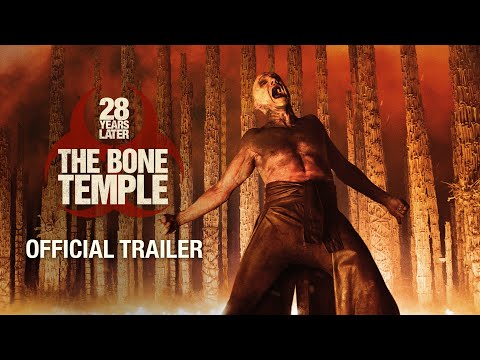
28 Years Later: The Bone Temple trailer