
Exclusive Interview: André Øvredal on ‘Passenger’
- Interview
 Sam Casserly
- 0
- 7 minutes read
It’s an exciting week for fans of director André Øvredal’s work, as his latest film, Passenger hits screens on Friday. Working across films such as Troll Hunter and The Autopsy of Jane Doe, Øvredal has consistently balanced dread, atmosphere and character with the kind of precision that turns simple setups into deeply unsettling experiences. With Passenger, he takes that sensibility onto the open road, transforming van life into something far more nightmarish.
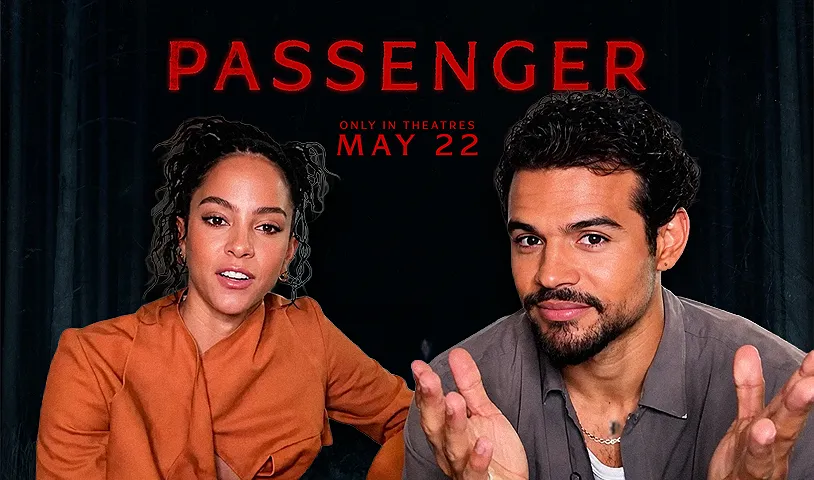
The film follows engaged couple Tyler and Maddie, played by Jacob Scipio and Lou Llobell, whose cross-country journey spirals into terror after they encounter a supernatural force they cannot escape. For Øvredal, however, the horror begins long before the demon appears.
“I love the story of the couple who is going on a journey,” he explains. “She’s kind of going along with his dream of living on the road and living a free life… but she’s not really, really deeply, profoundly into that. She wants a home. She wants stability. She wants the opposite of him.”
That emotional imbalance became the key to the project for Øvredal. “That relationship I found really engaging personally when I read the script,” he says. “I hope it translated to the screen.” While Passenger delivers supernatural scares and elaborate horror sequences, it is ultimately rooted in the collapse of a relationship already under strain.
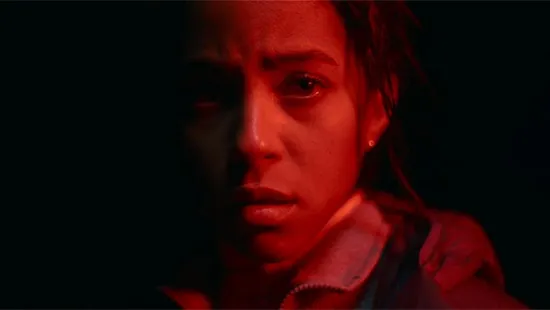
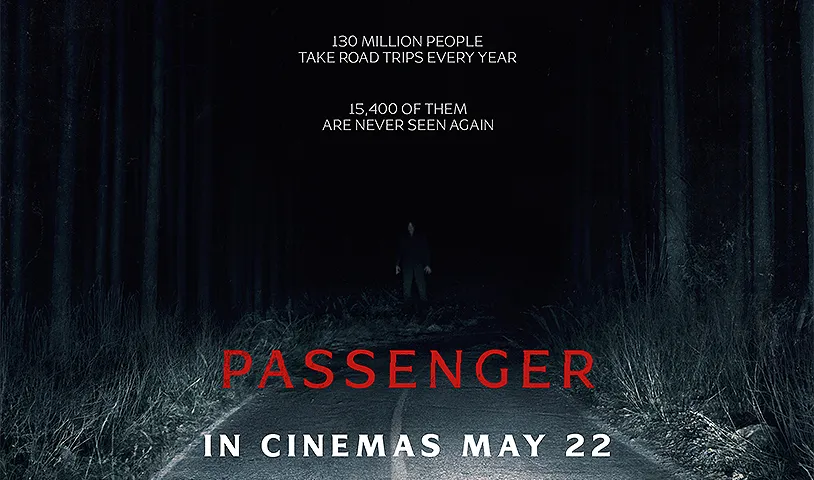
What especially drew him to the material was the film’s central antagonist, a demonic entity simply known as The Passenger. “I love the character of Passenger as a villain,” Øvredal says. “A fresh, fun villain that I hadn’t seen before.” The concept also offered him an irresistible visual framework. “Being on the road with basically what amounts to a haunted house on wheels… even though you’re in the same space, the world around you is constantly changing.”
That constantly shifting environment allowed Øvredal to explore both scale and isolation simultaneously. “I also love the loneliness of that,” he says, noting the opportunities it created to construct a series of distinct horror set pieces. “I thought the script contained a lot of fun, unique horror set piece scenes. That is just great fun to direct.”
As with much of Øvredal’s work, atmosphere is built carefully through control of information rather than constant shock tactics. When discussing tension, he immediately references one of cinema’s greatest masters. “I start with Hitchcock,” he says. “I start with the idea that it’s all about information. Horror and tension and scares is all about information.”
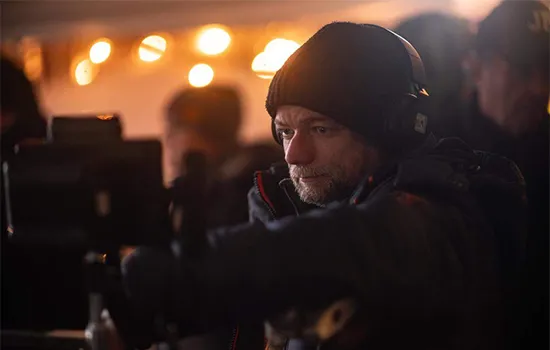
For Øvredal, the key lies in knowing precisely when to reveal details and when to hold them back. “When do you give the audience information? What information do you give them? And when? When do you let it all come out?” That philosophy shaped every aspect of Passenger, particularly the growing uncertainty between its central characters. “There’s a lot of tension coming from the uncertainty and the mistrust between some of the characters.”
Beneath the supernatural surface, Øvredal also saw the demon as a metaphorical extension of Tyler and Maddie’s relationship. “How can the demon become the symbol of their relationship troubles in a way?” he asks.
The film layers those emotional conflicts with broader thematic ideas involving religion, morality and the eternal battle between good and evil. “There is a religious theme playing through of evil and good… of a demon versus a saint.”
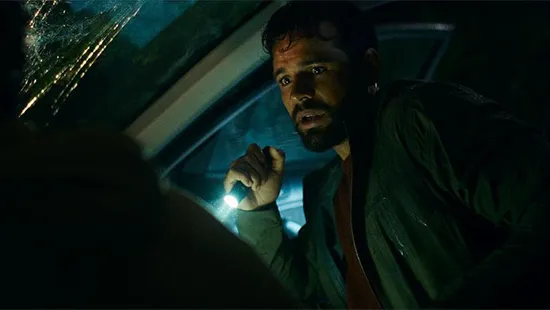
Despite the intimate nature of the story, Øvredal believes Passenger is best experienced with a crowd. “You can’t really match that experience,” he says of communal horror viewing. “Feeling the tension and the room kind of fidgeting and being nervous and people laughing actually in the wrong spot because they’re nervous.”
He compares horror audiences to concertgoers sharing a collective emotional release. “Guillermo del Toro said to me once that it’s like a rock concert,” Øvredal recalls. “You experience this together as a community.”
That sense of collaboration extended behind the camera as well. Øvredal speaks warmly about the cast, particularly the chemistry between Scipio and Llobell. “They built a very good relationship between themselves that I think comes through on screen,” he says.
He is equally complimentary about Melissa Leo, whose presence brought a unique energy to the production. “Melissa Leo was a star to work with,” he says. “She is so collaborative and wonderful and such a strong presence on set.”
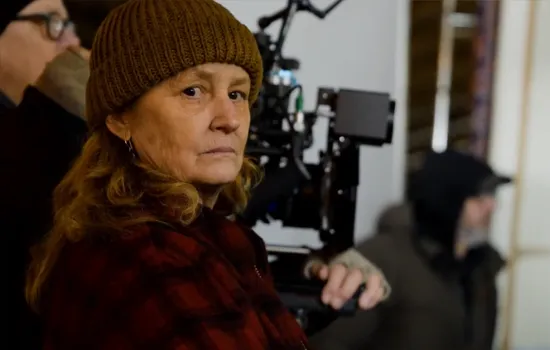
Filming through long nights in difficult weather conditions only strengthened that bond. “Lou and Jacob were such good sports in the middle of the night… staying up with us night after night after night into the morning, in the cold and in the rain.”
Their commitment, Øvredal says, helped shape the emotional realism at the centre of the film. “They totally understand what their characters would do and how to scale their performance to what they’re experiencing.”
With Passenger, Øvredal once again demonstrates his gift for blending intimate human tension with deeply cinematic horror. It is a road movie, a relationship drama and a supernatural nightmare all at once, driven by a filmmaker who understands that the most effective scares are often built not from monsters, but from the things left unsaid (or unseen).
Exclusive Interview: André Øvredal on ‘Passenger’

See Passenger in cinemas May 22.
Passenger trailer