

Interview: Rupert Russell on ‘The Last Sacrifice’
- Interview
 Peter Campbell
- February 6, 2025
- 2
- 1333
- 8 minutes read
Few films have left an imprint on the British horror landscape quite like The Wicker Man. The 1973 classic, with its eerie folk rituals, unsettling sense of isolation, and an ending as iconic as it is horrifying, has become synonymous with the genre now known as British folk horror. But according to filmmaker Rupert Russell, the chilling tale of Sgt. Howie’s doomed investigation on Summerisle may have more grounding in reality than many realise.
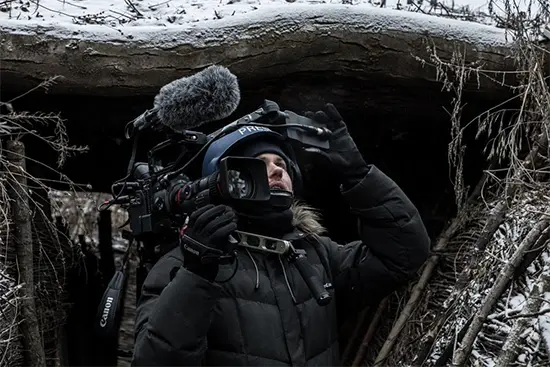
In his new documentary The Last Sacrifice, which makes its UK premiere at Pigeon Shrine FrightFest Glasgow 2025, Russell embarks on a true-crime investigation into the brutal, unsolved 1945 murder of Charles Walton, an elderly farm labourer found horrifically mutilated in a Cotswolds field. His killing—described as a “slaughterhouse horror” by Scotland Yard detective Robert Fabian—sparked nationwide speculation about ritual sacrifice, occult killings, and an eerie, insular community that seemed unwilling to give up its secrets.
Russell, whose work often explores the hidden forces shaping society (Freedom for the Wolf, Price Wars), was initially unaware of the Walton case until he had an epiphany while watching The Wicker Man for the first time in 2022. “I did not see it as a horror film,” he admits. “To me, it was a documentary of what living in Britain was like over the past several years. The madness of Summerisle was indistinguishable from the madness of the British Isles.” When a friend told him about the real-life murder that had likely inspired the film’s themes, Russell knew he had found his next project.
The True Crime That Became Horror Myth
Walton’s death remains one of Britain’s most infamous unsolved murders. Found with a pitchfork through his face and a billhook lodged in his throat, his violent demise baffled authorities. Scotland Yard’s Fabian, a legendary investigator at the time, was brought in to crack the case but left empty-handed. “The fascination for me wasn’t who did it,” Russell explains, “but who do we believe did it, and why? Mysteries are mirrors; they reflect our own fears.”

According to Russell, the Walton case helped cement many of the tropes that have since become staples of British folk horror. “The theories that emerged contained many novel features we hadn’t seen before in fact or fiction. In particular, the idea that the true source of danger wasn’t an outside threat, but an otherwise ‘normal’ insider. The enemy within.”
These fears, Russell argues, bled into the genre-defining folk horror films of the late 1960s and early ’70s, including The Wicker Man, Blood on Satan’s Claw, and The Witchfinder General. These films consistently feature protagonists—often teachers, doctors, or policemen—who arrive in a rural setting, only to find themselves at the mercy of a society governed by arcane beliefs. “The British films all feature a member of the new professional class who goes to a strange English village,” Russell explains. “They’re the victim of a conspiracy between the peasantry and an aristocrat who commands their loyalty through pagan gods or voodoo magic. They are paranoid tales of a reactionary counter-revolution.”
Fact and Fiction Collide
The enduring influence of the Walton murder, Russell suggests, was not only felt in cinema but also in the shifting perceptions of post-war Britain. “The folk horror movies of the late ’60s and early ’70s are the result of a collision of cultural forces. They’re an incoherent mishmash of all sorts of weird and wonderful things that were happening in Britain at the time,” he explains. “The murder, the rise of Wicca, the counterculture, the hippie movement, women’s liberation, the sexual revolution, class war—it all kind of swirled together in a technicolor vortex around the figure of the witch.”

This cultural melting pot was stoked by the media’s fixation on ritual sacrifice and the occult. Yet, Russell is skeptical about whether this sensationalism truly hindered the investigation. “There was a delayed reaction, mostly spurned on by the chief inspector of the case, Robert Fabian, whose memories, after he retired, brought the occult aspects to the public’s attention.” In his 1945 police report, Fabian complained that the villagers were “secretive” and uncooperative, suggesting that the real obstruction to justice wasn’t media hysteria, but a community unwilling to speak out.
The Evolution of Folk Horror
Russell’s deep dive into the folk horror subgenre has given him a new appreciation for its evolution. While the British strand of folk horror is rooted in class tensions and the struggle between modernity and tradition, he sees American folk horror as distinct. “The American films are about going somewhere foreign and are led by naive tourists,” he observes, citing examples like An American Werewolf in London and Midsommar. “They encounter not a class conflict, but a cult—an ideology taken to a dangerous extreme.”
As for his own favourite folk horror films, Russell admits he was relatively new to the genre when he started the project. “It was a true joy to take a compressed crash course,” he says, listing Panda’s Fen, The Plague of the Zombies, Twins of Evil, and Demons of the Mind among his top picks.

What’s Next?
With The Last Sacrifice about to make its mark on the festival circuit, Russell is already looking ahead. “I have two fiction horror films that are in development and another film archive doc,” he teases. Given his track record of insightful, boundary-pushing work, his next projects are bound to be as thought-provoking as they are chilling.
For now, The Last Sacrifice offers a compelling look at how a single unsolved murder shaped the landscape of horror storytelling.
THE LAST SACRIFICE is showing at the Glasgow Film Theatre on Fri 7 March, 3.30pm, as part of Pigeon Shrine FrightFest Glasgow 2025. For more information and tickets, visit: frightfest.co.uk/2025Glasgow/


2 Comments
[…] makes its UK premiere at Pigeon Shrine FrightFest Glasgow 2025. Directed by award-winning filmmaker Rupert Russell, this investigative documentary delves into the notorious 1945 witchcraft murder of Charles Walton, […]
[…] “The fascination for me wasn’t who did it, but who do we believe did it, and why? Mysteries are mirrors; they reflect our own fears.” (Love Horror film reviews and news) […]