
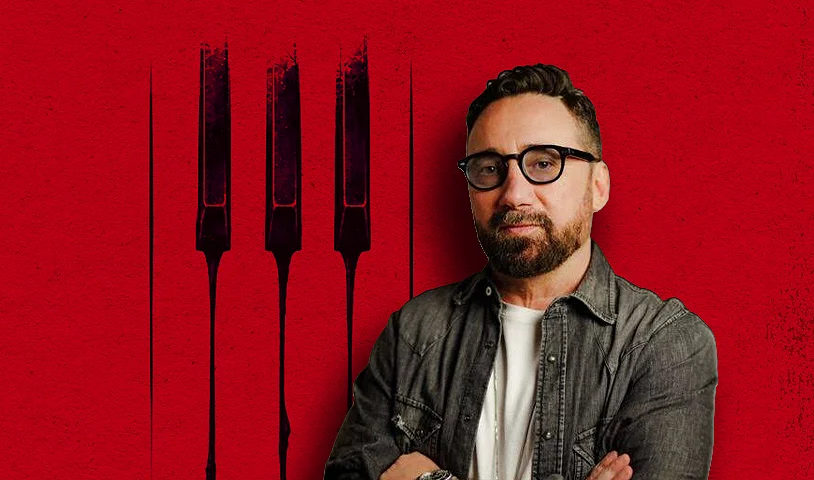
Exclusive Interview: Writer/Director of ‘Malum’, Anthony DiBlasi
- Interview
 Peter Campbell
- 1
- 15 minutes read
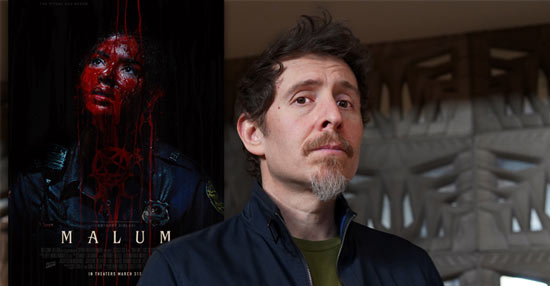
With a career steeped in the rich tapestry of horror, Anthony DiBlasi has carved his name into the annals of the genre, weaving tales that linger in the darkest recesses of our imagination.
Today marks a pivotal moment in his chilling repertoire as his latest creation, Malum, creeps its way onto UK screens, poised to ensnare audiences in its sinister embrace. An atmospheric symphony of dread and suspense, Malum promises audiences a descent into the abyss of fear, guided by the steady hand of a master craftsman.
But who is the man behind the camera, orchestrating this journey into the unknown? Born and raised in Boston, DiBlasi’s odyssey through the realms of horror began at Emerson College, where he honed his craft amidst the whispers of cinematic legends. It was there that he first felt the irresistible pull of the silver screen, a siren’s call that would lead him into the embrace of his mentor and collaborator, Clive Barker.
Under Barker’s tutelage, DiBlasi’s talents flourished, culminating in a directorial debut that made an impact with audiences worldwide. Dread, a harrowing exploration of the human psyche, marked the emergence of a visionary filmmaker, earning DiBlasi accolades and acclaim in equal measure.
Since then, his cinematic journey has taken him through the haunted corridors of police precincts (the acclaimed Last Shift) and the depths of psychological terror (Extremity), each film a testament to his unwavering commitment to chilling storytelling.
Now, with Malum, DiBlasi invites audiences to confront their deepest fears once more, as he unveils a reimagining of Last Shift. With Natalie Victoria by his side, his creative partner and muse, DiBlasi beckons brave souls to join him on a journey into darkness, where the line between reality and nightmare blurs, and the true meaning of terror awaits.
Ahead of the UK theatrical release of Malum, we sat down with Anthony DiBlasi to delve into the heart of his latest creation, and to discover what drives this modern master of horror to continue pushing the boundaries of fear.
Love Horror: Dread, your directorial debut, was based on a Clive Barker short story. What drew you to Barker’s work, what was he like to work with and how did you translate his narrative into a compelling feature film?
Anthony Diblasi: When I started working with Clive I hadn’t read all his books, I was very familiar with his films. So I just started reading everything of his. I was really drawn to Dread because one, it was his only non supernatural story at the time, and two, I was just out of college so I related to the characters.
Clive was a blast to work with, he’s so knowledgeable and inspiring because of that knowledge, he always has such subtle ways to define what horror is, and all the years I got to work with him was a blessing. Dread was essentially 30 pages, and when we were developing it at the studios they always wanted to make it a pg-13 college horror film. They always wanted to cut the meat scene out, which to me was the whole crux of the short story. So when I tackled that script it was about keeping as much of the short story as I could but expanding it in a way that felt like it was my voice, but also adding to Clive’s themes.
If you go back and watch, the Laura Donnelly character, Abby, she’s not in the short story. But I felt someone having a birthmark on half their body, would be a great way to visually represent Dread. She’s a character fearful just to be seen.
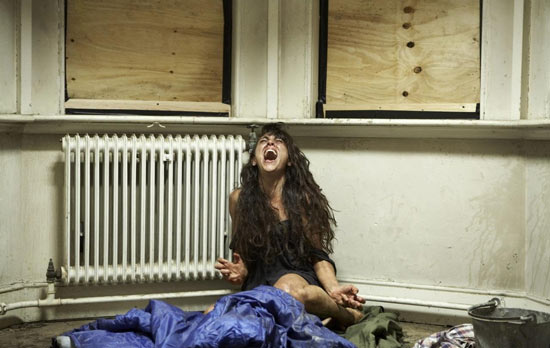
Last Shift received critical acclaim for its atmospheric horror and strong performances. What inspired the story behind this film, and what were some of the challenges you faced in bringing it to life?
It started with wanting to do a film heavily based around sound design. We thought a dispatch office would be an ideal location and that morphed into the decommissioned police station. We thought the Manson family is scary, but it would be scarier if they were ghosts. It was a hard shoot for sure, it was very short amount of time, and the whole schedule was night shoots, which can be exhausting for the crew, but on the upside gives it a more authentic feel.
Your latest project, Malum, is described as a re-imagining of Last Shift. What motivated you to revisit this story, and how does Malum differ from its predecessor?
With Last Shift, we had to leave a lot on the table due to its budget. So when Welcome Villain approached us about revisiting the material with a larger budget, I felt we could deliver on a deeper mythology and indulge in practical effects. It’s a completely different film in my opinion, the broad strokes are intact but I never felt like I was making the same film, changes with the script take the story in a different direction and my approach to the style and music create a more in-your-face film.
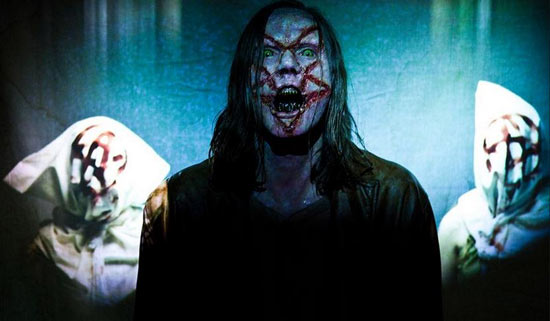
Malum is an excellent example of a film that uses limited locations and cast to evoke feelings far greater than the confines of the four walls of a police station. What tricks did you employ to make the film so cerebral and were you particularly influenced by any other films or film makers?
I think I was mainly trying to keep the audience on their toes, always questioning what was real and what wasn’t. Jessica is descending into madness and that allows me to jump away from the station and times and explore her emotional state and because it’s supernatural I could reveal story elements in a way that was very cerebral. Is this only happening in her mind, or is it physically happening to her? With Malum I went back and watched some of my favorites: Sinister, Haxan, Onibaba and of course because I was drawing from Last Shift, I only watched it once before Scott and I started writing Malum.
With a film like Malum, a lot of the focus is obviously on your lead, in this case Jessica Sula. Can you tell us a bit about the process for selecting the actor for such an integral role, and perhaps what it was that drew you to Jessica?
We had a great casting director based in New York named Joey Montenarello, and we were kicking around names, Jess Sula came up and I thought she was excellent in SPLIT. We set up a call and immediately Jess and I hit it off, and I think that’s a big part of it, relating to the actor and knowing that you can work long hours with each other and develop a bond that’s going to translate into a short hand, and Jess and I had that very quickly.
I told her right off the bat how demanding the role would be because it’s her 90 percent of the time, it’s extremely exhausting. But she was excited to take on the challenge. And it was exhausting for her, she was really put through the wringer.
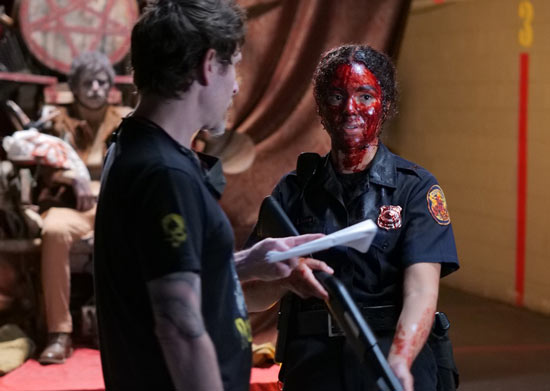
Malum is your 11th outing as a director and during your time you must have experienced a lot of highs and lows during film productions. Did this film face any unique challenges?
We shot in Kentucky in the middle of the summer. The abandoned station was extremely hot, especially up in the cell floors we were shooting in. When we went there for the scout the heat had been running… probably non stop since it closed the year before. We turned a 4 hour scout into a 1 hour scout because it was just too hot to be in there. So then the challenge was to get that place as cooled down as we could before the shoot, but it was still a very hot shoot.
Also crewing up in Kentucky was tough, we spent a lot of our budget on flying in crew and housing them, and while it’s extremely important to have a capable crew, you hope you can hire as many locals as possible, because flights and housing don’t show up on the screen.
Working on films that deal with such dark subject matter, are you ever worried that you might get unwanted attention from people (or beings) with sinister intentions?
I think intentions is the key word. I’m drawn to dark material and enjoy working on dark subject matter but my intentions are never to draw people into darkness. The sets are always light and fun, we have fun making these films, we take the work seriously but you have to be creative and collaborative so I don’t ever feel the darkness. It’s more so in the writing and researching process that you can go down that emotional rabbit hole.
But in general I’m a light person, and so is my wife, so I never really worry about that, but also horror fans are some of the most gentle and welcoming people. It’s the comedy crowds you have to worry about.
You’ve received a number of awards for your work to date, including twice for ‘best director’. How does this kind of recognition impact your career and shape your future projects?
At this level, honestly it doesn’t. I appreciate the recognition for sure but I don’t know if it’s ever opened up any doors. I just keep moving, keep writing and creating and there’s so many projects I’ve wanted to do that I haven’t gotten to yet, so I feel like the discipline to sit down and get the words on the page is what really molds the future projects.
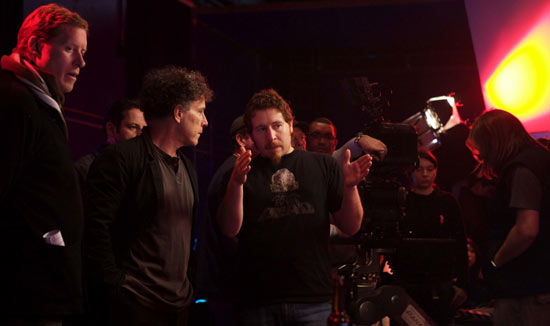
As both a director and a writer, how do you balance the creative aspects of filmmaking with the practical considerations of production?
Working with Clive, I started as an executive and then became a producer before I was able to direct my first film. So that experience gave me a very well rounded approach to directing. I know how to work with a budget because I started on that side, I know how to work with studio execs because I was an exec and collaborated with so many other execs on projects.
I also got to work with a lot of writers and directors and learn from their triumphs and pitfalls. But basically you have to be aware of the budget, you have to know what departments are getting the money and if you agree with those choices, that way you can really hone your creative choices and make sure you’re accomplishing what you need to.
Collaboration seems to be a recurring theme in your career, from working with Clive Barker to co-writing and directing films. How do you approach collaboration, and what do you value most in creative partnerships?
Film is the carnival and summer camp all rolled up into one. Collaboration with the cast and crew is at the heart of that, you create this wonderland shared experience. Some films more than others, but even the hardest films still build that comradery. With writing, you need that sounding board, I’m never afraid of other people’s ideas, I want that input, it’s only going to make your work better. And that’s from the crew as well, I trust every department to bring their best ideas to the table, I want them to, I want them to feel inspired.
Natalie Victoria, your wife and creative partner, has collaborated with you on multiple projects. How does your personal and professional relationship influence your work, and what are the advantages and challenges of working together?
Luckily I have the best wife ever, so the challenges are few and far between, and I genuinely mean that. Both in the director/actor aspect but also in writing. We’ve been writing together the last few years and we have a good system. She’s very character driven, which makes sense, and I’m extremely plot and structure driven, so we keep each other in check and can argue and get passionate about what we think is the drive of a scene or a story. Also she’s much more mainstream than me. I’m drawn to the weird and the niche so she broadens my storytelling in that way.
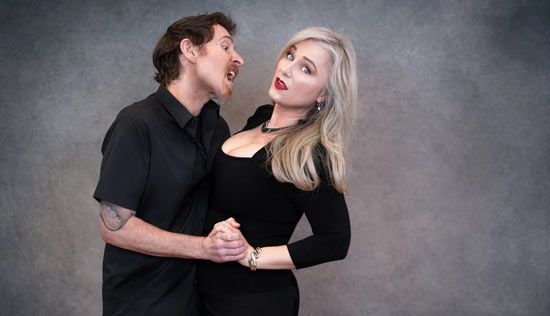
Your career has seen success both in independent filmmaking and working with production companies. What advice would you give to aspiring filmmakers navigating the industry’s different pathways?
I think the advice changes year by year. I think you should write and you should shoot. The technology has become so accessible to everyone that you can shoot a short on your phone if you had to and still make an impact. Submit those scripts and shorts to festivals and competitions that matter. Look at who’s judging these competitions. Is your work getting in front of industry people? If so, then submit. If you can place high in the competitions and get some success at a festival you’ll start meeting the right people.
Horror is a genre that often reflects societal fears and anxieties. What do you think draws audiences to horror films, and how do you use the genre to explore deeper themes or messages?
I think most horror is a cautionary tale, and I think people seek that out because it comforts them. It allows people to explore the terrifying in a safe space. To get close to death without having to get too close. My dreams about ghosts are often times some of the most comforting because they’re awe inspiring. I think there should always be some awe and beauty elicited while shocking and terrifying the audience.
Malum is out in UK cinemas from today (26th April) and will be available on digital and Blu-ray from Monday 27th May.
Malum trailer




1 Comment
[…] at 8:00 PM with Dread: Confessions of Cast and Crew, an in-depth discussion featuring director Anthony DiBlasi, alongside special insights from Barker himself. Known for Hellraiser and Books of Blood, […]