Never After Dark (2026) Review
- Ghosts Horror Film Reviews
 Darren Gaskell
- 0
- 5 minutes read
Airi (Moeka Hoshi) is a wandering medium who makes her living locating and guiding restless spirits from this world to the next. Her latest assignment is at the isolated country residence of Teiko (Tae Kimura) where strange things are happening. What begins as a familiar case of ghostbusting quickly turns sinister as Airi and those around her are threatened by a malevolent entity who is both not all and much more than they seem…
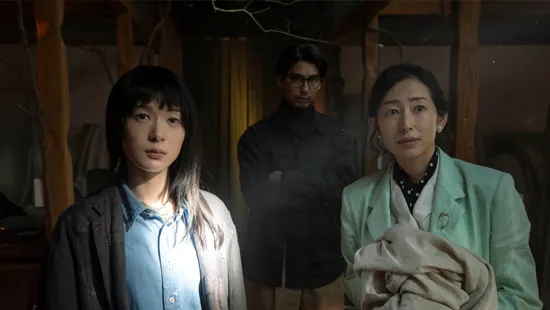
Yes, it’s “I see dead people” but given fresh, vital and hugely entertaining life in writer/director Dave Boyle’s smart spin on all of those ghostly tropes. Airi has her own spirit guide – her deceased, big sister Miku (Kurumi Inagaki) – who will show up in mirrors to give advice and encouragement to her sibling on this side of the veil. It’s not a spoiler to mention this plot point as it’s established almost immediately and it’s Miku who gets the initial inkling that this particular spectre is not going to go quietly.
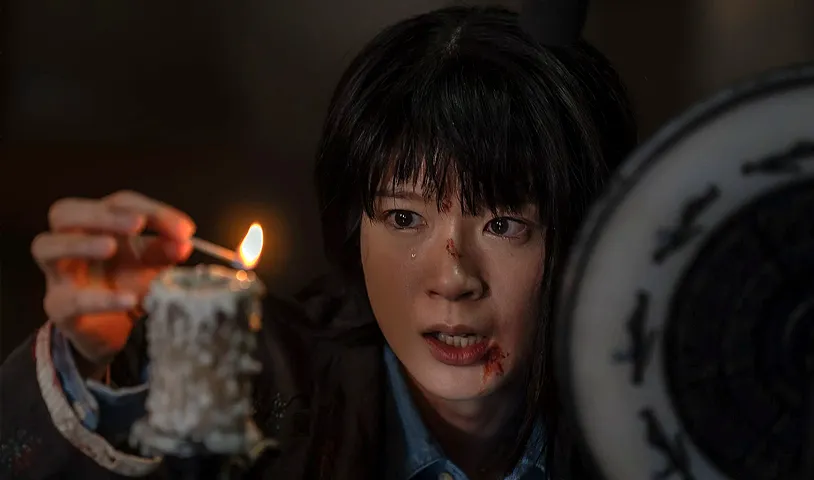
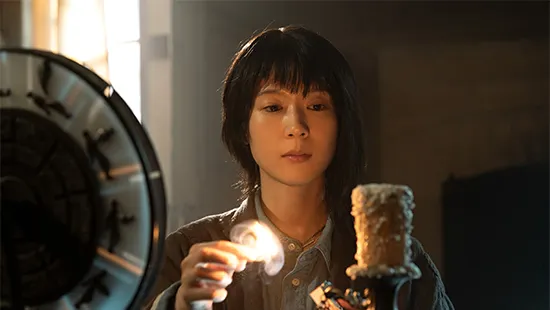
In terms of procedure, Airi has her own particular way of stepping into the spirit world, using a lock of hair and lighting a candle – not especially out of the ordinary – but then spinning a zoetrope which allows her to focus on the imagery and fall into a trance which then facilitates projection into the world of the dead, returning only to the land of the living when her supernatural self decides that it’s time to extinguish the flame of the candle. This is used to fun, suspenseful effect in a couple of sequences as she’s pursued around the mini version of the Overlook but, like the rest of the film, the concept isn’t overplayed.
The first half of Never After Dark sets up the dynamics between the characters, including Airi’s spiky interactions with Teiko’s son Gunzi (Kento Kaku) who doesn’t really believe in mediums beyond their ability to make his gullible mum part with money. However, as the twists and turns reveal themselves, the relationships between the protagonists develop in unhurried, natural ways and those changes inform the final act, which sees all concerned trapped in the last place most of them would want to be.
At an hour and three quarters in length this would, on the face of it, be around fifteen minutes too long to retain a consistent grip on its audience but Never After Dark trusts its viewers to come along for the ride and wait for the rewarding ways in which the unexpected manifests itself. It could have loaded the proceedings with cheap jump scares but never does and resolutely avoids a race to the finish.
Boyle allows the viewer to get to know the players, especially Airi, who is unable to work at night because the veil between worlds is too thin and spends the evenings contemplating life and, in one amusing digression, getting drunk and dancing around the rooms. This also points up the connection between Airi and Miku and the realisation between both of them that the living one isn’t particularly comfortable around people.
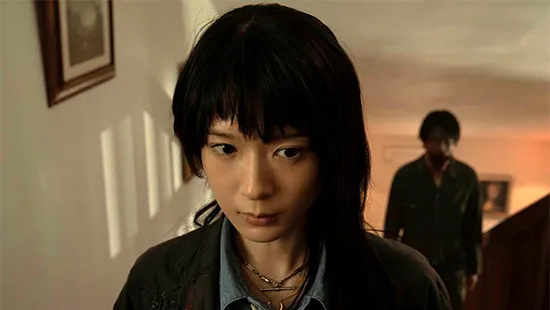
For anyone who’s a little jaded about J-Horror, Never After Dark brings a fresh perspective to this type of tale, with the troubled spirit having its own unique modus operandi and one particularly difficult challenge for Airi to overcome. There are numerous bloody moments but the level of gore is generally restrained, although viewers with a phobia of damage being wreaked on teeth may find themselves looking away on more than one occasion. That said, there’s often a fun, charming air hanging over what would normally be unrelentingly bleak material and there’s a comforting reliance on straightforward effects and old school camera angles – much is glimpsed in mirrors, for instance – rather than a glut of CGI.
By shadowing Airi on her adventures, Never After Dark lets the audience in on what’s scary and what’s not to our protagonist which removes some of the fear of the unknown but this means that the rug pulls are all the more surprising and delightfully chilling. It all builds to a tense, not to mention bloody, climax as the featured sister act is put to the ultimate test and the final scene possesses a huge amount of emotional resonance. From set up to resolution, the telling of the tale is always slightly askew, underpinned by a brilliant performance from Hoshi and a sprinkling of potent jolts. Decades on from Jack Torrance’s winter job, this is another haunted hotel well worth checking into.
| Movie Rating: |   |
Never After Dark trailer