
The Black Phone Q&A’s with Scott Derrickson & Ethan Hawke
- Interview
 Peter Campbell
- 0
- 22 minutes read
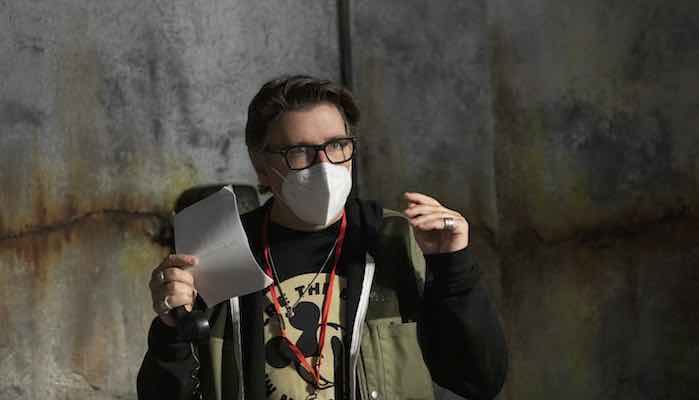
SCOTT DERRICKSON Q&A (WRITER / PRODUCER / DIRECTOR)
How did this project come together?
Well, it came together as a result of a few things. I’ve been in therapy for a couple of years, mostly dealing with my childhood, and then I got excited about this project when I combined Joe Hill’s short story with my own experience growing up in North Denver in the late 70’s. That’s essentially what the screenplay is.
What appealed to you about the story?
I believe Joe is a very unique writer. I can’t think of another horror writer who can approach such dark material from the point of view of love, with great compassion and empathy. And he doesn’t compromise on the scariness because of that. I read the short story The Black Phone when it was first published 18 years ago, and it always stuck with me. Then I thought it would be a great idea for a movie because I had never seen anything that combined a serial killer and abductor with the supernatural, but also because of the empathy I felt in the writing. I really felt that the author cared about the kid in the story. So, a very important aspect for me in making this film was to retain that point of view of compassion and love, while telling a truly terrifying and otherwise very grim tale.
And you have a terrifying villain in The Grabber. What did an actor of the caliber of Ethan Hawke bring to that role?
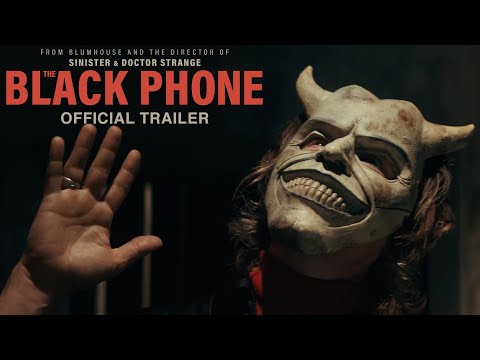
I didn’t write the script with Ethan in mind, but when I finished it with my writing partner Robert Cargill, he was the first person I wanted to send it to because of the uniqueness of his voice, which is very distinctive and has real range. He can make his voice low and gravely but also high and light, effortlessly moving it around, and I felt that could be a very important and valuable aspect of the character. And then tailoring to him the mask he wears was important too. Initially, I think all we wrote in the script was that it was an old leathery mask with the devil painted on it, either smiling or frowning; but once Ethan signed on, I felt inspired to do something more elaborate with the mask, like splitting it in half so he could show just his eyes or his mouth. For me, these aspects were interesting, but in the end how The Grabber actually functions in the movie is all thanks to Ethan. He came to the set with an understanding of the character that exceeded my own.
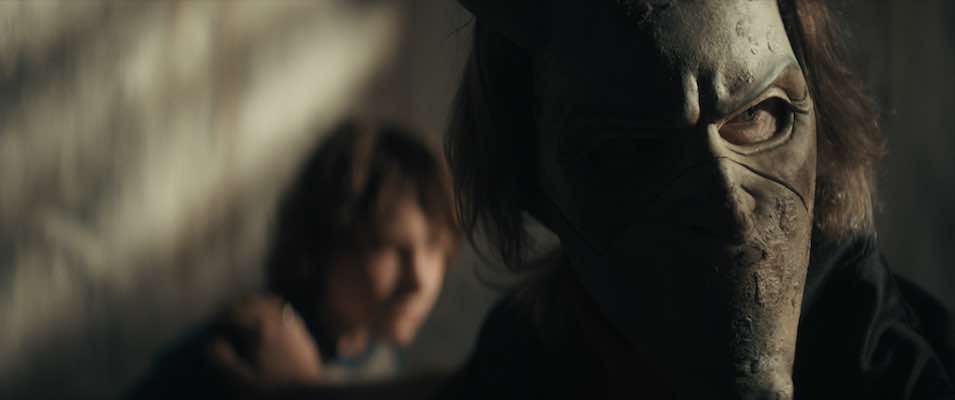
It’s unnerving how his mask constantly changes…
Yes, and we were very specific about how and when he wears it. So, there was a revision of the script once I came up with the idea of splitting the mask, trying to imagine in each scene which one he would wear and why, and how it would impact what he says and does. Masks are scary and obviously a huge iconic component of a lot of horror films, and I was trying to expand upon that. I just tried to do something that felt like an evolution of the idea of the masked killer. That was one of the ambitions of this movie.
And Ethan delivered an extraordinary performance, making sure The Grabber was a complex villain.
He definitely got the complexity of the character that was in the screenplay, and then he added some extra layers. And I give him the credit for trusting the mask to do what The Grabber wanted it to do, because wearing a mask was a way for the character to be himself and honest with what he felt and did.
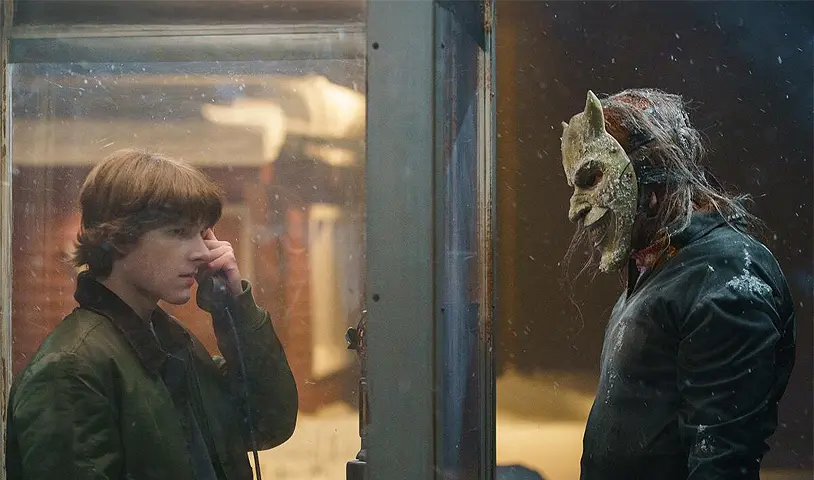
After having abducted several young kids in the town where the action takes place, with fatal consequences, The Grabber targets the teenager Finney Shaw, who struggles to survive and outwit him. There is a fascinating and terrifying cat and mouse relationship going on there, right?
Yes, and much more so than The Grabber intended there to be. I think Finney was constantly surprising him with his intelligence and willfulness, and also with the ghosts of the kids that are calling him on this mysterious black phone. I think that what makes a movie like this work depends on how it plays on the audience’s suspense and fear, because there is not a guarantee in the genre that the hero is going to get away. Sometimes, horror films can end very badly; so, one of the things that adds to the suspense of The Black Phone is that you don’t know where it is going.
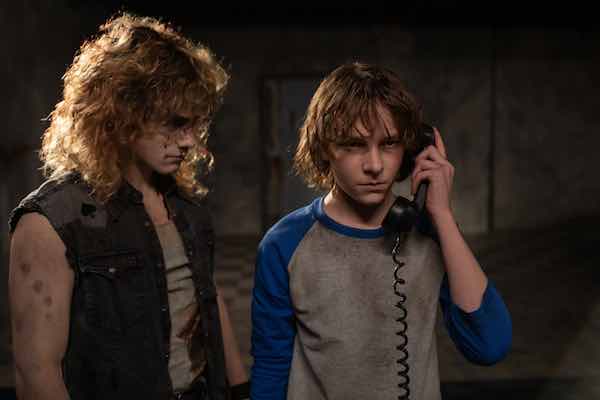
Mason Thames delivers a powerful performance as Finney.
It’s very rare to find an actor as young as him with that kind of raw talent, which involves a real powerful, thorough, and emotional understanding of what a character would think and do in a certain circumstance. So often I didn’t have to give him any direction at all, as he just knew how to process Finney’s thoughts on camera. When you watch him, you realize that he doesn’t have an untruthful beat in the whole movie. This way, in every scene you can sort of see what is happening inside: how he is thinking about the situation; how is reacting to things; how he is plotting things. And the more I worked on the movie in post-production, the more I marveled at his performance. It is flawless.
And his character’s connection with his sister is also key in the story.
Oh yes, more than anything else, the movie is really about the bond between Finney and Gwen. And the pressure I felt had to do with the fact that we only see them on camera together for the first 25 minutes or so of the film, because I had to make sure the audience cared about them as characters and also about their relationship. The biggest challenge of the movie was getting that to work, so that when they were separated you felt the impact of that and the importance of Gwen’s role.
What can you say of Madeleine McGraw and her performance in that role?
Madeleine is a young star. She was astronomically better than any other actress that read for that role. I was so amazed by her audition that I moved the whole production for her, after finding out that she wasn’t available for our initial shooting schedule. So, I called producer Jason Blum and told him that we had to shoot later because I needed her to play Gwen, and even though he probably thought I was crazy, he supported me and agreed.

The siblings have their own problems at home with their father, played by Jeremy Davies, which is another important part of the story.
Yes, it is. There are a lot of things going on there about overcoming trauma and the resilience of childhood, as they have to survive him, the bullies at school, and this abductor and serial killer.
You clearly didn’t listen to that old saying in the industry about trying to avoid working with dogs or kids, as you have both in the film.
I love working with kids! The important thing is to find the right child actor, and I dedicate a lot of time to interviewing them and meeting their parents too, as I need to know that the kid has the right emotional support. I just love how honest and truthful kids are, and I never talk down to them. Regarding the dog scenes, I left them to my beloved second unit director, Maggie Levin. So, I direct the kids, but the animals go to the second unit – which in this case did a great job.
This movie is truly haunting, without having to rely on easy scares to capture the audience’s attention.
I love a good jump scare, but it’s like cotton candy in the sense that it creates a little spike in your mouth and then it is gone without leaving a real lasting impact. I think what makes an effective horror movie is tone and suspense, because they create enduring experiences that stay with you after the film is over. There are no jump scares or much gore or even violence that I remember in Robert Eggers’ movie The Witch, but it took me days to shake off the feeling of it. That’s when you know you have seen something remarkable.
So, do you believe that watching a film like The Black Phone can cathartically help us navigate our fears?
Yes, which is precisely why I work in this genre. Good horror taps into the unspoken and unspeakable fears that we carry, and I believe that experiencing it with a movie leads to a sort of live inoculation, helping your system build up immunity to take on the real thing if you encounter it. I think horror art and cinema works like that, because it can bolster your capacity to survive the real evils that are in the world. Referring to the cathartic effect of it, Wes Craven said that good horror movies don’t cause fear but actually help release it, and I agree and really like that idea. It has been my relationship with the genre both as a film viewer and a filmmaker.
That mysterious black phone that keeps on ringing in the basement where Finney is being held captive, even though The Grabber insists is broken, adds to the suspense and brings the supernatural element of the story into play.
Yes, that was Joe Hill’s idea, and I remember that when I first read the story, I thought that just a black phone in a basement by itself was something simple and creepy. Funnily enough, right after the film debuted at a film festival last Fall, I moved into a new home in Los Angeles, and when I was in the living room with Jason Blum, I heard a phone ringing in the basement and thought, “Oh my God! What’s happening?” So, I went down and discovered that Jason had installed a black phone there that he was calling…
Have you kept it?
Oh yes, it’s still there. It’s great!
Producer Jason Blum and his company Blumhouse Productions continues, year after year, to be a key voice in this genre. What can you say about him?
Jason has probably become my closest friend in this business. He just loves the genre and is very protective with his directors. I think that everything he has been able to accomplish flows out of his passion for watching and making movies.
So, what should the audience expect from The Black Phone then?
A very suspenseful and original supernatural thriller with a lot of heart and soul.
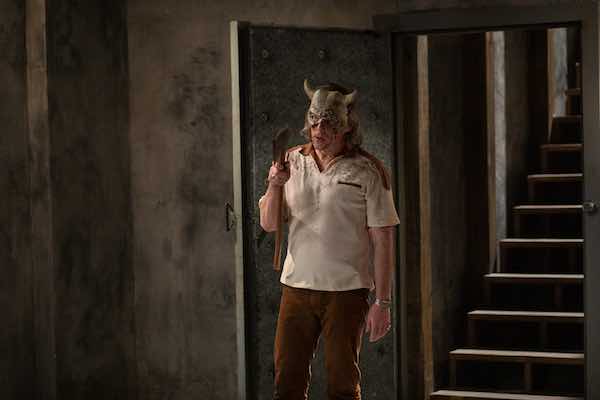
ETHAN HAWKE Q&A (THE GRABBER)
What was it about The Black Phone that made you want to be a part of it?
About 10 years ago, I worked with Scott Derrickson on Sinister, and I was so glad that I got to work on that film because I learned a lot from him about genre movies and how they can intersect with the performance. I’ve followed his career over the years and have a lot of respect for him. So, when someone like that offers you a movie, you take it seriously. Also, I felt that unlike 95% of scary movies, The Black Phone had a real beautiful beating heart in the middle of it.
How would you describe that beating heart?
Well, the film is scary and terrifying, but it has a heart of gold in the sense that it’s really about a pair of siblings helping each other, learning how to take care of themselves. I just found it oddly moving, and I couldn’t put the script down when I read it.
You play a terrifying and complex character known as The Grabber. Who is he in your eyes?
He is obviously an extremely damaged person. In a movie about parents passing on their torments and how to avoid it, in a lot of ways, it is about how a generation tries to stomp out the love in the one underneath it. So, I found that it was easier to portray him as a wounded animal that could do whatever he wanted because the world, in his eyes, was so unkind to him. In that sense, I think he feels a sense of justice when inflicting pain on others because of what was done to him. Generally, people who lie a lot are people who were lied to a lot. So, they don’t feel guilty about it because they believe it’s fair.
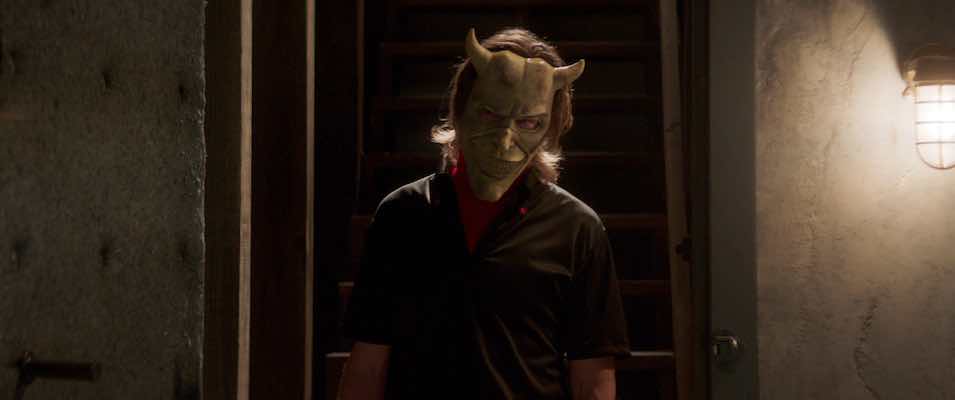
He always wears a mask. What can you say about the experience of acting with your face covered?
There was something liberating about the mask work. When I was a kid, I remember going to drama class and studying what a mask can do to body language and voice, and how it can impact a performers relationship with the audience. Also, living through a pandemic, with our faces are covered all the time, I found it very interesting.
And the mask constantly changes…
That’s where Scott’s brain is so special as it was his idea to have the mask constantly change. They put a lot of artistry into the mask: sometimes it covered the top half of my face, while other times it covered the bottom; sometimes it was on one side, while other times it was on the other side; sometimes it was a smile, while other times it was a frown or had no expression at all. Scott and I would talk about this line in Scorsese’s Bob Dylan documentary Rolling Thunder Revue that says, “you know somebody is telling you the truth when they are wearing a mask, and that they’re lying when they are not.” What that relationship is to identity lies in the truth and is fascinating because we are all scared of not knowing the truth and hate being misunderstood. There was just something so powerful about how they designed these masks, and it was fun to have them all out and decide which one was right for each scene. Masks are important archetypes of the horror genre.
After having abducted several young kids in the town where the action takes place, with fatal consequences, The Grabber targets a teenage boy who struggles to survive and outwit him. Mason Thames delivers a powerful performance in that role as Finney Shaw.
It’s so much fun when you meet these young people that are so in love with movies. I went through it with Joshua Caleb Johnson on The Good Lord Bird, and with Ellar Coltrane on Boyhood, where you watch these young artists at work who have such a great sense of playfulness and joy. Mason was very excited to be in this movie, and he got so into the film that he made it so much fun to be on set. So, the environment was playful and rich. He is a savvy young performer that did such a good job, and the same thing can be said about Madeleine McGraw, who plays his sister, Gwen.

And then we have this old broken-down black phone attached to the wall in the basement where Mason is being held captive that The Grabber insists doesn’t work, but that keeps on ringing.
I know, it’s just scary! Phones have become a big part of our lives; so, the idea that a phone can connect us with something that we can’t connect to – like the past or the dead – is powerful. And there is something about this old 70’s phone that is ripe with metaphor to me.
You have worked with many great filmmakers. Why do you believe Scott Derrickson has become such an important voice in the horror genre today?
He just knows what he is doing and understands the geometry and math of the genre. For example, certain people know how to make a comedy, but others don’t. So, as an actor, you can be funny as hell on set, but if the edit isn’t quite right, it’s lost. And the same thing is true with a scary movie. There is a science to what taps fear into us, and how to use it effectively to tell a story. The Exorcism of Emily Rose is one of the scariest movies I have ever seen, as is Sinister, and Dr. Strange is also an extremely well-made film. As a performer it is great to be in good hands and know you are safe, and that’s what Scott Derrickson provides. When people know what they are doing, the job gets much easier. In that sense, he’s like a very good coach that knows what position each player should play, and your job, as an artist, becomes fun because you can color in between the lines as much as you want, knowing that, in the end, all the colors are going to match up and the drawing will make sense.
Speaking of the fun, actors tend to say that’s it’s fun to play the villain because you can go out of the box in your portrayal of the character. Do you agree?
Yes, because usually you know that the good guy is going to do the right thing, but you don’t always know what the villain is going to do. That’s why, throughout history, you see actors having a ball with villains. I had a front-row seat watching Denzel Washington play a world-class villain in Training Day. But, to do it well, you don’t “jump the shark,” as they say – you keep on playing the truth of your character and your reality to make sense out of it.

So, what did you think of The Black Phone when you saw it finished?
I thought it was Scott Derrickson’s most mature film to date. I love directors that make the characters come forward, and he knows how to make the story, the characters and the filmmaking become one thing. When you see a genre movie like this that also feels personal, you realize that there is an artist trying to create something out there. And I like films that invite you in like that. I really like Sinister, even though it’s cold and dark, but there is an elegance and warmth to The Black Phone that I hadn’t seen from Scott before. That’s why I think he has matured.
We see that warmth in the relationship between the siblings. Madeleine McGraw who also shines as Mason’s sister, Gwen.
I grew up with a stepsister with whom I had a very powerful connection to, and that sibling bond, that can occur, is strong. Learning how to love each other despite difficult circumstances – and obviously the circumstances in the movie are much more difficult than anything I ever experienced- is, in my opinion, the heart of the movie; especially as we watch these siblings take care of each other and fight for one another. Madeleine is wonderful in that role! I love them [Mason and Madeleine] both, and I think they are the movie.
You obviously didn’t listen to that old saying in the industry about avoiding working with dogs or kids, as you work with both in this film.
Well, I think some actors say that because oftentimes, the scenes that are chosen in the end are the ones where the dogs or the kids are “best” in, but the truth is that with a good director, good young actors, and a decent canine, anything can be accomplished.

The story is also thrilling and surprising, and in a very smart way, without cheating the audience with twists and turns that don’t really make sense from a narrative point of view but are there for the easy scares.
Yes, because typically you feel the director is trying to surprise you when it doesn’t make sense. But with great filmmakers, like Hitchcock, there is a big twist that makes you think: “Why didn’t I see that coming?” That’s when something is smart – when in hindsight it had to be, versus, “Wait, what was that?”
And what do you attribute the success of producer Jason Blum and his company Blumhouse Productions to?
A lot of times, when you deal with genre filmmaking, there is an over-emphasis on trying to entertain and sell something they believe people want to see; but the funny thing is that often what people want to see is precisely what you want to make, and not what you might think they want to see. So, be true to yourself and let the chips fall where they may. And Jason Blum figured out pretty early on that if you let someone like Scott Derrickson execute his vision for a genre film, you can be the great general manager that not only hires the coach but allows him to run the team. Jason lets the players play, and because of that people put their best effort forward. That way, when the artistic troupe is having fun, so is the audience. When you are on a set with Scott you know he’s in charge, which is not always the case with big-budget Hollywood movies.
Do you believe that watching a scary movie like The Black Phone can be cathartic in a way, maybe even helping us navigate our fears?
Fear is a big part of our daily lives, and many times we just don’t know what to do with it. So, putting it on film or on stage has value, because ultimately it teaches us how to handle it.
What scares you in real life?
People unwilling to listen to each other. I think these past couple of years have been difficult for everybody, as we were figuring out how to navigate our fear of the pandemic and of each other. There is so much that we’re fearful of all the time, and I think the arts can help find a meeting ground.
The Black Phone is out now.