

MaXXXine (2024) Review
- Horror Film Reviews
 Tom Atkinson
- 2
- 7 minutes read

In releasing his ‘X’ trilogy, Ti West has delivered three very powerful, yet different films that have each left an indellible mark on horror and modern cinema more widely.
With MaXXXine, the grand finale of this project, West takes us on a visceral journey through 1980s Hollywood, weaving a tale that is as much a slasher as it is a critique of the very industry it depicts. This third installment sees Mia Goth reprise her role as Maxine Minx, the ambitious survivor from X, now thrust into the glitzy yet perilous world of Los Angeles.
Set in 1985, MaXXXine opens with a montage that situates us firmly in the cultural milieu of the period, a time of moral panic, sensationalist media, and the burgeoning home video market. Clips of Ronald Reagan pontificating about American values juxtapose with news reports on the ‘Night Stalker’ and the satanic panic, creating an atmosphere thick with paranoia and fear. It’s clear from the outset that this isn’t just another slasher film; it’s a commentary on the intersection of fame, ambition, and the darker undercurrents of society.
Maxine, played with unrelenting intensity by Goth, has come a long way from the Texas farm where she survived a gruesome massacre. Now in Hollywood, she juggles her career in adult films with her aspiration to break into mainstream cinema. Her big break comes when she’s cast as the lead in a horror sequel, The Puritan II, directed by the imperious Elizabeth Bender (Elizabeth Debicki). Yet, as her star begins to rise, so do the stakes. Maxine finds herself haunted not only by her traumatic past but also by a series of grisly murders targeting those in her orbit, perpetrated by the notorious Night Stalker.
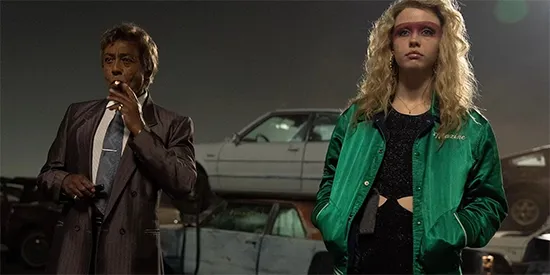
Again, Ti West’s direction is nothing short of masterful, blending elements from various cinematic traditions. There are nods to the lurid aesthetics of giallo, the moral complexities of film noir, and the stylistic flourishes of ‘80s slashers. The cinematography is drenched in neon, with scenes lit in striking hues of blue, red, and purple, creating a dreamlike yet unsettling atmosphere. The film’s use of period-specific techniques, such as VHS tracking lines and grainy film textures, not only grounds the story in its era but also serves as a loving tribute to the golden age of video nasties.
The supporting cast is equally impressive. Kevin Bacon’s portrayal of the sleazy private investigator John Labat is a highlight, channeling the grimy spirit of Chinatown’s Jake Gittes while adding a layer of menacing charm. Giancarlo Esposito brings depth to Teddy Knight, Maxine’s agent, who serves as both mentor and protector in the treacherous world of Hollywood. Elizabeth Debicki’s Elizabeth Bender is a commanding presence, her character’s blend of artistic ambition and ruthless pragmatism offering a stark counterpoint to Maxine’s raw drive for fame.
One of MaXXXine’s strengths is its thematic depth. While it functions effectively as a horror film, it also delves into the sociopolitical landscape of the 1980s. The film explores the hypocrisy of a society obsessed with moral righteousness while indulging in its darkest fantasies. The backdrop of Hollywood’s glittering yet seedy underbelly serves as a metaphor for the film industry itself—an institution capable of great beauty and profound ugliness.
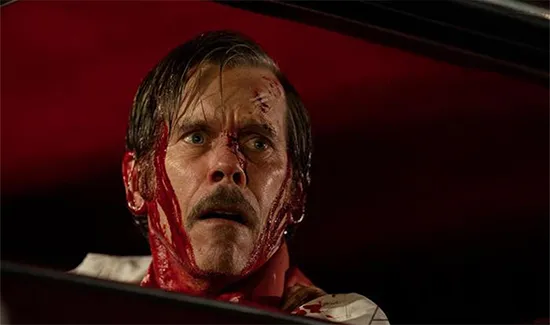
The violence in MaXXXine is both brutal and stylish, staying true to the franchise’s roots while pushing the boundaries of on-screen gore. The alley confrontation early in the film sets the tone, with its visceral depiction of survival and savagery. Subsequent scenes, including a harrowing encounter involving a junkyard car crusher, are executed with a mix of creativity and shock value that will satisfy seasoned horror connoisseurs.
And yet, though the film is classified as a horror, like Pearl before it, it’s much more than that. It’s a period piece, a story of more than just scares and blood. In fact, Maxxxine was far more reminiscent of a nostalgic Tarantino thriller than 80s slasher. This could be misconstrued as a mis-step by fans hoping for a something along the lines of a modern reimagining of horror classics such as Maniac (1980) or Prom Night (1980). In fact, here West manages to deliver an enthralling plot with intriguing characters – much like Once Upon a Time in Hollywood, but minus the extensive periods of dialogue that inevitably stretch the runtime and risk slowing the pace.
Tarantino comparissons and complements aside, MaXXXine is not without its flaws. The plot, while engaging, occasionally falls into predictability, particularly in its third act. The climax, though visually stunning, wraps up in a manner that may leave some viewers desiring more complexity. And whereas in Pearl, Mia Goth shone bright, given ample opportunity to run with monologues and emotion, here her character is more hardened, less vocal, and as a result, not quite as encapsulating. Yet, these shortcomings are mitigated by the film’s sheer stylistic bravado and the strength of its performances.

Goth’s portrayal of Maxine across X and Maxxxine is nothing short of revelatory. She embodies the character’s evolution from a survivor of horror to a hardened, ambitious starlet with a singular focus on her goals. Goth’s ability to convey vulnerability, strength, and a simmering rage all at once makes Maxine one of the most compelling protagonists in recent horror cinema.
MaXXXine is a fitting end to Ti West’s X trilogy, a film that balances homage with innovation, style with substance. It’s a neon-soaked odyssey through the dark heart of Hollywood, a film that revels in its genre roots while offering pointed commentary on the very industry it depicts.
If this indeed marks the end of the trilogy, it secures its place as one of the most distinctive and daring horror series of the 21st century. And if there are more stories to be told in this universe, one can only hope they maintain the same level of audacity and brilliance.
| Movie Rating: |   |
Maxxxine trailer






2 Comments
[…] Mia not only stars as the titular character but also serves as an executive producer in A24’s MaXXXine. Directed by Ti West, this film is the third and final chapter in a highly acclaimed trilogy, all […]
[…] Goth horror delights are set to grace your shelves as Second Sight Films announces that Pearl and MaXXXine are next in line for the Limited Edition 4K treatment, that must be seen to be believed. And we […]