Coffin Joe: Horror Exploitation with a Philosophical Twist
- Horror Film Reviews
Michael J. McMorrow
- 0
- 7 minutes read
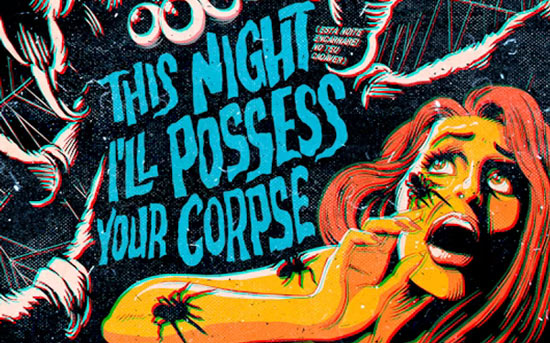 This Night I’ll Possess Your Corpse and its follow-up, The Strange World of Coffin Joe, confirm Brazil’s Coffin Joe as perhaps the world’s most existential movie monster.
Jose Mojica Marins’ Coffin Joe films are exploitation movies, seeking out controversy and reveling in taboo acts such as blasphemy, torture, necrophilia, and cannibalism. And, of course, naked women. So, they have some similar elements found in other exploitation trends of the 1960s, such as American Roughies and Nudies or European shockumentaries such as Mondo Cane.

But the Coffin Joe series’ unique element is existentialism. While characters in exploitation films often face life-or-death violence, never has so much existential exposition been exhibited.
From the opening narration of This Night I’ll Possess Your Corpse (1967), the sequel to the original film, At Midnight I’ll Take Your Soul (1964).
Is life everything and death nothing?
Or is life nothing and death everything?
Consider this excerpt from the introductory narration for The Strange World of Coffin Joe (1968):
What is everything?
What is nothing?
Existence.
What is existence?
Death?
What is death?
Wouldn’t death be the beginning of life?
Or would life be the beginning of death?
And that’s only a tiny part of the colossal word salad that opens the film. OK, so now might be a good time to say the Coffin Joe films have been criticised for being too talky.
Coffin Joe fits the context of the 1960s counter-culture, with Joe constantly challenging societal norms. The existentialism aligns with the surge of interest in philosophy after World War II’s end and the Cold War’s nuclear fatalism. But Coffin Joe isn’t some harmless beatnik or feckless hippie commune dweller.
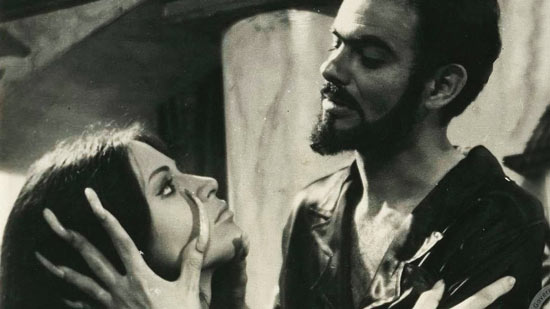
Coffin Joe is an undertaker who doesn’t just creep out his neighbors — no, they are deathly afraid of the little man obsessed with immortality. The small man is capable of great violence and bending women to his will, all the while filling the air with his nonstop blasphemy and lectures on existence and immortality. He is very public with his hatred of religion and looks down on his neighbors as simpletons who are slaves to a false creed.
His fellow villagers simply try to live from one day to the next, always keeping the religious hope of an afterlife in mind. Coffin Joe is not making any bargains with any God. He perceives himself as a candidate for immortality and has a single project in mind. He needs to find the perfect woman and conceive a perfect son with her.
While it’s a little disappointing that his road to immortality is the traditional method of having a child, Joe keeps it interesting by plotting, killing, kidnapping, intimidating, and controlling others.
The first two Coffin Joe films portray the pursuit of his paternal objective. In the first, Joe’s scheming and propensity for murder fail him.
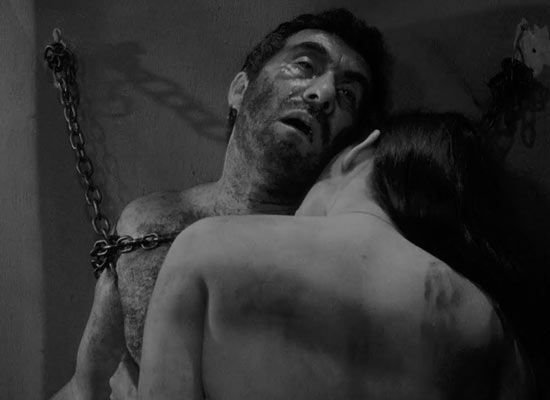
As the second film begins, the villagers are shocked that they failed to kill Coffin Joe. Then Joe is found innocent of all crimes in court. Armed with a cloak of invincibility, Coffin Joe is more terrifying than before.
Joe renews his mating project. But this time, after being burned by his first lover, he changes his strategy. He decides he will kidnap and dominate a bevy of women, putting each one through a series of tests to find the perfect one. It’s almost a sociopathic prototype for reality shows like The Bachelor.
Many B-movie directors struggle to create enough content, but Marins had the opposite problem. He couldn’t rein in his story. While Coffin Joe surprises the audience with many unexpected plot twists, the speechifying is excessive.
Marins’ intense portrayal of his creation carries the film, as the quality of the other performances varies. He creates an eerie world, with classic horror movie lighting and sets augmenting the grim atmosphere of the sparse village.
Outwardly, Joe seems unperturbed by all his murders and trickery. But in private moments, a curse placed on him by one of his victims haunts him. Will this supernatural assist help the villagers turn the tables on Joe?
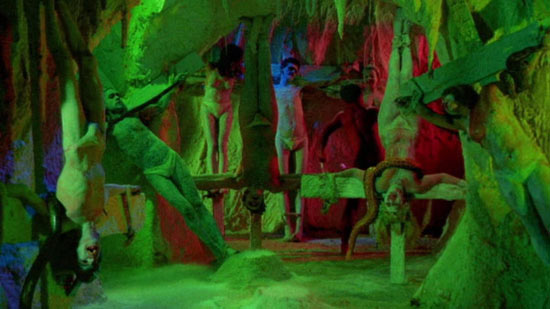
The film suddenly turns from black-and-white to color as Joe endures a weird visit to hell. Then, it returns to its shadowy two-tone world for a final battle with the offended town folk.
Marin’s last 1960s Joe movie, The Strange Word of Coffin Joe, is a trio of vignettes that do not involve the character but are presented by him with a yin-yang philosophic narration.
In the first vignette, a meek doll maker and his four daughters have a surprise for a gang of rapists and robbers. The second piece follows a mute balloon seller obsessed with a young bride. In the last, Marins plays a radical professor who exposes a normal, respectable couple to unspeakable acts.
The Strange Word of Coffin Joe goes further into exploitation, containing scenes of cannibalism, rape, and necrophilia. While it is plenty weird, only the last installment comes close to the eerie mood of the previous two films.
Despite flaws and battles with censors, Marins succeeded in creating an unforgettable character in what is regarded as the first Brazilian horror film. He also challenged conventional morality in Brazilian society and deserves recognition as a significant exploitation filmmaker of the 1960s.
Ratings:
This Night I’ll Possess Your Corpse: 4/5
| Movie Rating: |   |
The Strange World of Coffin Joe: 2/5
| Movie Rating: | |
Both of these films are now available to stream on Shudder.
This Night I’ll Possess Your Corpse trailer