
A Woman Kills [La Femme Bourreau] (1968) Review
- Horror Film Reviews
Michael J. McMorrow
- 0
- 5 minutes read
The recently rediscovered A Woman Kills is a short 1968 French serial killer film directed in an engaging style, but it runs out of story before the final act.
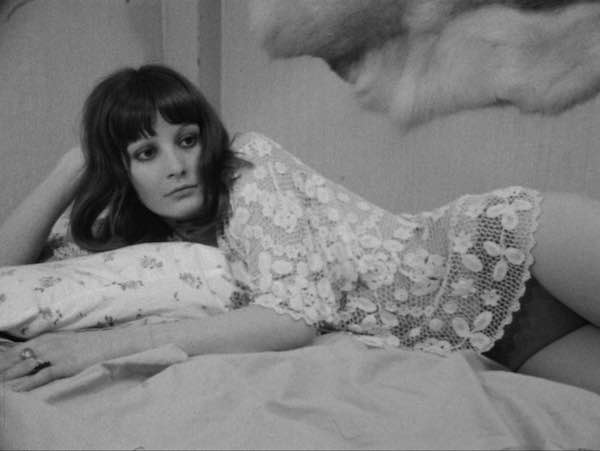
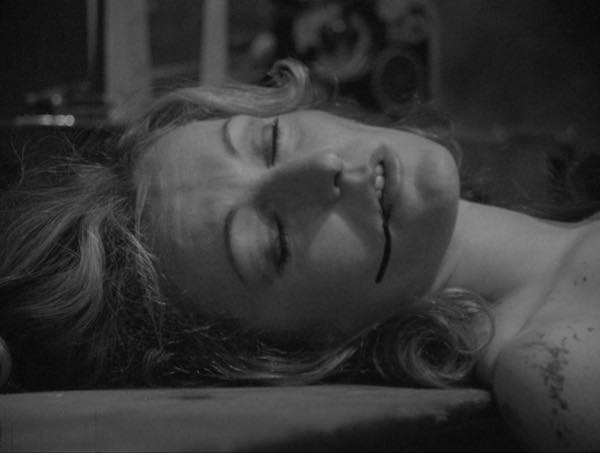
The backstory is delivered rapidly. A young female prostitute is convicted for the serial killing of several other prostitutes. If hanging the blame on a prostitute seems odd, you’re right. After she is executed, the murders continue, shocking Paris again.
At the same time, the government’s official executioner, a man badly damaged by his experiences in France’s war with Algiers, is privately struggling with the mental burden of his job.
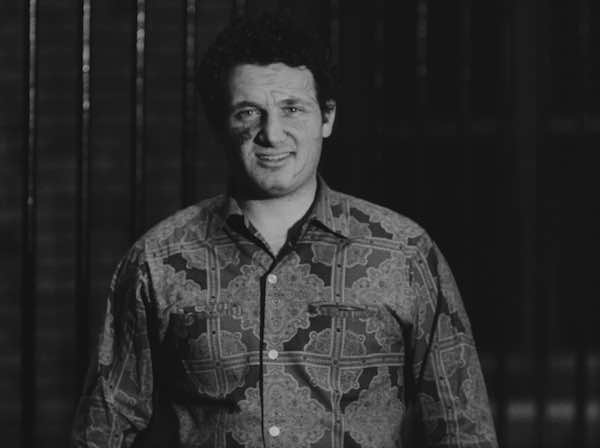
Once a mysterious “lost” film, Luna Park acquired A Woman Kills and worked with director Jean-Denis Bonan to complete the film between 2010 and 2014. The earlier unfinished version was screened for distributors in 1968 but found no takers.
Part of the problem may have been that Director Bonan’s previous short, Tristesse des Anthropophages (1966), which featured feces eating, was censored in France. But A Woman Kills’ short run time and non-conversational narrative style probably didn’t help.
A Woman Kills was filmed as a side project, while Bonan directed a documentary about the 1968 Paris student uprisings. Bonan works within time and budget constraints to create a compelling small-cast film.
While you won’t get any deep insight into the social upheaval of 1968, the existence of this sketch of a movie speaks to the energetic atmosphere of the day. It has a free, improvisational feel, filled with creative camera angles and shot framing.
Bonan chooses to rely on narration, monologues, and imagery rather than simply depicting conversations. Usually, films that rely on voiceovers and dubbed-in dialog suffer from it. But here, the lack of discussion creates an engaging alternate reality.
What appears to be the start of a dialogue between the two key characters is quite different. We soon see that the troubled executioner Luis Guilbeau is not speaking with another person. Instead, he rehearses what he’ll say to police official Solange Lebas. We never see the actual interaction. It’s a clever, low-budget way to move the narrative without a flat procedural scene.
Bonan explains in an interview that he did not want to make a simple piece of realism, instead seeking a different approach: “I wanted a raw camera that could film the apparent and at the same time a camera that could in some way film the “inside.”
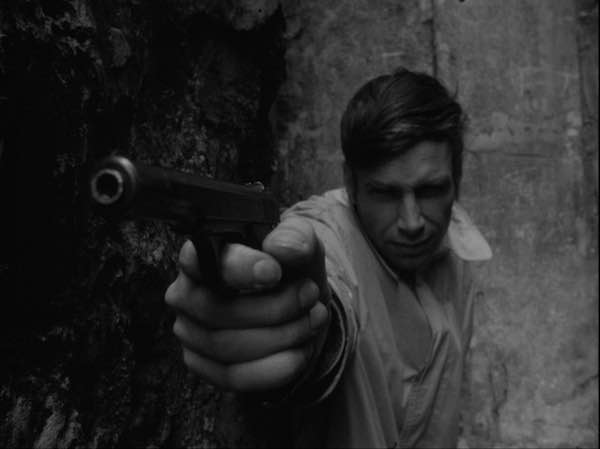
Pushing the narrative along with these methods is effective and drives interest throughout the film’s first half. After that, as the unlikely relationship between Solange and Luis develops, the story settles into a manhunt led by Solange. But A Woman Kills arrives at its conclusion too quickly and becomes a very artsy police procedural.
The depiction of a man who sometimes dresses in drag parallels 1960s Hollywood portrayals of gay and trans characters being so mentally tortured as to be life-threatening or doomed.

Bonan’s quick study doesn’t flesh out all the plot ideas. But A Woman Kills could be a blueprint for a gripping full-length feature where the demise of the young prostitute isn’t relegated to the backstory.
Though style wins over substance in this flawed work, A Woman Kills is worth viewing, at just 70 minutes and overflowing with creativity.
A Woman Kills is streaming on the Arrow platform.
| Movie Rating: |   |
Trailer:

Notes
Bonan interview: http://www.searchmytrash.com/articles/jeandenisbonan(2-23).shtml
Michael J McMorrow writes about movies and pop music at popshots.news