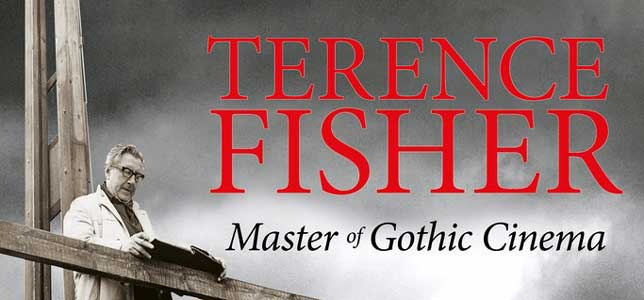
100 Pages of Horror – Terence Fisher: Master of Gothic Cinema by Tony Dalton
- Horror Features
 Alex Humphrey
- 0
- 7 minutes read

In his long an illustrious career British director Terence Fisher made 50 films but his most famous where the ones he made for Hammer. From classics like Dracula Prince of Darkness to his final movie Frankenstein and the Monster from Hell the immensely talented Fisher formed a formidable portfolio gaining acclaim as a Gothic specialist.
Written by Tony Dalton Terence Fisher: Master of Gothic does contain copious amounts of information on Fisher’s Hammer films however the author is very conscious to take a concise look at the rest of the film maker’s career including his non-horror films and early life as an editor.

Part of the reason for this in depth and immensely well researched biography is that although volumes of books have been published on Fisher’s Hammer years many of them barely mentioned his other work. Another reason is that Tony Dalton was a close personal friend to the director until his death in 1980 and kept in touch with his family including his daughter Micky Harding ever since.
Dalton himself has worked in TV and film since 1969 with jobs at the BFI, Granada TV, Everyman Cinema and as publicity consultant on Star Wars and Close Encounters of the Third Kind. Leaving this behind to concentrate on film research, consultancy, and writing his biography of Ray Harryhausen’s life and work, An Animated Life, was published in 2003, followed by four more books about the special effects genius.
Penning a book about his very good friend Terence Fisher seemed inevitable especially as their relationship gave Dalton a privileged and unique perspective. Developed with the kind cooperation and support of Fisher’s daughter Micky, who also wrote the foreword, Terence Fisher: Master of Gothic Cinema is a hefty tomb running at over 490 pages. The result of five years of research and writing it details the fascinating life and films of an auteur that was much more than he seemed.

Our 100 page review takes in the aforementioned foreword by Fisher’s daughter Micky and an introduction by Dalton discussing his friendship and how the pair meet. Reminiscing over afternoon’s spent with Fisher and his wife Morag in their humble home talking about movies and more it is clear to see Dalton’s passion for his friend and this project, a passion that shines through the book on every page.
Interestingly Dalton then goes on to say that although the book deals with the director’s life chronologically from his birth until 1957 the chapters on his horror films are divided up by subject matter. Dalton says this decision is because he wanted to take a fresh approach to the films that so many others had written about before him and he hopes it will “allow us to trace a progression of how the film subjects changed in association with the trends of the day.”
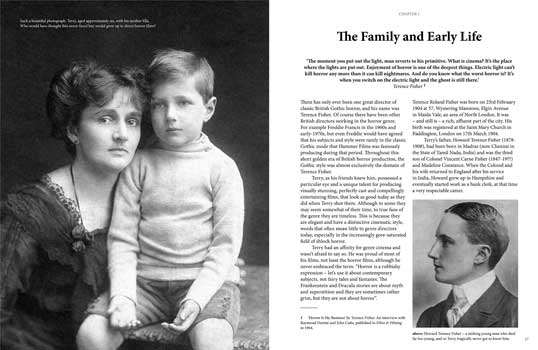
As stated Dalton has done masses of research and the biography succeeds in painting as rich and detailed a picture of a person as it possibly can. Chapters talking about Fisher’s family and his early life are engaging especially when you learn a young Fisher was sent to the school ship the HMS Conway to train for the merchant navy. Gaining a passion for the sea he became a sailor for several years before a few failed career attempts and a failed marriage finally found him realising what he really wanted to do was work in cinema.
Staring out in 1933 at the age of 29 he described himself as ‘the oldest clapper boy in the business’ but managed to stay the distance and graduate to become an editor working on a variety of classic British features. Avoiding the draft for World War 2 due to the importance placed on filmmaking as a tool for propaganda the 40’s were a period of great change for Fisher who met the love of his life and his second wife Morag as well as getting accepted into the Rank Organisations Film Training Programme where he gained the skills necessary to transition from editing to directing.

Working for a number of companies in a variety of genre’s Fisher established a style and a reputation that remained with him throughout his time making movies. A wiz when it came to coming under budget he was much sought after however it wasn’t until his move to Hammer in the early 50’s and his first horror for them, The Curse of Frankenstein, in 1957, that he discovered his true forte.
Moving past the 100 page review limit we come to Fisher’s most famous years at Hammer which are perhaps the most fascinating to horror lovers. Chapters titled Dracula and His Disciples and Frankenstein, Creator of Man are obviously about two of the most famous movie monsters ever created and Fisher’s relationship with both.

The Realm of Science Fiction and A Host of Other Horrors are self-explanatory but more cryptic is the chapter entitled Those Hours of Darkness When the Powers of Evil Are Exalted which deals with his Sherlock Holmes adaptations among other things.
Lastly in the chapter called The Eyes Have It Dalton goes in depth on three of his own favourites from Fishers extensive catalogue talking about The Phantom of the Opera, The Gorgon and my own personal favourite The Devil Rides Out which is a true British classic as insane as it is entertaining.

The final chapter is a fascinating look at projects that might have been including adaptations of Dr Jekyll and Mr Hyde, Dune, various horror comics and Fisher perhaps revisiting Dracula in a couple of forms.
Both a celebration of a great friendship and an insightful delve into a deluge of fantastic films Terence Fisher: Master of Gothic Cinema by Tony Dalton is packed with pictures and posters and is an essential read for Hammer fans everywhere as well as anyone interested in British cinema during this period.
Terence Fisher: Master of Gothic Cinema by Tony Dalton is available now from various book stores online or otherwise so check out the FAB Press website HERE for more info on ordering. Lastly if you want to read previous horror book and graphic novel reviews from our 100 Pages of Horror series, including a host of other FAB Press titles, just click HERE