
Nosferatu (2024) Review
- Horror Film Reviews Vampires
 Tom Atkinson
- 2
- 6 minutes read
Robert Eggers’ long-awaited Nosferatu is not merely a remake of F.W. Murnau’s 1922 silent classic, nor is it a straightforward adaptation of Bram Stoker’s Dracula. It is, instead, a gothic symphony of horror that pays homage to its predecessors while carving its own distinctive path into the annals of vampire lore. With meticulous attention to detail, a palpable sense of dread, and a career-defining performance by Lily-Rose Depp, Eggers delivers a film that is both hauntingly beautiful and deeply unsettling.
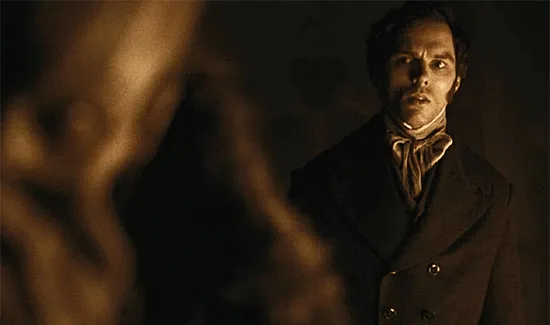
Set in early 19th-century Germany, the film follows Thomas Hutter (Nicholas Hoult), an earnest young estate agent tasked with traveling to Transylvania to meet the enigmatic Count Orlok (Skarsgård). Despite warnings from his wife Ellen (Depp), who has been psychically haunted by Orlok since childhood, Thomas ventures into the count’s foreboding domain. It’s a setup familiar to fans of the genre, yet Eggers imbues it with his trademark precision. The journey to Orlok’s castle is a masterclass in tension-building: shadowy forests, an eerie silence punctuated by the rhythmic thudding of hooves, and oppressive cinematography that seems to crush the viewer under the weight of its dread.
From the outset, it is clear that Eggers has poured his soul into this project. Every frame is meticulously crafted, from the muted, candlelit interiors of the Hutter home to the decrepit grandeur of Orlok’s castle. The film’s production design is an immersive triumph, blending historical authenticity with an almost otherworldly menace.
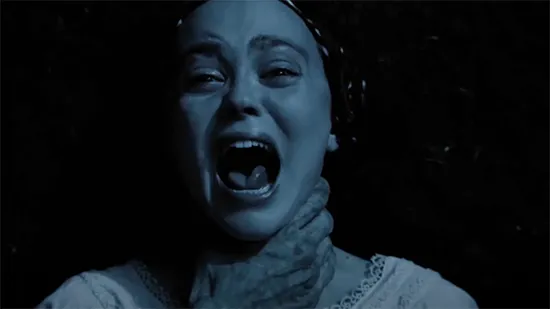
At the heart of the film is Lily-Rose Depp’s extraordinary portrayal of Ellen. Her descent into madness, punctuated by seizures and moments of demonic possession, is nothing short of mesmerizing. Depp’s physicality – writhing, contorting, and defying logic – evokes comparisons to Isabelle Adjani’s unforgettable performance in Possession (1981). Yet Depp brings a vulnerability to Ellen that makes her plight all the more heartbreaking.
Nicholas Hoult, as the naïve and increasingly terrified Hutter, serves as a relatable anchor for the audience. His transformation from skeptical husband to desperate protector is both believable and affecting. Meanwhile, Bill Skarsgård’s Count Orlok is a grotesque marvel. Beneath layers of prosthetics and a chilling, guttural voice, Skarsgård exudes a malevolence that is both repellent and strangely magnetic. His Orlok is less a man and more a force of nature, a walking embodiment of decay and hunger.
Willem Dafoe, as the occult professor Albin Eberhart Von Franz, injects a touch of sardonic humor into the otherwise oppressive narrative. His scenes crackle with energy, providing brief moments of levity amidst the relentless gloom. Aaron Taylor-Johnson and Emma Corrin round out the ensemble with strong supporting performances as Ellen’s well-meaning but ultimately powerless friends.

Eggers eschews the jump-scare-heavy approach of many modern horror films in favor of a slow, suffocating build-up of tension. The film’s sound design is particularly noteworthy, with unsettling silences giving way to ominous droning and discordant strings. The visuals, too, are breathtakingly macabre, with shadows that stretch and twist like living entities and blood-soaked set pieces that linger in the mind long after the credits roll.
Yet for all its visual and auditory splendor, Nosferatu isn’t perfect. The film’s pacing, particularly in its second act, falters under the weight of expository dialogue. While Willem Dafoe’s monologues are entertaining, they occasionally sap the momentum, leaving the viewer yearning for a return to the raw horror of the earlier sequences. Additionally, the film’s predictability – an unavoidable consequence of its adherence to well-trodden vampire tropes – dulls the impact of certain key moments.

Beneath the fangs and shadows lies a potent critique of patriarchal control. Ellen’s struggles against both Orlok’s supernatural predation and the condescending authority of the men around her – represented most pointedly by Ralph Ineson’s ineffectual Dr. Wilhelm Siever – speak to broader themes of bodily autonomy and the historical oppression of women. Eggers weaves these themes subtly, allowing them to enhance rather than overshadow the central narrative.
Nosferatu is a triumph of atmosphere and craftsmanship. While its pacing issues and adherence to familiar beats may hinder it from achieving outright perfection, the film’s strengths far outweigh its weaknesses. With Lily-Rose Depp delivering a star-making performance and Bill Skarsgård redefining the cinematic vampire, Eggers has created a horror film that is as intellectually stimulating as it is viscerally terrifying. It may not reinvent the genre, but it reaffirms its potential to both horrify and hypnotise.
| Movie Rating: |   |
Nosferatu trailer





2 Comments
[…] Eggers’ reimagining of Nosferatu, which captivated audiences and secured five BAFTA nominations, is making its way to home […]
[…] goosebumps at the ready! To celebrate the spine-chilling release of Robert Eggers’ mesmerising Nosferatu – now available on stunning 4K UHD, Blu-ray™, and DVD – we’re giving three lucky readers […]