
It Feeds (2025) Review
- Horror Film Reviews Psychological
 Tom Atkinson
- 1
- 5 minutes read
It Feeds, the latest from Chad Archibald (The Oak Room, Vicious Fun), doesn’t open with a bang, but instead, a lingering unease. A teenager arrives at a small private psychiatric clinic, her arms marked and her voice shaking, claiming something monstrous is attached to her. The place feels lived-in, the air heavy with secrets. What begins as a familiar possession story starts to shift, tightening its grip not through spectacle but by picking at the nerves of its characters and, by extension, ours.
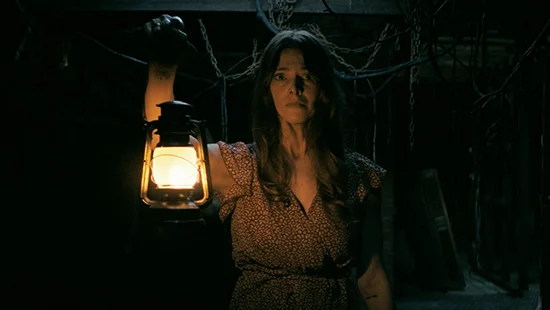
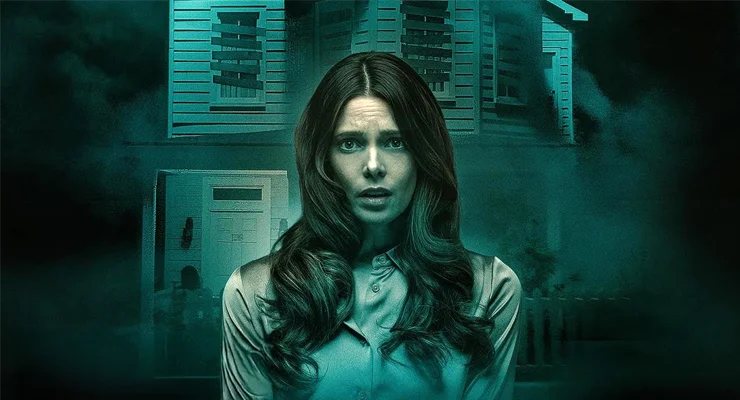
Ashley Greene plays Cynthia Winstone, a psychic psychiatrist whose ability to see into the minds of others has come at a steep cost. She’s cautious, methodical, and clearly haunted by past trauma. When Riley (Shayelin Martin), the terrified teenager, turns up seeking help, Cynthia is quick to shut her out. It’s not a matter of disbelief, but self-preservation. Her daughter Jordan (Ellie O’Brien), younger and still clinging to moral clarity, is outraged. To her, this is a simple case of someone in need being turned away. But, as the film steadily reveals, nothing about this curse is ever simple.
What makes It Feeds work isn’t its monster, though that’s a success in itself. Designed with an eerie, gaunt physicality by Daniella Pluchino, the creature is more of a presence than a performer. It hangs over scenes, crouches in corners, waits for the inevitable. The real tension comes from the film’s emotional groundwork. Cynthia and Jordan’s mother-daughter relationship is quietly fraught, defined by loss and unspoken regrets. Their connection gives the film its spine. And when Jordan steps into danger, it’s not just the standard reckless-teen trope. It’s a logical, painful attempt to be the kind of person her mother used to be.
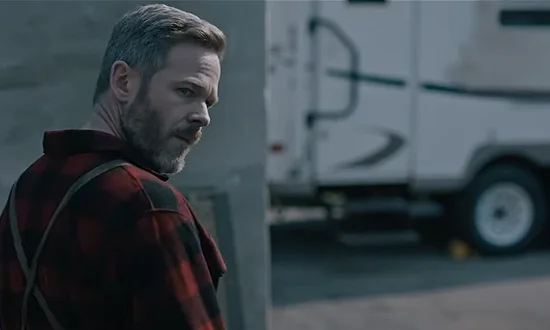
The supporting cast does well with roles that might otherwise feel perfunctory. Shawn Ashmore adds a twitchy unease as Riley’s unreliable father, and Julian Richings turns up briefly to remind us, once again, that no genre film is worse off for including him. His appearance is fleeting but memorable, dropping just enough exposition to steer the plot forward without clogging it up.
The film’s structure is deliberate, almost literary. It teases revelations, drops symbols and clues, then circles back to unpack them. Sound design plays a huge part in this, from guttural rumbles that announce the creature’s proximity to sharp, angular tones that mirror the characters’ inner chaos. Archibald is careful not to overexplain. Instead, he lets scenes breathe, often settling into stillness before breaking it with sudden violence or dread. There are jump scares, but they’re used with restraint. And when the horror comes, it comes with teeth.
There’s a tendency in horror cinema to lean on metaphor while forgetting to be frightening. It Feeds strikes a better balance. It doesn’t just allude to trauma, it shows it, wears it on the faces of its characters, etches it into their choices. The entity is terrifying not because it’s powerful, but because it’s a manifestation of something already rooted deep in its victims. The possession is psychological as much as supernatural.
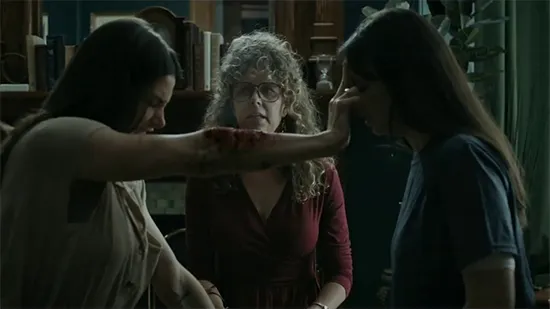
By the final act, the film has moved beyond surface scares. It becomes a story about inheritance – not of wealth, but of damage. Cynthia and Jordan’s journey becomes one of breaking cycles, of confronting the monster not just in the shadows, but in themselves. It’s not revolutionary, but it’s affecting.
In a strong year for horror, It Feeds holds its own with a steady hand and a sharp eye. It may not satisfy every craving for blood and chaos, but for those who appreciate a more introspective kind of terror, it’s well worth watching.
| Movie Rating: |    |
It Feeds trailer




1 Comment
[…] a period-set aquatic survival film blending mid-century crime and nature horror, and the second is It Feeds, a supernatural possession story centred on generational trauma and unseen terror. Though markedly […]