Alan Jones Celebrates 25 Years of the Trieste Science+Fiction Festival
- Interview
 Peter Campbell
- 0
- 8 minutes read
As the Trieste Science+Fiction Festival marks its 25th anniversary, it continues to shine as a beacon for fans of cinematic wonder, where speculative storytelling meets intellectual curiosity. At the heart of its recent evolution is Artistic Director Alan Jones – a journalist, broadcaster and co-founder of FrightFest, who has spent the last four years helping to steer Trieste’s flagship genre event into new and ambitious directions.

“Science Fiction has always been about looking forward – to an exciting future, where anything and everything is possible,” says Jones, who has been attending the festival for more than two decades. That sense of optimism and imagination, he believes, is key to the genre’s longevity. “It offers a safe space to explore complex social and ethical questions. The Trieste S+F audience really embraces that in a way I rarely see at other festivals.” Jones is particularly inspired by how the festival nurtures deep engagement among attendees: “I have made it my mission to talk to as many members of the audience as possible and I’m always surprised and delighted by their dedication to engage in cosmic conversations.”
Although this is only Jones’ fourth year officially at the helm, his connection to the event runs deep. “I was first invited to be on the Jury and then became a regular attendee/stalker,” he laughs. “I loved the city so much it has become my second home.” When the opportunity arose to become Artistic Director, he didn’t hesitate. But with the role came a crucial challenge: ensuring that the science fiction core of the festival remained intact. “Before my time there had been a drift away from that core mission and I found that was the main bone of contention with the audience,” he explains. “It’s called the Trieste Science+Fiction Festival so Sci-Fi should be the main ingredient. It isn’t rocket science… oh actually it is!”

That dedication to staying true to the genre’s roots also extends to how the festival reflects current events through the sci-fi lens. “Science Fiction has always been the conduit for commenting on the present,” says Jones. “You only have to look at old episodes of Star Trek to see that. Using future scenarios as a mirror to reflect on what’s happening now provides a means to discussing complex problems like AI, for example.” It’s a recurring thread throughout this year’s programme, particularly with films tackling near-future concerns. “I do see hard sci-fi focusing on the more realistic near future issues – the ‘five days in the future’ concept – like AI, biotech, religion and climate change,” he adds.
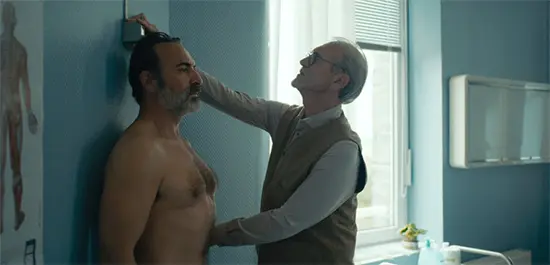
Among his personal highlights is the opening film, The Shrinking Man, a new take on the Richard Matheson classic that he says explores “man’s insignificance”. For Jones, the return to early source material like this is both welcome and timely. “Sci-Fi horror and other genre-blending is on the rise too and diverse perspectives are becoming more prevalent.”
Technological innovation also plays a major role in the festival’s identity. From virtual reality to AI and interactive formats, the programme finds space to interrogate and celebrate the tools shaping tomorrow. “In endless discussions in our wonderful public forum, The Dome, in Piazza Borsa,” he says. “This fantastic venue became a major talking point with every Extra-Triestrian last year and I’m thrilled we have the opportunity to build on its relevance in these key areas. You must remember that Trieste is the city of science anyway and every avenue is constantly explored. That is what the city council expects and what we provide.”
As ever, European science fiction remains a distinct and vital presence in the line-up. “It offers a valuable alternative to the dominance of Marvel fluff that’s for sure,” says Jones. “Each country has their own social and political problems, and they can focus on those issues in their own particular way through language and the genre lens. The cultural and literary influences are different too and that means more thought-provoking character-driven stories that refuse to rely on expensive CGI spectacle alone.”
When it comes to curating the line-up, Jones acknowledges the vastness of the genre makes his job simultaneously thrilling and daunting. “Put simply, the hope there are enough science fiction movies in any one given year to go round and make the programme interesting, exciting and accessible,” he says. Originality remains paramount: “Ensuring the originality of each movie will reach out and touch the audience in the way you want it to.”
Jones is also passionate about diversity, both in terms of geography and artistic vision. “Hard to put into words the answer to this question,” he admits. “My attitude and stance to the genre throughout my entire career has always veered towards diversity.” A recent deep-dive into his own career helped reinforce that conviction: “Because of a new book project I’m currently conceptualising, I’ve gone through all my set reports over the past five decades, from Star Wars and Alien through The Matrix and Hellboy and it’s the one constant I’ve noticed in my journalism. Why would I change now especially when it’s becoming the norm – finally!”
Emerging filmmakers are also a cornerstone of the Trieste selection process. “An enormously important one,” Jones says of their role. “I take pride in providing a showcase for emerging talent and first-time filmmakers. They are the future, and if you can define that special something in their work, they will always remember you and be a festival guest for life.”
So what trends does he see on the horizon for the genre? “Well, that’s the beauty of the science fiction genre, the zeitgeist consistently changes,” he reflects. “Today’s AI concern will be tomorrow’s robot holocaust, global warming, Mars colonisation and medical immortality. I love the unexpected, the new, the challenging so bring it on. But mainly bring it to Trieste as I’m here for a few more years yet!”

As for his personal highlights this year, Jones can’t pick just one. “The entire TS+F Festival is a highlight because it isn’t just about movies but being a part of the Trieste cultural fabric. I take my role very seriously in that respect because, while some may not be interested in the films we show, they might be regarding books, video games, or the discussion forums we organize. I am there for every demographic and never forget that.” Still, he singles out three must-sees: Jan Kounen’s The Shrinking Man (“Jean Dujardin is terrific in this remake”), Glenn McQuaid’s The Restoration at Grayson Manor, and what he describes as “quite the best documentary I’ve seen in ages,” John Lilly and the Earth Coincidence Control Office by Michael Almereyda and Courtney Stephens.
For more information and tickets to the upcoming Trieste Science+Fiction Festival, visit: sciencefictionfestival.org/en/