
Interview: Joe Hill and Natasha Kermani on ‘Abraham’s Boys’
- Interview
 Erica Vilkus
- 0
- 6 minutes read
In Abraham’s Boys, the horrors of the past are inherited rather than slain. A thoughtful and quietly unnerving adaptation of Joe Hill’s acclaimed short story, the upcoming feature explores what happens when the myths of Bram Stoker’s Dracula meet the emotional reality of a family trying to live with its legacy.
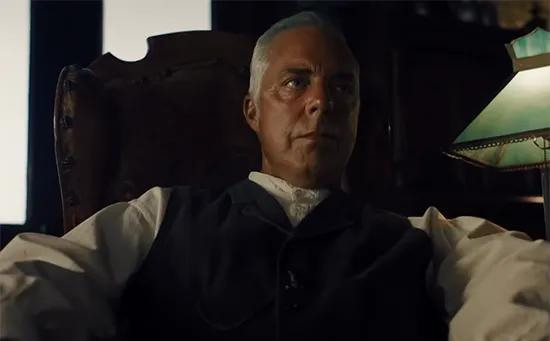
Set long after Van Helsing’s infamous battles, the film centres on Max and Rudy, two boys raised under the strict, watchful eye of their father, Abraham. They know him only as a paranoid and controlling parent. They don’t understand his rules, his fears, or the quiet desperation he carries. But when they begin to uncover the truth behind his history – and the identity of the monster he once hunted – they’re forced to confront a terrifying reality they were never meant to know.

“I think they can expect to be scared,” says Joe Hill, whose story forms the basis of the adaptation. “And I think they’ll find themselves plunged into a Hitchcockian, close claustrophobic thriller that has [an] interesting thing to say about fathers and sons – the limits of how well you can understand your father or your mother and what they’ve been through.”
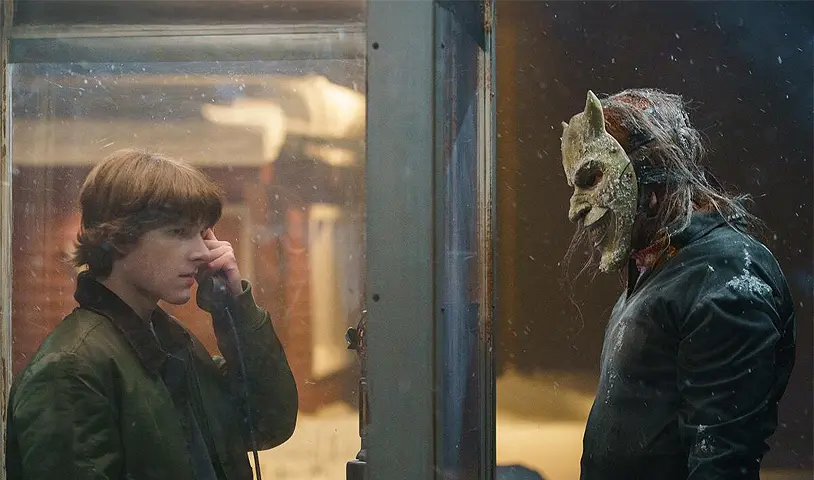
For Hill, who also wrote the short story behind The Black Phone and co-created the hit comic Locke & Key, seeing his work adapted has become a familiar, if still fascinating, experience. “When I write a story, when it comes out, I’ve had my fun with it. I’ve had a chance to visit that world and tell the story my way,” he explains. “And it’s always interesting to see what someone else would do with it… what’s in that story that excites them? It’s almost like I get to look at the story through a different set of lenses.”
In this case, that lens belongs to writer-director Natasha Kermani, known for her genre-defying work on Lucky and her recent contribution to V/H/S/85. Her approach to Abraham’s Boys was both reverent and expansive, taking the tight structure of Hill’s original and developing it into a full emotional journey.
“My favourite part was getting to just dive more deeply into these characters,” she says. “Joe’s story is brilliant, but it’s really just a very small snippet of their experience. So it was just great to be able to take all the groundwork that he beautifully made in his short story and then be able to imagine, you know, their past: Who is Abraham Van Helsing as a young man? What happens after the events of the short story?”
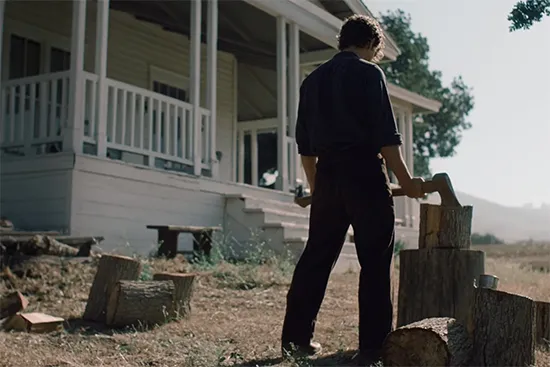
This adaptation is far from a loose interpretation. “I think we were very loyal to the short story,” Kermani says. “I think I was just in love with the short story, and the short story is in the film. So everything in the short story is basically in the film.”
In expanding that narrative, Kermani also found herself revisiting the roots of Dracula, merging Hill’s modern perspective with classic horror mythos. “It was such a pleasure because the material is so deep, that it was just, going back into Bram Stoker’s Dracula and pulling all those pieces together and just, playing it all out to its inevitable conclusion.”
The result, according to both writer and director, is a small but intense horror film – one that replaces spectacle with atmosphere, and reimagines a familiar legend through the lens of grief, fear, and fractured memory.
Hill puts it best: “It’s a small, intense, quiet film that does a lot with a little.”
And for fans of the source material, there’s reassurance in the knowledge that Abraham’s Boys has stayed close to its roots — with the author’s full approval. “Joe likes it,” Kermani notes. “So that hopefully counts for something!”
Abraham’s Boys: A Dracula Story is set to launch in US theaters on July 11th, 2025. You can read our review of the film here: Abraham’s Boys
Abraham’s Boys trailer