Interview: ‘Traumatika’ with Pierre Tsigardis and Rebekah Kennedy
- Interview
 Gavin Brown
- 0
- 21 minutes read
Today at Grimmfest, the much-anticipated Northern UK Premiere of Traumatika is set to leave audiences breathless. Directed by Pierre Tsigaridis and starring Rebekah Kennedy, this chilling film isn’t for the faint of heart—it’s a psychological deep dive into trauma, possession, and the kind of familial horror that leaves scars across generations. Crafted with a love for the horror genre’s darkest aspects, Traumatika melds elements of slasher, giallo, and true crime with a sharp twist on found footage, creating an experience that is unsettling, brutal, yet profoundly captivating.
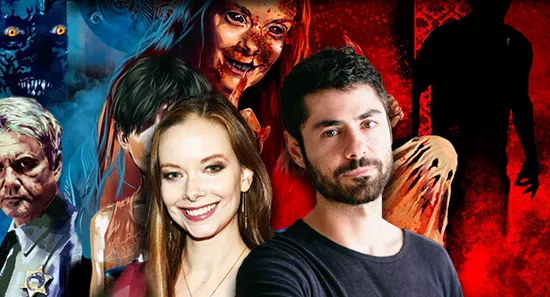
Having previously stunned audiences with Two Witches, Tsigaridis once again collaborates with producer Maxime Rancon to deliver a terrifying spectacle. Traumatika stands out as a visceral love letter to horror in all its forms, mixing found footage, first-person storytelling, and Satanic Panic vibes with an all-star cast. Employing multiple points of view and exploring cursed artifacts, demonic possession, and a harrowing true crime narrative, this film pulls no punches in pushing its characters—and viewers—to the brink.
As Traumatika prepares to make its mark on Grimmfest, Gavin Brown spoke with Pierre and Rebekah about their inspirations, challenges, and the journey to bring this shocking and enthralling film to life.
Interview with Pierre Tsigardis and Rebekah Kennedy of Traumatika
Have you been pleased with how your latest film, Traumatika, has been received so far?
Pierre: For the most part, I’d say yes. I think the press has been very good so far, so we’re really grateful for that. It’s a very intense, crazy film, so I know people have had very passionate feelings about it, which is great. I feel like, if you don’t passionately love something or passionately hate something, then you haven’t really made a movie.
Rebekah: It’s been fun and interesting to hear the different conversations and feelings and thoughts and breaking down what the film was, so I’m excited to see what more people think.

What’s happening with the full release of the movie and when it’s coming out iso that more people can see it?
Pierre: Well, we’re actually actively trying to find distribution as we speak, so hopefully we will have more information in the near future. Right now, the movie is playing at the Grimmfest and Sitges film festivals in October so it will be after that
How was the experience of making the film for you both?
Pierre: Yeah, for the most part, making a horror film on my end, I think it’s always a very fun experience. I’m so grateful to be able to do what I do. Honestly, I think even though the movie is very dark and has some challenging scenes, I think the making, at least the production aspect of it is actually pretty smooth and fun. We’re always rushing because we have to be fast, we never have enough time on location, but the actual shooting and making of it is actually a really good time. It’s really fun.
Rebekah: Most of the time it’s a smooth process, I would say, for me, I had a great time too. It’s a challenging role for sure. I hesitate to say it was fun, because so many of the scenes were not necessarily fun to film, you have to go to a lot of dark places. It’s a lot of dark material but Pierre, and Max our producer make the set feel really safe and comfortable, and I always feel like I can go to those places, and I feel safe doing so, so that is really helpful. We explore a lot on set, which is an amazing thing for an actor, and not often do you get that as well, so I’m really pleased with how everything came together, and the actual set experience is a collaborative safe place, and that’s the most important thing to me, especially when we’re making a film like this,.
Pierre: Rebekah brought Sean O’Bryan, Sean Whalen, who were her friends, so at least the first part of the movie, it was just kind of like friends working together and hanging out.
Rebekah: I didn’t get to work with Sean Whalen on this project, but I worked with Sean O’Bryan closely, who plays my dad in Traumatika, and I previously worked with him on The Veil that comes out in October. I was so thrilled that he jumped on board, because he is such a generous, amazing actor to work with as my scenes in Traumatika with him are very intense, to say the least, so I wanted to have someone that I trusted, that I knew would have my back, that I knew we could do what we needed to do, and it would not feel uncomfortable or creepy or weird, was just such a relief to me as an actor. We trust each other and that it made the process that much better.

Was that challenging, given the subject matter of the first part of the film?
Rebekah: It’s challenging in the best way for an actor. I knew when I got the script from Pierre that it would be something that would challenge me as an actor and as a person, and to do things that I haven’t done, to go to places I haven’t been, and that is always a treat. That is always something I look forward to when I work.
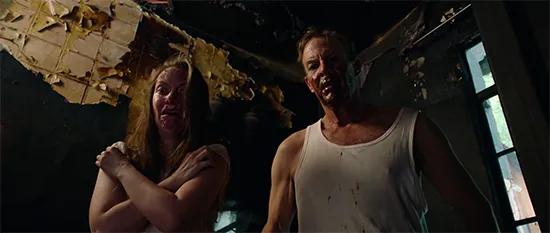
There were quite a few scenes that were uncomfortable in the sense of the character required a lot of emotion, it’s hard to even describe just going to a place that you don’t really want to go to, but then seeing it afterwards is rewarding in the sense that you overcame the challenge, you did it, and it’s an interesting process. It’s an interesting thing to find Abigail, because she appears as a villain for quite a lot of the first part of the movie, and then you when you flashback, you start to understand why she is the way she is. I think that’s a really beautiful backstory to her and that she’s not all one thing.
There’s always nuances, and that was a really interesting and challenging thing to find as well, and to keep exploring her and why she’s doing what she’s doing, and the dichotomy of not wanting to do it, but knowing that she has to do it in order to save her sister was a really interesting balance to find as well.
Ranen Navat who plays Mikey, delivers such a strong performance, despite being so young, how was it working with him on the film?
Pierre: It was challenging, but again, it went well. We had to use a lot of different techniques, for getting the performance out of him, compared to, if it was a regular adult, but he did such a great job. We’re so grateful for this, for him. We would work with metaphors and images. We wouldn’t obviously tell him what’s going on, so we would just give him pointers of things that he could imagine, and then he would also have him copy emotions. We would just roll the camera, and I would try to steal as much as possible, and then Rebekah would, for example, say lines or do emotions, and he would mimic, and we would tell him where to look so he didn’t really understand anything of what was happening obviously, but we preserved him in that sense, He was focussed enough to know to follow the directions which were vague in the sense that it were not based on the story, but they were a different way to get to the same results. It was a little difficult. I feel like we had to be a lot more creative in terms of directions but I’m really happy with his performance.
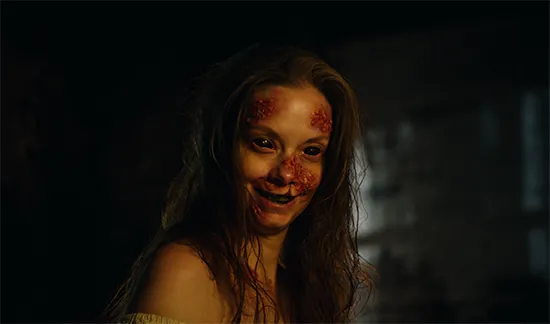
Rebekah: He was only six when we filmed, I mean, I can’t even imagine! I didn’t start that young, so to have that kind of accessibility at six is incredible. He did a fantastic job. Like Pierre said, we were very creative and he never saw me in the makeup, that was also challenging, challenging for sure. Acting all of my scenes with him, I filmed by myself. So if I was in the makeup, then I was just working with Pierre and the camera, and he wasn’t there. When we took the makeup off, then we could slide him in and get his reactions, He’s six, so he has the ball of energy and light to him. and as adults, sometimes we can get a little jaded or a little tired on set, and he brought an interesting new life to things and a reminder that we are so blessed to be doing what we’re doing, and it’s a gift.
Was the true crime programme within the film that forms the second half, a good experience to do as well?
Pierre: We wanted to make another side of a story like this, like what if this story had been real, and how real stories can be distorted by the media. We wanted to explore on that and take people off guard and jump into this true crime that would insert this very horror based story of the first half into a different or an unexpected reality, and revise all of what happens, but under a different lens.
You mentioned FrightFest, where the film premiered. How was the whole experience for you?
Pierre: The screening was great. The theatre was amazing. I was really happy. I had a problem with the DCP, so I had to do a new DCP last minute for the file to screen the movie. So I was a little stressed out about if it was even gonna look or sound good, or even look play at all. So my first relief was like, Oh, it actually played all right, but I think it looked like it was supposed to look, and it sounded even better than then I expected it to sound, so I was really happy, The dialogue sounded great, which I think made the performance even better. We had a lot of reactions from the crowd be because it was screened in front of a thousand people. There were people jumping and laughing at the right moment and having some strong reactions. I think that’s the cool thing about FrightFest, since it’s a very horror based audience. Everybody knows everything about horror films, and they’re all very interactive the movies in general. I was actually sick at the time so I couldn’t enjoy it as much as I wanted but it was a great experience.
Rebekah: It was actually my first time in London and in the UK period, so it was a really cool experience. My husband came with me, and we stayed for six days and got to experience the city, which was really awesome. The festival itself was amazing, like Pierre said, screening in that theatre was just phenomenal, and it sounded great and looked great. It was really fun to see with an audience and hear the different reactions. I remember specifically, there’s a scene where I’m cutting my arm, and this guy behind me goes, Oh, Jesus! Making a film is such a collaborative effort, so we’ve lost a little bit when you’re watching it by yourself at home. so it’s really fun to then get to see it with a huge group of people and see it in real time, what they actually think and how they’re feeling, and what’s landing. The experience itself, like the festival, everybody was just amazing and so kind and generous to us and made us feel so welcome and we would love to go back in the future.
How important are events like FrightFest for the horror genre and filmmakers like yourselves?
Pierre: Oh, it’s very important just for exposure, for your movie to exist. Honestly, like FrightFest was at the top of our list of a wish list of festivals to be able to get into. So I owe a lot to Paul and and Alan for selecting the movie, and I’m so grateful they they like the movie, because for us, it means a lot because we can’t really do a screen test. We’re indie filmmakers, so when we finish a movie, we can’t have a lot of people watch it. We can’t have it screen on a big screen, because we don’t have the resources or anything, so then to have the possibility and the opportunity, to be screened in a big theatre like this and a quality stamp like Fright Fest to gather so many people, so many festival goers, so many press outlets, you can’t ask for anything more than that indie filmmaker. We are very, very happy to have FrightFest, and film festivals like Grimmfest and Sitges too.
Rebekah: It was really amazing to get to screen there that particular festival, festivals in general, really get your film out there, and then critics start reviewing and people start talking about it and it just helps get the word out. The critics were really kind to us at FrightFest, and that that helps so much as does the audience helps get the word out because, like Pierre said, we don’t have the same resources that a studio film has, or even a big budget indie film has to, have the same kind of publicity, so this really helps boost the film.
You both worked together on Two Witches, how was it working together on that movie, and have you get plans to work together again?
Rebekah: Even though it was hard, looking back, it felt like friends hanging out, collaborating with friends and exchanging ideas and just doing what we all love. So that’s why it just feels like more of a grateful experience. There were a lot of challenges in terms of physically challenging things in the movie, but at the end of the day, most of the memory is just us collaborating and making a really cool film, working with people that I respect and admire and look up to and I feel like it’s a privilege to get to work together again on Traumatika and maybe more.
Pierre: I can’t say too much, but we are working on another Two Witches movie, it’s more ambitious and we can’t rush into it but Rebekahs character, Masha, we’re going to expand on that character, because I think it’s a dope character, and I think the horror community has been responding to her character quite well, and there’s so much more to do with her. Now that she has come into her real powers, I’m excited to see where we go different places. We’re not gonna just do the same Masha from Two Witches, we’re gonna have to take her to new places.
Rebekah: You kind of never know when you play a villain. You never know what the audience response will be, but like Pierre said, the horror community has really embraced her, and I get quite a few fan messages about how much they loved her, and it’s like, Oh, that’s amazing! I feel like there’s not a witch horror villain in the horror landscape right now, that’s like an iconic witch. I think it’s a cool idea to develop this witch here, because I think a lot of people can identify as witches or look up to witches and thinking they’re cool.
What are your favorite horror movies and influences of all time?
Pierre: The Exorcist, because I think it’s this big studio movie that combined the hottest director of the time with the hottest cast of the time, with a big budget, and yet they went and did a very nasty horror movie in the best way, that I think, you wouldn’t be able to see that anymore, on this big of a scale, done by a Warner Brothers or whatever, and go that far into the horror and into the shock value. I think this movie always needs to be at the top of a list somewhere, just because of the scale of it all. For me, Scream is always my first love in terms of horror because I watched it when I was really young and and the opening is, to me, still the best opening of a horror movie that you can do, in terms of captivating an audience.
Rebekah: There’s so many to name. It’s hard, but one of my favorites is The Sixth Sense because for me as an actor, coming from an actor standpoint, seeing characters developed like that in a horror movie is just incredible because not every horror film gives actors a chance to really create a character like that. Hereditary would be another one, but The Sixth Sense just combines all of the elements that I love and the acting is incredible, every time I watch that movie I cry! When do you watch a horror film and cry?! That’s at the top of my list, the fear is palatable and so real that it’s just impossible not to be taken on a ride.
Pierre: I love The Sixth Sense, you’re right, I should have said that too! It’s the movie that makes me cry the most, that scene at the end when they’re in the car and he opens up, I cry every time!
Rebekah: I’m crying thinking about it!
You can read our full review of Traumatika here: lovehorror.co.uk/slasher/87169/traumatika-2024-review/