
The Spore (2021) Review
- Horror Film Reviews Infection Sci-horror
Jack Carlin
- 0
- 11 minutes read
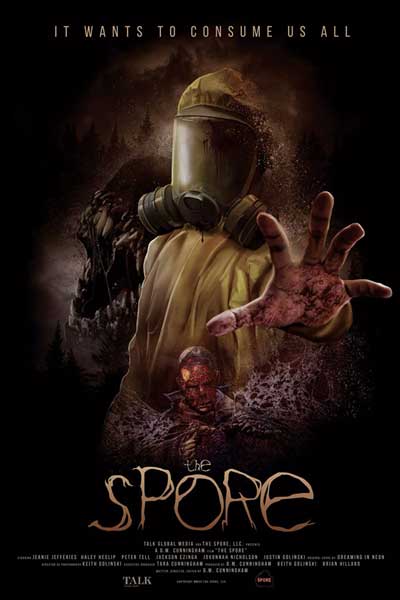
The Spore follows the tales of ten separate strangers as they navigate around an infected wasteland destroyed by an infectious virus. In this segment-styled horror we assist our group of survivors individually as they come to terms with the mutation-infested surroundings and their own means for survival.
Covid-19 has been an interesting chunk of history to say the least, a tainted turn of events that shaped how we as society deal with diseases, those who have contracted the virus, and ultimately death itself (attending a funeral via online cam anyone?). Whilst that comment is a skosh on the morbid side of life, it proved to be an interesting focal point for genre narratives since, with the likes of Host (2020) utilising the lockdown life to its full potential.
Whilst D.M. Cunningham’s The Spore (which played at Grimmfest 2021) may have no deliberate connection to the pandemic itself, it’s near impossible not to view work such as this as a timely piece of cinema very much indictive of our current climate. The Spore may not have any direct link to humanities near two-year suffering during covid, but it’s easy to view it as a piece of indie film making willing to reflect such tragedies through the twisted lens of the horror genre. I mean, that alone is worth something right?

What looks to be D.M. Cunningham’s feature length genre debut, he enters the genre with a knowing appreciation for greats that came before. Paired with cinematographer Keith Golinski, Cunningham is eager to express his admiration for the genre, presenting a few visual parallels to the likes of Night of the Living Dead and Texas Chain Saw Massacre.
The work of Carpenter is certainly a focal point here particularly within the score, fabricating a deliciously sinister synth beat not unlike his work in the 80’s, paired an especially fun nod to Judith Myers (the sister Michael Myers murders in the opening scene of the 1978 original Halloween, obviously) which blares out from the radio broadcasts in its opening scene. Whilst moments like this are too and far between, it’s a tender moment for Cunningham to pay homage to his inspirations without lingering long enough as to mimic them; nobody cares for a copycat.
On the topic of duplication, where The Spore plummets is in its uncanny likeness to the popular two-series Netflix zombie romp Black Summer. Remodelling its abrupt segment style that pulls you in and out of survivor’s stories however it pleases with not-so successful results, rarely giving you a solid beginning or a well-rounded end to the character’s individual story arks. Whilst this is the huge appeal in the context of Black Summer, The Spore uses this same narrative tool with crippling results, bogging itself down with a storytelling technique that refuses to function on a feature length time scale. The concept of throwing us right in the midst of a viral outbreak is not entirely a bad one, but when done before (and done better) the end result just feels lacklustre and frustratingly jarring.
Each chapter transition feels clunky, abruptly yanking us away from any sense of narrative closure throughout its duration, with the closest thing to equilibrium being that of two characters (who’s limited screen time shakes off any opportunity for empathy) coming together in the final two minutes. Such a technique only works when we emote for said characters, but when they lack any real sense of depth or likability and those credit’s begin to role, you can’t help but wonder what was really the point?
The Spore starts on a strong note, kicking things off with a nifty use of radio dialogue to aid us on catch up with its current mutation situation. paired with a sharp visual opening that alludes to the true potential of its surrounding terrors, setting the tone for what seems to be a vacantly ominous affair. Once we get our bearings and our feet planted firmly in Cunningham’s crafted universe, it’s then when our keenness begins to slip from our grasp. Each treacherous tale is as drearily somber as the next, playing like a group of instruments all striking the same note and key. It’s fine once or twice, but after a while the tales gets a little tedious.

That’s not to say The Spore is a total miss, as it boasts one incredibly effective scene which sees one character interaction with a mutated human not unlike something pulled straight from Tokyo Gore Police. It’s both haunting and expertly crafted in effects and direction, which ultimately is a real shame as the rest of The Spore struggled to hold a candle to that scene.
Perhaps ditching the Black Summer format and opting to a more Ravenous (2017) styled flick could have aided its altering character narrative technique, which evidently had such a huge part to play in The Spore. Presenting us with characters to care for, or an attention to character nuances could have really given this the extra notch it needed to excel and become a truly memorable environmental horror experience.
Like Ben Wheatley’s In The Earth by way of Netflix’s Black Summer – The Spore has true elements of craftsmanship from D.M. Cunningham and co. buried deep within, but on surface level it proves to be nothing more than a shallow and unfulfilling experience that squanders its interesting premise in favour of generic thrills. Respect is earned for this daring shot in the dark, but unfortunately the payoff just feels like a dud.
| Movie Rating: |   |
Trailer: