
Wrath of the Gods (2026) Review
- Cults Folk Horror Horror Film Reviews
 Luna Guthrie
- 1
- 9 minutes read
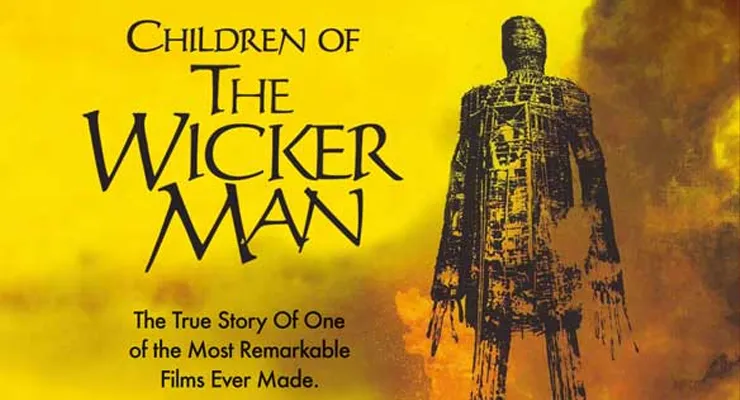
Robin Hardy’s The Wicker Man remains, over 50 years since its production, a staple of British cinema, and of the wider horror genre. A sleeper hit, and for the majority of its runtime a crime mystery more than a horror, its status as a classic work of horror has built over the decades, thanks in no small part to a stellar cast of ‘70s stars and a twist that leaned heavily on the mystical manifesting in the real world. It didn’t rely on any supernatural elements – for all the audience knows, Edward Woodward’s doomed Sgt. Howie is correct in declaring that there is no sun god, and that no amount of blood sacrifice will deliver a bountiful harvest to this island of modern Scottish pagans. That was ultimately what made it so chilling. The cult element of the story is one that could conceivably exist in the real world of today, and there are few things more terrifying than an organised group of people guided by a certainty that their world view is the correct one.

Only the staunch Wicker Man fans will have even heard of, let alone seen, Hardy’s final directorial effort, The Wicker Tree, which he finally brought to fruition when he was in his 80s, after years of effort. Despite a cameo from Christopher Lee, it was a rather silly movie that failed to reach the highs of its predecessor, although its climax packed a thematic punch. Hardy’s filmography was a scarce one marked profoundly by The Wicker Man and his continuing attempts to expand upon it, both in literary and cinematic forms. Whether this was because he felt it was his magnum opus and just didn’t want to shake it, or because he couldn’t make anything else stick, is up for debate. But evidently, the world of The Wicker Man meant a lot to him, as evidenced by the existence of Wrath of the Gods, which makes its debut at FrightFest 2026.
Directed by Hardy’s very recently deceased son Justin, it is – just as The Wicker Tree was – the fruit of much labour. Justin and his brother Dominic spent the last few years bringing to light a buried chapter in The Wicker Man’s legacy, through a book and documentary, revealing their mother Caroline as a long-suffering wife and backer, without whom that classic folk horror would never have been possible. Now, they have brought their late father’s long-held wish for a Wicker Man trilogy to life. There has perhaps never been more of a horror family affair than this film series.
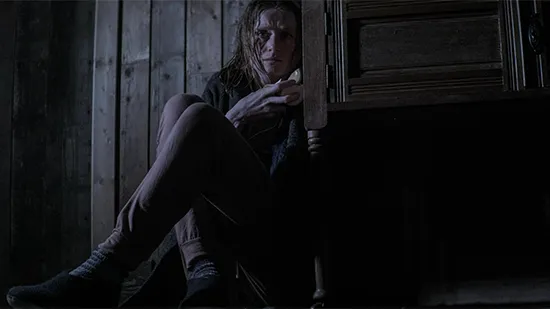
Wrath of the Gods takes place, once more, on the frigid Scottish islands, and immerses itself in the Nordic pagan influences of this particular region of the North Sea. An unnecessary title card explains that the film is written in the native dialects of the island – a welcome detail which needs no explanation, but lends much weight to the world of the film. The Scottish islands are still a merciless place to be, where proper legal or medical assistance can be hours away and reliant on the scarce transport available. This particular island, named Hel in the movie, makes for a wonderfully isolated setting that is used to full advantage. The look of the picture is freezing, wet and gray, with the landscapes and natural lighting lending all the atmosphere it really needs.
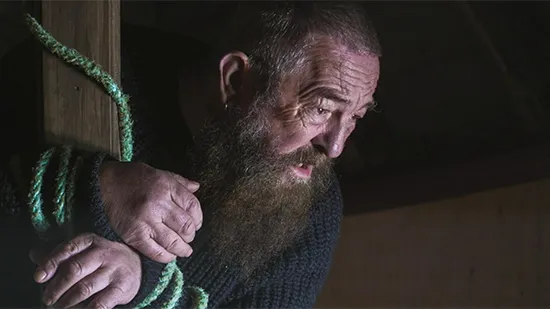
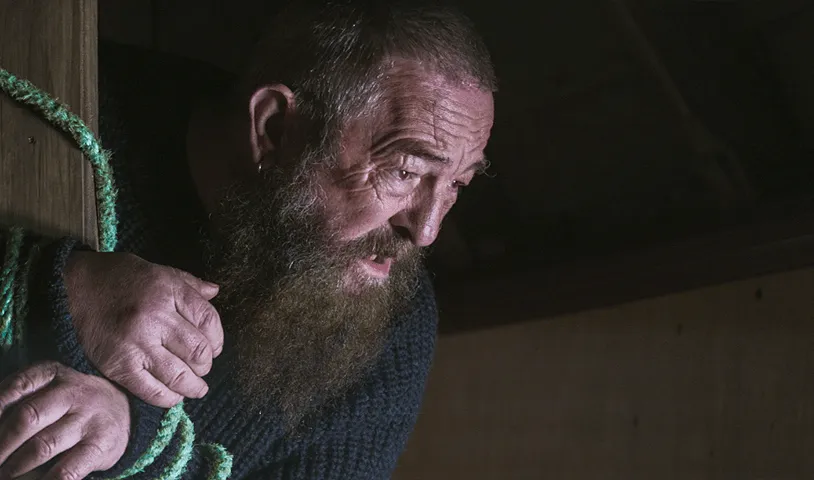
Anna (Christiane Schaldemose) returns to the island with her teenage daughter Gudrun (Martha Robertson) to bury her recently deceased husband on his homeland. They go back to live with her parents-in-law, played by Francis Magee and Lynsey Rendall, where they are shunned by the locals, with allusions to Anna having corrupted her husband and driven him away from his rightful home. The movie meanders for some time, setting up unexplained tension between Anna and her in-laws, while her daughter is selectively mute and seems to suddenly come out of her shell when shown old home videos of her dad. While hints of a bitter past between our protagonist and the world she now finds herself in are thrown around, there is little sense of where the story is going for the first half.

Then Gudrun disappears, along with another local girl, and a not terribly desperate search for them ensues. At times, it feels like your average crime mystery, but because very few stakes or rivalries have been effectively established up to this point, the action lacks a great deal of momentum. This lagging pace is not helped by a distinct feeling of directorial naivete, demonstrated by moments that seem to be pivotal to the story just trickling out rather than landing with any real impact. The narrative comes to several crucial twists, but the direction, cinematography, music and editing do nothing to emphasise their importance. There are some real head-scratcher moments born out of improper setup and execution.
There are pieces of excellence here. Schaldemose and Magee are real standouts whose performances suffer at the hands of uneasy direction and bad framing. They deserve a more polished product than they end up getting. The aforementioned atmosphere and use of the natural surroundings builds a world that feels truly tangible, especially for anybody who has ever ventured into the most rural parts of the UK, and there is some gorgeous musical composition by Guy Dagul, whose previous credits include Cliffhanger and Arachnophobia, which help Wrath of the Gods to feel like a true spiritual successor to The Wicker Man. In fact, the sound department largely delivers, with some considered mixing and a real sense of ambiance.
Where The Wicker Man made great use of the devout practices and pagan lifestyle of the islanders, Wrath of the Gods seems to forget that this is the key piece to the whole affair. It uses Norse mythology, and the language and traditions of this island, as more of a backdrop than a key to the story, and it is disappointing that by the movie’s climax, very little of this heritage matters. Summerisle’s residents relied on farming, and truly believed that human sacrifice was the way to ensure their prosperity, hence their elaborate ruse to bring an offering to the island. This third instalment, however, has no such philosophy, and what starts out as a crime mystery ends as such, with more of a revenge angle than a spiritual one, blended with a half-baked angle of neo-goddess worship in the form of basic feminism.
It lacks the scope and scale that lent the original movie its gravity, in which an entire community fed into a belief system and carried it out to its logical conclusions. The most Wrath has to offer is a dozen sluggish islanders who don’t seem particularly bothered one way or the other, but wind up at the climax to round out the numbers. It’s not disturbing or terribly intriguing, and it is a shame that a few more experienced filmmakers couldn’t have been involved and steered this Viking ship in the right direction. But much credit to the Hardy brothers, and to their family’s cinematic legacy. The Wicker Man’s roots run deep in their lineage, and despite their turbulent familial relations over the decades, Justin and Dominic clearly cared as much about this story as their old man did, and it is truly touching to see the torch be picked up and used to light another pyre.
| Movie Rating: |    |
Wrath of the Gods trailer





1 Comment
[…] concept from The Wicker Man director Robin Hardy is heading to York in a film completed by his son. Wrath of the Gods, the final feature directed by the late Justin Hardy, will receive its regional premiere at Dead […]