How the Sugar Skull Became a Horror Symbol in Britain
- Gaming
The Templar
- 0
- 5 minutes read
Two decades ago, British Halloween parties had pumpkins, witches, and plastic skeletons. While these still exist now, a new symbol has appeared: the sugar skull.
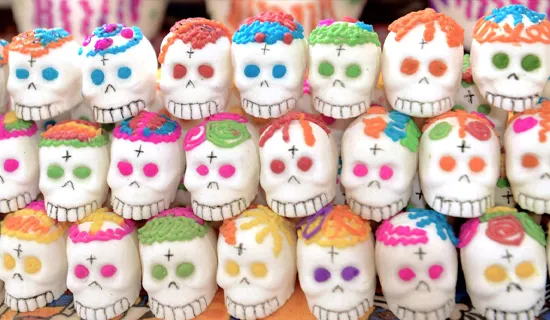
The sugar skull (known as calavera in Spanish) is a bright, skull-shaped folk art that’s used in the Mexican celebration of the Day of the Dead.
It started to gain popularity after the 2015 James Bond film, Spectre, which opened with a Day of the Dead parade through Mexico City. From this point, we started to see it more as a horror symbol in films as well as during Halloween events.
Festival Before the Film
Though the film may have sparked interest in sugar skulls in Britain, the skull itself belongs to something much older than any film.
UNESCO added Mexico’s indigenous festivity dedicated to the dead to its Representative List of intangible heritage in 2008.
Giant skeletons at the new Day of the Dead celebration in Mexico City. A new cultural event created because they saw it in a Bond movie and thought it looked cool. https://t.co/vv74qdVQKs
— Hernan Cortes (@CyberPunkCortes) October 31, 2026
The festivities run from the end of October to the start of November each year, and during this time, families lay flower petals, candles, and offerings along the route from the cemetery to the house.
The sugar skull is part of the decorations they use. It’s used to honour those who are no longer with us, which is why it sometimes gets tied to horror.
Parade That Bond Invented
Spectre, released in 2015, opens with Bond chasing a target across the rooftops of Mexico City, while the Day of the Dead parade fills the streets below.
?? Little Known Fact: Mexico City, host an annual Day of the Dead parade. But it didn’t exist until 2016. It was inspired by the opening scene of the James Bond movie “Spectre” https://t.co/i9YJ6eliwG
— BowTiedPassport ?? in ?? (@BowTiedPassport) November 1, 2025
No such parade existed. Mexico’s Tourism Promotion Council had put $18 million into bringing the production to the city.
The year after, they decided to throw a real parade to match the one they produced in the Spectre.
Since then, the festival has gotten bigger and bigger each year. The 2025 edition, the ninth, drew around 1.5 million people along the route, with around 8,000 costumed performers.
Where the Skull Turns Up Now
The sugar skull symbol appears in multiple areas of life. We’ve seen it on clothing, posters, tequila bottles, and more.
It has even found its way into several slingo online games built around horror themes. Slingo Day of the Dab, for example, uses the sugar skull on a bingo grid instead of using a monster.
The mentioned applications are completely different from one another. However, they all use the symbol in a way to represent something spooky.
Why Britain Took the Skull
The skull travelled into Britain’s horror symbols because it was relatable. Skeletons and skulls have always acted as a way to scare people, whether through experiences or films.
It’s very similar to the skull and crossbones symbol, just with a little more flair to it. Skulls and crossbones are even used on warning signs to represent death.
Sugar skulls, on the other hand, couldn’t be used for such a thing. They’re unusual and somewhat strange to British culture, making them excellent horror symbols.
It’s the unknowingness and its shape that spook Brits, making them excellent symbols to gain inspiration from when developing horror themes.