Roulette Strategy and Golf Course Management: Why Both Reward Discipline
- Gaming
Mrs. Creed
- 0
- 6 minutes read
A good round of golf is rarely won with one heroic swing. It is built from small decisions: which club to take, which side of the fairway to favour, when to lay up short of the water and take the bogey. Players who chase every pin tend to post the big numbers. Roulette, for all its glamour, asks for the same temperament.
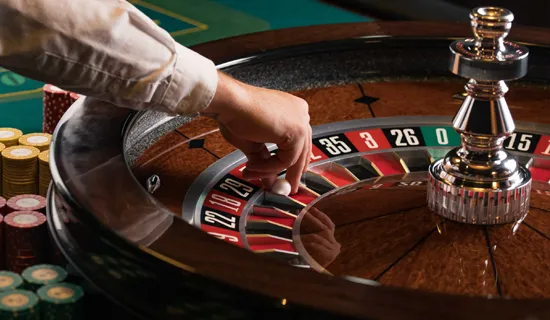
The wheel has no memory and no favourites, and the maths behind it never shifts. That makes it an odd fit for strategy talk, yet the idea of managing risk rather than beating it runs through both pursuits. For anyone who wants to try the game, a list of the best roulette sites is a sensible place to compare licensed options before sitting down at a table.
The margin: what the house edge means
Every golf hole has a built in difficulty, and every roulette wheel has a built in margin for the casino. It is called the house edge, and it comes from the zero pockets. A European wheel has 37 pockets, numbered 0 to 36. An American wheel has 38, because it adds a second green zero.
The payouts are set as if the zeros did not exist, and that gap is the edge. On a European wheel the house edge on a standard bet is 2.7%. On an American wheel it rises to 5.26%. In practice that means a £10 bet on red loses an average of 27p per spin on the European wheel and about 53p on the American one. Over 100 spins at £10, the expected cost is roughly £27 against roughly £53, before any luck is counted.
Averages are not guarantees. A short session can finish well ahead, just as a golfer can birdie the opening hole. Over a long enough run, though, the edge asserts itself. Most UK online casinos run European tables as standard, and some offer French variants with a partial refund on even money bets when the ball lands on zero. Checking which wheel is on the table is the quickest way to cut the margin in half.
Choosing a table: licence, limits and live dealers
Course management starts before the first tee, with a look at the card and the conditions. The same applies when picking where to play. A licence from the UK Gambling Commission is the baseline, and it can be checked on the regulator’s public register in a minute or two.
After that, the practical details matter. Table limits decide whether a modest bankroll can sit through a normal run of losses or gets wiped out in a handful of spins. Live dealer tables stream a real wheel and a real croupier, which suits players who want to see the ball spin, while software versions run faster and allow smaller stakes. Faster play means more spins per hour, and more spins per hour means the house edge works harder. A slower table is gentler on a budget, much as an unhurried round is gentler on the scorecard than a frantic one.
Withdrawal speed, clear terms and visible responsible gambling tools are worth a look too. None of them changes the odds, but all of them show how a site treats its customers.
Course management for gamblers
Golfers who score consistently tend to have a plan they keep when things go wrong. Carnoustie’s Champion Course, which will stage the Open in 2029, is the sort of test that punishes the player who ignores the plan. One wild drive into a bunker, followed by an attempt to recover everything with a single miracle shot, usually turns one dropped shot into three.
The roulette version of that mistake is the chase. After a losing run, the urge is to raise the stake and win it all back at once. Betting systems such as the Martingale, which doubles the stake after every loss, feel logical but cannot change the edge. They also hit table limits and bankroll limits quickly, so a long losing streak ends in a very large loss.
A workable plan is dull by comparison. Decide a budget before the session, treat it as money spent on entertainment, and stop when it is gone. Set a time limit as well as a money limit. Pick outside bets such as red or black, or odd or even, if smaller swings are preferred, and accept that the long term cost stays the same whichever bet is chosen. Writing the limits down beforehand helps, because decisions made calmly are better than decisions made three spins into a losing streak.
When to walk off
Every golfer knows the feeling of a round that is slipping away. The sensible move is to take a breath, finish the hole and stop forcing shots. Walking off a roulette table follows the same logic: leaving early is a decision, not a defeat.
Signs that it is time to stop include playing past the planned budget, topping up a balance to chase losses, or gambling to change a mood. Tools exist for exactly this. Operators must offer deposit limits, time outs and reality checks, and GAMSTOP lets UK players self exclude from every licensed online operator in one free step. Players who feel their gambling is getting out of hand can also contact the National Gambling Helpline on 0808 8020 133, which is free and open around the clock. Gambling is for over 18s only.
Back on the fairway, the best rounds often end with a modest score that nobody remembers, achieved by someone who stuck to the plan. A good session at the wheel is much the same: planned, limited and finished on the player’s own terms.