

Until Dawn (2025) Review
- Horror Film Reviews Monsters
 Tom Atkinson
- 1
- 5 minutes read
David F. Sandberg’s Until Dawn arrives with the weighty expectation that tends to accompany video game adaptations, especially ones as beloved and narratively intricate as Supermassive Games’ original 2015 release. The film, penned by Gary Dauberman and Blair Butler, doesn’t shy away from the challenge. What it delivers is a briskly paced, knowingly constructed horror feature that’s more playful than profound, more inventive than terrifying, and far more entertaining than most of its genre stablemates.

The story begins with a trope-heavy setup, where a group of college friends travel deep into rural nowhere to investigate the mysterious disappearance of Clover’s sister, Melanie. Their car ride, complete with cryptic gas station warnings and an ominous rainstorm, ends at a remote visitor centre in Glore Valley. So far, so familiar. But once the masked killer appears and dispatches the group one by one, only for them to wake up again in the same place, fully aware of how they died, the film reveals its true nature. This is a time-loop horror story where death doesn’t end the nightmare but resets it, raising the stakes each time the cycle restarts.
What separates Until Dawn from the many other films that use similar mechanics (Happy Death Day, Triangle, even Edge of Tomorrow) is the clever incorporation of video game logic. Characters learn from their mistakes, adapt strategies, and even speak in the sort of genre-aware shorthand that has become common in post-Scream horror. Each time someone dies, the film doesn’t pause to wallow in grief. It resets, often with a sick joke or a grisly surprise. The kills are creatively staged and never linger long enough to feel cruel. There’s a certain video game efficiency in the brutality here: nasty, quick, and often laced with gallows humour. The atmosphere is manacing, with low light, widespread decay and threats lurking in every shadowy corner.

Ella Rubin makes a strong lead as Clover, combining resilience and vulnerability without descending into genre cliché. Odessa A’zion and Ji-young Yoo also stand out, offering a dose of energy and attitude that lifts the collective. Michael Cimino and Belmont Cameli round out the group, though the male characters are clearly there to support rather than steer. Refreshingly, it’s the women who drive the plot forward, take charge of survival plans, and deliver most of the film’s best lines.
Sandberg’s direction shows a filmmaker more confident in his rhythms. He leans into the surreal, looping structure without losing narrative clarity. There are nods to horror’s greatest hits throughout – masked killers, haunted houses, grotesque body horror – but these are deployed with a sense of fun rather than pastiche. The mutation subplot, where each death pushes the characters closer to monstrous transformation, adds a unique wrinkle to the formula, giving the film a sense of forward momentum that many time-loop tales lack.
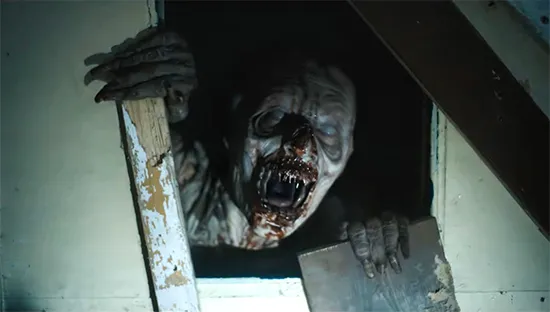
Until Dawn isn’t particularly deep, and it never quite delivers the emotional weight it gestures towards, especially in its themes of guilt and grief. But it’s sharp, slick and self-aware, and unlike so many adaptations, it understands the feel of its source. It’s horror for genre fans who know the rules, and want to see what happens when the game breaks them.
| Movie Rating: |    |
Until Dawn trailer





1 Comment
[…] you’ve ever wanted to play your way through a teen horror movie, Until Dawn is basically the modern version of every slasher you grew up with. You make choices, face […]