
Five Raindance Revelations with Jiro Sato for ‘Nameless’
- Interview
 Peter Campbell
- 0
- 5 minutes read
Some horror films have visible threats and some have those that lurk in the shadows. Nameless heads in a different direction, asking ‘what if the deadliest weapon imaginable was completely invisible?’
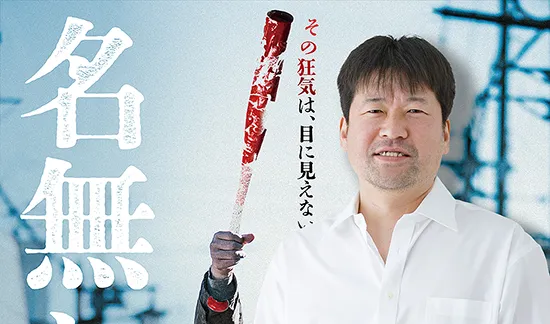
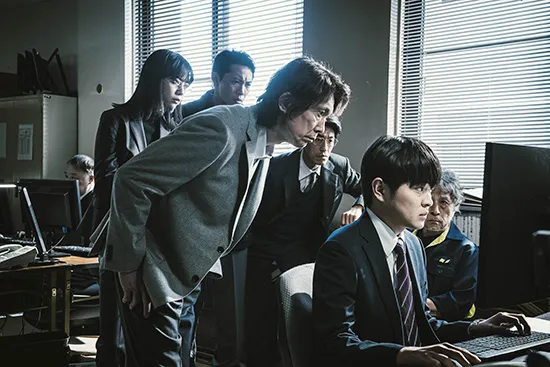
Making its European Premiere at Raindance Film Festival, director Hideo Jojo’s supernatural thriller centres on a seemingly unstoppable killer cursed with a mysterious power hidden within his right hand. As bodies begin to pile up and investigators struggle to make sense of an impossible series of murders, the film blends police procedural, supernatural horror and dark fantasy into something uniquely unsettling.
At the heart of the story is one of Japan’s most recognisable screen talents, Jiro Sato. Best known for his extensive acting career spanning more than 200 productions, Sato also created the original story and co-wrote the screenplay, helping shape a tale that explores fate, violence and the burden of a power no one should possess. The result is a film that feels rooted in classic horror traditions while introducing an original mythology of its own.
For this edition of Five Raindance Revelations, we spoke with Sato about the film’s journey to London, the Japanese classic that changed his perspective on cinema, and what he discovered about storytelling while bringing one of the year’s most unusual horror films to life.
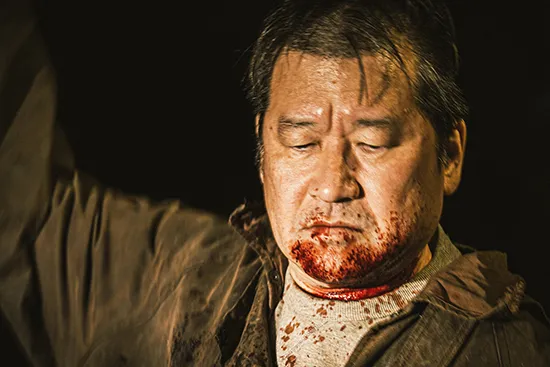
Jiro Sato writer and star of ‘Nameless’
1. Tell us about your film and why you felt Raindance would be a great place to unleash it on London and the UK.
Since childhood, I had watched only Hollywood films or movies from my own country, Japan. In recent years, however, I have become acutely aware that extraordinary filmmakers in countries all over the world are creating extraordinary cinema. It inspired me to seek out and experience these outstanding works from every corner of the globe. This should be a great opportunity for me.
2. What moment made you realise you wanted to create films, not just watch them?
I found within myself an overwhelming urge to both “act” and “write”— something I simply could not ignore.
3. What’s one film that fundamentally changed the way you think about cinema?
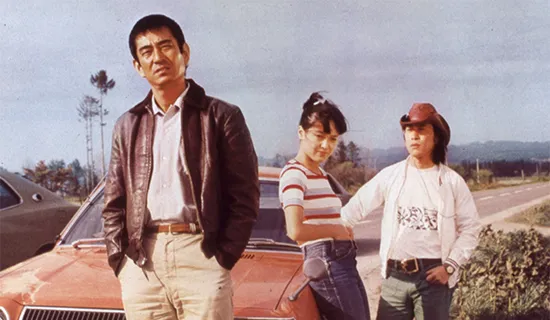
The Yellow Handkerchief (1977, Japan, directed by Yoji Yamada)
4. If you could collaborate with anyone in film history, who would unlock the most exciting project for you?
I would be excited if I could collaborate with Meryl Streep or Nagisa Ohshima.
5. What’s something making this film revealed about yourself that you didn’t know before?
I came to realise that I had been relying on dialogue to carry much of my expression. Through this experience, however, I learned that a person can exist as a powerful presence on screen even without speaking a single word.
Sato’s answers reveal an artist driven by instinct as much as ambition. Whether discussing the urge to write and perform that first pulled him towards filmmaking or reflecting on the power of silent screen presence, there is a clear fascination with how cinema communicates beyond words.
That makes Nameless an especially fitting project. While built around an extraordinary supernatural premise, the film appears equally interested in what cannot easily be explained: the impulses that drive people, the burdens they carry, and the invisible forces that shape their lives. Those themes are reflected in Sato’s own revelation that silence can often be as expressive as dialogue, a lesson that seems particularly relevant in a story centred on a man struggling to articulate the curse that defines him.
As Nameless introduces European audiences to its blend of horror, mystery and supernatural dread at Raindance, Sato remains focused on the wider world of cinema that first inspired him. Judging by his enthusiasm for discovering new voices and perspectives from across the globe, this latest chapter is as much about continuing that journey as it is celebrating the arrival of one of Japan’s most intriguing new genre films.
Nameless trailer