

Exclusive interview with Simeon Halligan on ‘Past Life’
- Interview
William Knowles
- 1
- 11 minutes read
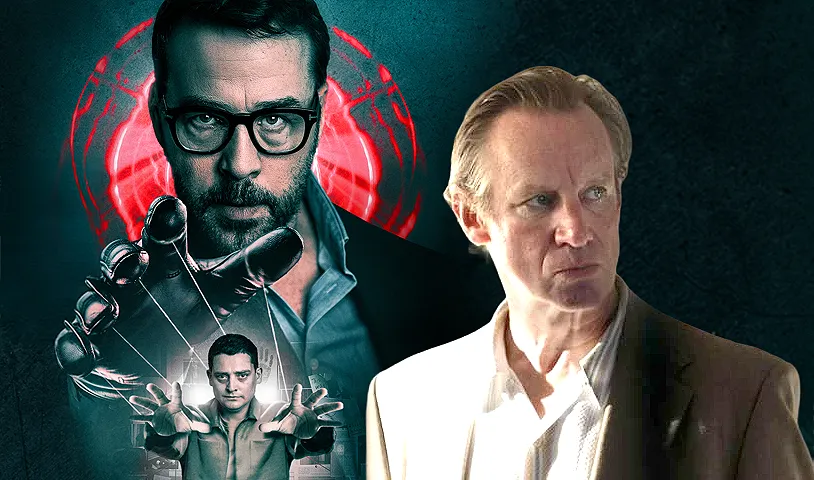
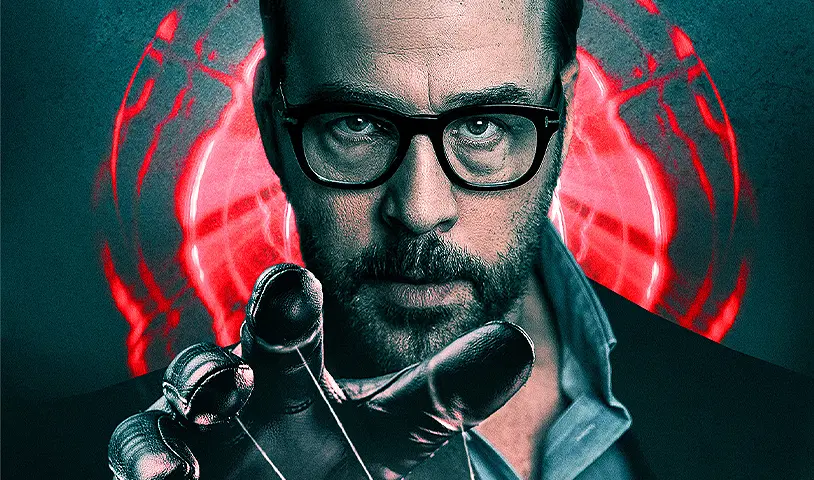
Grimmfest has long been a key fixture on the UK genre calendar, so it’s fitting that its 2025 edition played host to the world premiere of Past Life – the latest feature from filmmaker and festival co-director Simeon Halligan. A psychological thriller starring Aneurin Barnard, Jeremy Piven, Pixie Lott, Tim McInnerny and Nicholas Farrell, the film follows a traumatised former war reporter who undergoes past life regression, only to find himself haunted by the memories of a serial killer from the 1980s.
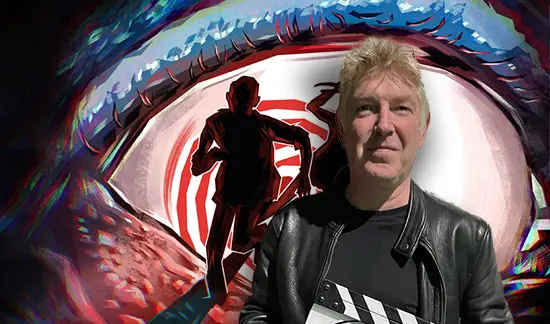
Directed by Halligan and developed in collaboration with writing duo Ray Bogdanovich and Dean Lines, Past Life combines investigative thriller elements with eerie psychological horror. Halligan is no stranger to the genre. A Royal College of Art graduate, he began his career as an art director and production designer before turning to filmmaking, and has since directed features including Splintered, White Settlers and Habit. He also co-founded Grimmfest in 2009, which has grown into one of the world’s most respected genre festivals.
We sat down with Halligan at Grimmfest to discuss the origins of Past Life, the evolution of its supernatural elements, the technical challenges behind its POV murder scenes, and his thoughts on past life regression itself.
Exclusive interview with Simeon Halligan on Past Life
William Knowles: So where did the initial idea for the film come from?
Simeon Halligan: I work with a writing duo called Ray Bogdanovich and Dean Lines on this project. We’d never done anything together before. We’re all based in Manchester, and they’d written some great stuff. One of the things they’re very good at is coming up with one-line ideas for films. They said, “We’ll throw you 20 one-line ideas and you can pick a couple you like, and we’ll develop them.”
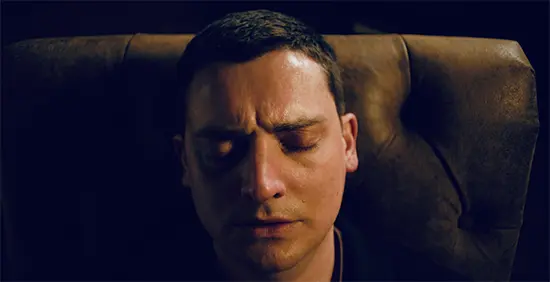
One of those was Past Life, and the original idea was something like, ‘What if someone was made to experience their past life and realised they were a serial killer?’ Eventually they wrote the first draft, and from there we developed it and developed it. It went on a long journey, I have to say. The script took a long time to get to the version that’s now on the screen.
For instance, in an early draft the lead character partnered with the journalist, and they were trying to solve this crime from the past together. But I started to think: you’ve got Aneurin Barnard’s character, who’s a journalist, and he doesn’t really need the skills of another journalist to solve it. I thought it’d be much more interesting if he partnered with the hypnotist, because the hypnotist has the skills he doesn’t have. That was the major turning point.
With all the themes you have in the film of PTSD and procedural elements, was the plan always to go for a thriller, or was there ever a point where you felt you might lean more supernatural or dramatic?
That’s an interesting question. Our lead character is haunted by these things he sees when he’s hypnotised. He wants to get these images out of his head, but when he goes back to the hypnotist to try and clear them, the hypnotist says he’ll have to take him on further to clear them properly. At that point he witnesses more of these murders in this hypnotised state.
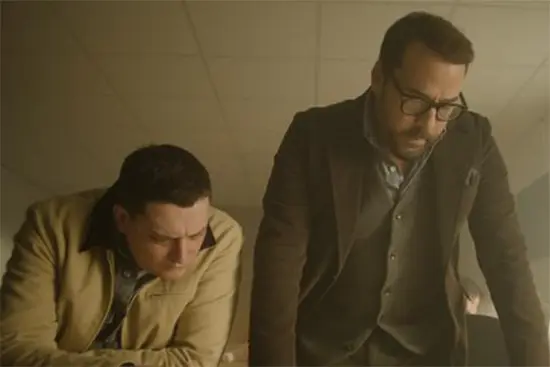
In earlier drafts, more of those visions were haunting his daily life. There were little moments where the victims came to him and he saw them, so the supernatural element was stronger at one point. But when we got to the final cut, that material just wasn’t working as well within the context of the piece we were making. There are one or two visions that ended up on the cutting room floor.
On the subject of the visions, a lot of them are told with POV shots. How was that different from filming the other scenes?
Very different. The first murder we shot used a head mount, like a helmet, because a lot of those scenes are filmed POV as if you’re seeing through the murderer’s eyes. It’s quite voyeuristic. We had a stunt performer wearing this head-mounted camera while doing all the action. It was heavy and kept slipping, which made it really difficult.
We used some of that footage, but we also relied a lot on a Ronin rig. It’s the same rig they used on Adolescence, that show which was shot entirely in continuous takes. It could move around and follow the action seamlessly. And then we even used a GoPro. When the head mount wasn’t working well, we switched to a GoPro on a headband, and that gave us some of those shots.
I’ve used those GoPros and I’m still surprised by their versatility.
Yeah, but what we found with the GoPro was that some of the visual quality wasn’t great. It’s degraded, especially when shooting in low light. We had so little time, and for some of those sequences we were just running out and had to shoot with whatever we could get. If we’d had more time, I probably wouldn’t have used the GoPro.
In the edit, the quality worked well enough, but we had to play with it because it’s quite grainy. Compared to shooting the main footage on the ARRI ALEXA, it’s a very different kind of quality. But I think we get away with it. When you see the murders, they’re in his head, in the past, so it’s like you’re seeing through this murk.
Would you say that was the biggest technical hurdle the film had, or were there scenes that caused more trouble?
Everything was tricky because it’s always a fight against time. Limited budget, schedule and money are always the things you’re battling. We built sets for a lot of the interiors at Vectar Studios in South Manchester, and tried to use the studio as much as we could.
The mind corridor sequence, where he sees this endless corridor of doors opening up to memories, was built as a set and then extended with green screen. It involved quite a bit of post-production to make it look like it stretched on forever.
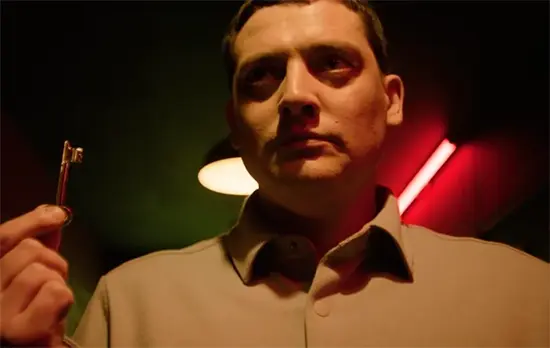
For driving scenes, we shot a lot in the studio with projection behind rather than going out on the road, because that’s really expensive. Complex driving requires a low loader with a car on the back of a truck and camera rigs attached, which is costly and involves road closures.
There’s a car jam scene later in the film, where the main character is rushing home to save his wife but suddenly has to stop in a traffic jam. We just put a load of cars in the studio car park at night, added some guys with “road closed” signs, and got away with it! We did a lot of cheats like that.
Moving away to a broader question, with the theme of hypnosis and past lives, do you have any personal experience with that, or are you more of a sceptic?
I don’t know. I’ve never tried it. I was thinking about trying it before the film, but I didn’t. I was a bit scared, a bit nervous. I mean, what if you do discover that you were a serial killer in a past life? That’d be pretty scary.
I talked to a lot of people who have hypnotised others to help them experience past lives, and quite a few people who have been hypnotised themselves. All of them were adamant that what they experienced was real. I really grilled them because I wanted to know what they saw and how it felt. They told me all sorts of stories about being in places that were definitely from the past.
It’s fascinating. I really don’t know what to think. It’s a great area for fiction to explore, and I’d love to come back to it. Whether I believe in it, I’m not sure. I’m convinced there’s something there, because what I heard was very convincing, but what it is exactly, I don’t know.

What’s the main thing you want audiences to take away from the film?
That’s a tricky one. I just hope they enjoy the journey and get involved with it. It’s an investigative thriller, trying to solve a crime from the past that follows through into the present day. I hope it’s gripping.
I was so lucky to get the cast I did, and I hope that helps audiences connect with the story. I was quite inspired by a film called Eyes of Laura Mars, a 1970s film John Carpenter wrote the script for. I wasn’t inspired by it initially, but as we worked on Past Life I saw similarities – the photographer who can see the killer’s visions in real time, for example. Serial killer films like Se7en, Memento and The Machinist were also inspirations.
Past Life marks a confident return to the director’s chair for Simeon Halligan, blending psychological unease with classic thriller structure and an inventive use of POV to place audiences uncomfortably close to the action. Premiering at Grimmfest, the film reflects Halligan’s deep understanding of genre both as a filmmaker and as a festival curator, and hints at rich thematic territory still to be explored.
Whether viewers leave the cinema questioning the reality of past life regression or simply caught up in the twists of its investigative plot, Past Life promises to linger in the mind long after the credits roll.





1 Comment
[…] Media has set a spring release for Past Life, a psychological thriller from Grimmfest director Simeon Halligan, with the film heading to UK cinemas on 20 March before arriving on digital platforms on 6 April […]