
Dead Northern Short Cuts – Vowels, MUFF and A Hand to Hold
- Interview
 Jasmine Clarke
- 0
- 13 minutes read
Over the years, lots of horror films have had a knack for making the internal horribly external. An anxiety, fear or unhealthy relationship can become something tangible, bloody and very difficult to ignore, and the three films in our latest Dead Northern Short Cuts take full advantage.
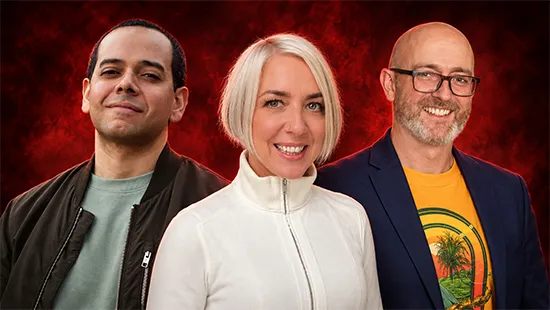
This time we’re meeting the filmmakers behind Vowels, MUFF and A Hand to Hold, three shorts that find very different reasons to put their characters through the genre wringer. One transforms the struggle with a speech impediment into horror, another digs into folk traditions surrounding courtship and commitment, while the third takes the idea of being unable to let go of a relationship to an exceptionally gruesome extreme.
Ahead of their screenings at Dead Northern 2026, we spoke to Rafael De Leon, Jane Renton and Philip Clyde-Smith about the films they’re bringing to York, the pleasures and occasional terrors of making them, and what they hope audiences will take away.
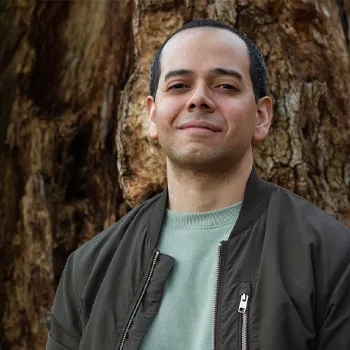
Rafael De Leon – Vowels
For writer-director Rafael De Leon, Vowels has its roots in something intensely personal. The horror short was inspired by the speech impediment he has experienced since childhood and the frustration, anger and embarrassment that can accompany struggling to say something that should seemingly come easily.
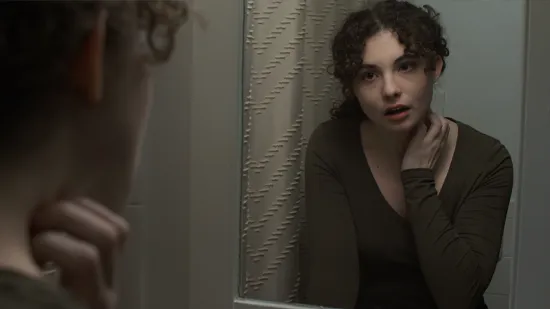
Turning that experience into horror, Vowels gives physical expression to a struggle its filmmaker has lived with for years, exploring both the impediment itself and the determination to persevere through it.
Who are you and why are you heading to Dead Northern 2026?
My name is Rafael De Leon, writer/director of the short horror film Vowels, screening at Dead Northern on Saturday, September 26.
Tell us about what it was like to be part of this production.
We had a great cast and crew that made this production smooth for the most part. It was challenging to shoot a pivotal make-up FX shot in very few takes due to time, but with the talents of lead actor Alexa Smith and make-up FX artist Anthony DiFolco, we pulled it off.
What part of seeing your film at Dead Northern are you looking forward to most?
Although I cannot attend Dead Northern, I hope that Alexa’s performance and the make-up FX elicit a strong reaction. I hope that the film’s story of struggling with an impediment and persevering connects with someone in a positive way.
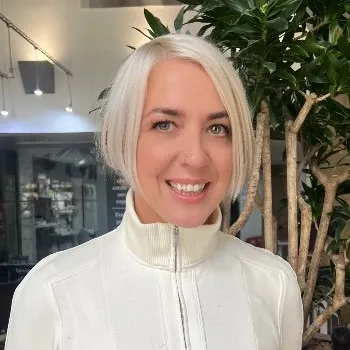
Jane Renton – MUFF
A supernatural accessory causes considerably more trouble than its owner bargained for in MUFF, a darkly comic folk-horror tale in which commitment-phobic Noah finds himself spellbound into fighting a duel for the hand of a spectral woman.
Inspired by the traditional folk song The Golden Glove, the film plays with the historic symbolism of a dropped glove as an object associated with both courtship and ill fortune. From there, it tumbles into a bloody fable about friendship, commitment, bodily autonomy and the recurring mistakes that surround romance, with a little help from the middle aisle of Lidl along the way.
Who are you and why are you heading to Dead Northern 2026?
I’m Jane Renton, a writer, producer and journalist. I wrote and produced MUFF, a comedy-horror starring Ronni Ancona while studying Comedy Writing and Production at the NFTS.
I love folk-horror. Its themes are deep-rooted and instinctive and I think it is particularly relevant now as we see some of the less savoury sides to human nature repeating in a domestic, cultural and global context. Of course how we act on a larger stage starts with how we act in our own lives, and what is more relatable than the repeated mistakes we make in our personal lives?
Going exclusive shouldn’t feel like having a gun to your head, unless it actually does. MUFF uses an old pre-Elizabethan folk song to explore ideas of courtship and engagement, and to flip the narrative on men being in charge.
I’m heading to Dead Northern because my comedy-horror MUFF is lucky enough to be screening in what is widely considered to be the most haunted city in Europe. What a treat! It is absolute folk-horror goals and the festival does not disappoint. And what a name for a festival based outside of London. Love it!
Tell us about what it was like to be part of this production.
Making MUFF was exhilarating, exhausting and fraught with very practical issues, such as being under a flight path which meant pausing shooting for far more than was practical on a one-day shoot.
As writer-producer I got to experience the peculiar pleasure of inventing something on the page and then discovering all the practical problems I’d created for myself. The biggest high was watching an extraordinary cast and crew take the idea seriously and make it properly funny and properly, messily gruesome.
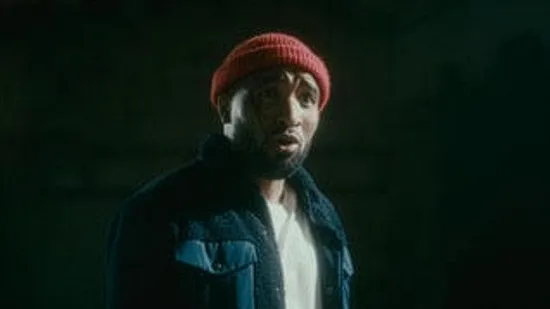
Having Ronni Ancona play the lead was a particular joy. It was a real family affair as my daughter, Lily, is an animator and designed the title sequence and also doubled up as a runner.
There were inevitably moments when time, money and practical filmmaking collided with what was in my head, but some of those limitations actually made the film better, memorably seeing the film come together via three editors!
Seeing this fairly peculiar idea gradually become a real film, and then watching audiences react to it, has probably been the most memorable part.
What part of seeing your film at Dead Northern are you looking forward to most?
The audience. Horror is wonderfully communal and comedy is completely dependent on other people being in the room, so comedy-horror really comes alive with an audience.
There are a couple of moments in MUFF where I still find myself waiting to hear what people do, whether they laugh, recoil, or ideally do both at once. As a journalist who has reviewed frequently, it is such a pleasure to see the reactions every time.
And after spending so long with a short film while you write it, make it, finish it and send it out into the world, there’s something so lovely about getting to sit in the dark and experience it as that shining idea again rather than the project that needs refining, fixing and filing.
Philip Clyde-Smith – A Hand to Hold
“Till death do us part” proves rather less definitive than expected in A Hand to Hold, a pitch-black Irish comedy horror about Moira, an elderly woman who finds herself literally attached to her deceased husband Patrick when his hand refuses to release its grip after death.
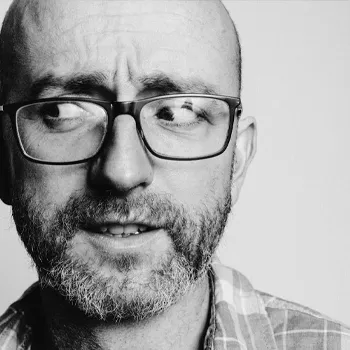
Attempts to separate the pair grow increasingly grotesque as everyone from their daughter and a local doctor to a farmer, priest and Satanist becomes involved. Mixing gruesome horror with black comedy, A Hand to Hold explores grief and toxic relationships while making the inability to let go horribly literal.
Who are you and why are you heading to Dead Northern 2026?
My name is Philip Clyde-Smith and I’m the director of A Hand to Hold. The script was written by Eliza Power and I approached her a while back as a desperate director looking for a film to make. Luckily no one had made A Hand to Hold, even though the script is award-winning. So with Eliza we went out to develop the film.
We managed to secure an amazing cast through the power of the script: Murray McArthur, How to Train Your Dragon; Frances Barber, Sammy and Rosie Get Laid; Frank Bourke, This Is Not a Murder Mystery; Lisa O’Connor, Call the Midwife; Shane Casey, The Young Offenders; Katherine Moran, Call the Midwife; and Jimmy Tarbuck, Sunday Night at the London Palladium.
Originally I thought we could film this over two days, over a weekend in an Airbnb. But once we got talking to our incredible SFX make-up artist Eve Pashley, who did all the SFX, she said there would be too much blood and it would destroy the flat.
Then we brought in Greg Mills to produce, who I have worked on commercials with for many, many years. Before you know it we had to raise a budget and we matched the quality of the cast with our crew, all people I have worked with before. It was, pardon the cliché, like a family.
Tell us about what it was like to be part of this production.
It was such a fun production to be a part of. I think having worked with most of the crew before, we worked well together. Deane Thrussell, our cinematographer, is a visual master, and was so supportive and full of solutions.
There was of course a lot of pressure. In the main SFX scene when the cast gets covered in blood, we only had one take to get it. So I took on the responsibility of throwing the bucket. We practised a few times outside the set but when it came to it I screwed up.
I hit the camera as I threw the bucket, making the bucket spin inwards and knocking the camera slightly. We were shooting super high speed so you couldn’t tell I screwed up until playback. I sat there shitting myself as the clip loaded and played back at 1000fps.
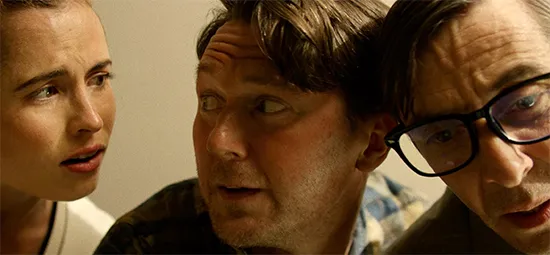
The shot worked. Not only that, because I knocked the camera, it created a perfect arc shape around Frances Barber’s face. I was a legend but also came very close to ruining the film.
We also built the set in an abandoned primary school in south London. Cheryl Tarbuck was our director with her incredible team, and they managed to build it for a really tight budget. It looks great on the big screen. The beds were so comfortable that sometimes Frances would come in early to sleep in them before shooting.
Also, finally, the thing I learnt was always order more fake blood. We actually ran out. Seriously though, surround yourself with really talented people and trust them. Also I’ve developed a great team with Eliza and we’re currently developing the short into a feature film.
What part of seeing your film at Dead Northern are you looking forward to most?
Unfortunately we are away in the US of A at the Catalina festival as we’re up for the Wes Craven Horror Award. However, I am sincerely gutted not to be there. The horror audience in the UK is the best. The passion and love for horror is awe-inspiring.
I love being in the audience seeing how people react to the film. The sound design at 750mph in London is another level. If it’s played in 5.1 it’s mind-blowing. As is the score by Brian Byrne, who is an established Irish film composer.
I sent him the first edit and he watched it with his son, who said to do the composition. So thank you Brian’s son!
Speech, sex, courtship, commitment and grief might not immediately sound like ingredients for the same shorts programme, but horror has never been particularly interested in leaving life’s more uncomfortable subjects alone.
Vowels makes an intensely personal struggle tangible, MUFF reaches back into folk tradition for its gleefully strange take on modern relationships, and A Hand to Hold finds exceptionally messy consequences in the inability to separate ourselves from someone else.
They are three more reminders that a short doesn’t need an enormous canvas to find something worth digging into. Sometimes one anxiety, one old song or one stubbornly attached hand is more than enough.
More filmmakers from the Dead Northern 2026 shorts programme will be stepping into the spotlight in the next Dead Northern Short Cuts.