
Our Happy Place (2024) Review
- Horror Film Reviews
 Tom Atkinson
- 1
- 5 minutes read
Our Happy Place is not the kind of horror film that seeks to dazzle with jump scares or excessive gore. Instead, Paul Bickel’s debut feature embraces a more insidious sense of dread, quietly worming its way under your skin through repetition, psychological instability and a slow, wintry descent into madness. It’s a pandemic-era horror, yes, but unlike some of the more opportunistic fare made under lockdown conditions, this one uses its limitations to eerie and effective ends.
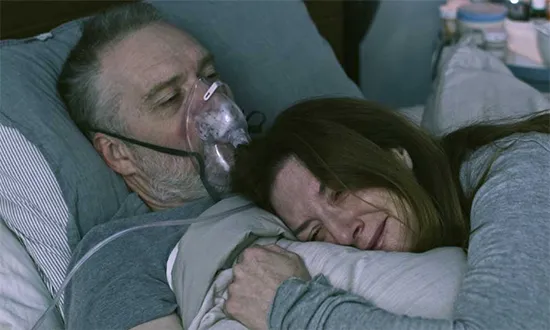
Raya, played with impressive emotional precision by newcomer Raya Miles, is the caretaker for her bedridden husband Paul, who lies wheezing under an oxygen mask in a remote cabin deep in the woods. Their isolation is a precaution against Covid, but it’s quickly clear that something much darker is gnawing away at Raya’s sense of self. Each morning, she wakes outside, in the snow. Then in a shallow grave. The imagery is blunt, but it’s powerful: a literal and metaphorical burying of the self, the past, and whatever truth she’s tried so hard to repress.
There’s a whisper of The Shining in the snowy wilderness, and a smattering of The Babadook in its grief-and-trauma symbolism, but Our Happy Place treads its own path. What sets the film apart is its commitment to psychological ambiguity. The viewer, like Raya, is left questioning reality. Are these dreams, visions, hauntings? Or is the horror simply the creeping loss of sanity brought on by grief, guilt and too much silence?
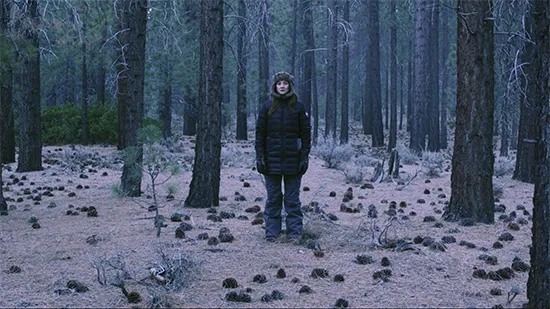
Paul Bickel, who not only directs but also plays Paul and handles cinematography, builds an oppressive atmosphere with limited means. The cabin is a sanctuary and a prison, shot in tight, claustrophobic frames. There are long stretches of silence, broken by distant cries or the hiss of Paul’s breathing machine. The shadows move in subtle, disquieting ways, and there’s an ever-present axe – at first just a household tool, later a potent emblem of violence, real or imagined.
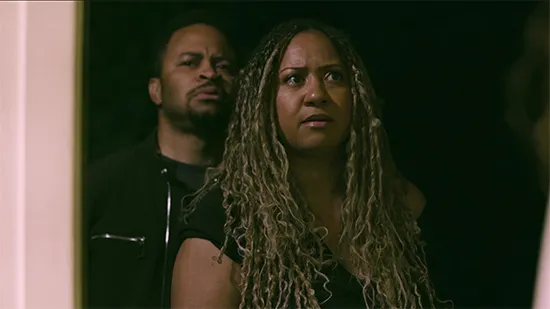
The supporting cast is sparse, but effective. Tracie Thoms is grounded and empathetic as Amy, Raya’s concerned friend, though her function is mostly to provide a sounding board and a contrast to Raya’s spiralling paranoia. Most of their interactions take place over screens, further reinforcing the sense of isolation.
Where this otherwise impressive achievement wobbles slightly, is in its rhythm. The repeated structure of Raya’s night walks and morning awakenings begins to drag midway through, and the variations, though meaningful, don’t always arrive with enough punch to justify the pacing. Likewise, the film’s conclusion, while thematically resonant, may feel a touch too telegraphed for some viewers. The clues are there from early on, and by the time the final reveal arrives, it risks undercutting its own impact.
Still, Our Happy Place achieves something many indie horrors aim for but few deliver, and that is a genuine sense of unease born not from monsters or murderers, but from the fraying threads of the mind. In Raya Miles, the film has a lead capable of carrying that burden, and in Paul Bickel, a multi-skilled filmmaker with promise and a gift for atmosphere. It is a film that undoubtedly gets under the skin, and lingers.
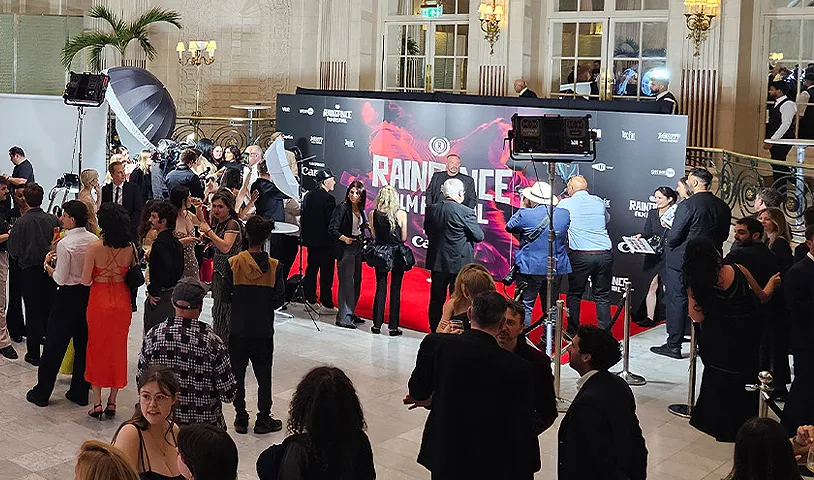
Our Happy Place screened at Raindance 2025 on 20th June.
| Movie Rating: |    |
Our Happy Place trailer





1 Comment
[…] Raya Miles delivers a powerhouse debut—she embodies exhaustion, confusion, and creeping paranoia with visceral precision. (Love Horror film reviews and news) […]