

Roger Corman: The Legacy of a Legendary Filmmaker
- Horror Features
 Jasmine Clarke
- 1
- 7 minutes read
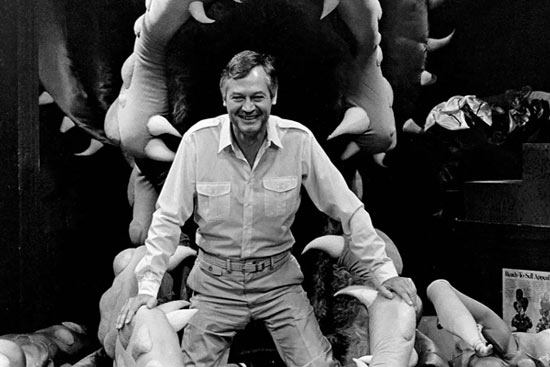
Roger Corman, a name that resonates deeply within the realms of horror and science fiction, recently passed away, leaving behind a legacy that has profoundly shaped the cinematic landscape.
Known as the “Pope of Pop Cinema,” Corman was more than just a filmmaker; he was an innovator, a mentor, and a pioneer who defied the constraints of traditional Hollywood. Over a career that spanned more than six decades, Corman’s contributions to film were as varied as they were influential. He possessed an uncanny ability to produce high-quality films on shoestring budgets, a skill that earned him a reputation as the master of the B-movie. His work not only entertained but also pushed the boundaries of genre filmmaking, creating a rich tapestry of horror and sci-fi that continues to inspire.
Corman’s influence extends far beyond the films he directed and produced. He was a visionary who saw potential where others did not, nurturing the careers of numerous young filmmakers who would go on to become some of Hollywood’s most respected names. His innovative approaches to filmmaking, including guerrilla techniques and independent production, revolutionised the industry, demonstrating that creativity and resourcefulness could triumph over financial constraints.
Before diving into filmmaking, Roger Corman studied industrial engineering at Stanford University. He briefly worked as an engineer before deciding to pursue his passion for film, a decision that would significantly impact the horror and sci-fi genres. Corman’s first job in the film industry was as a messenger at 20th Century Fox. This position allowed him to learn about the industry from the ground up, giving him insights into the mechanics of film production.
Here we look back at some of the biggest contributions he made to the evolution of film…

1. Master of the B-Movie
Roger Corman’s name is synonymous with the B-movie genre. His ability to produce high-quality films on incredibly low budgets is a feat few could replicate. Corman’s approach to filmmaking was innovative; he often completed films in a matter of days, utilising minimal resources while maintaining a compelling narrative. His 1960 film, The Little Shop of Horrors, is a prime example. Made in just two days and one night, this horror-comedy became a cult classic, showcasing Corman’s knack for combining humour and horror. The film’s success laid the foundation for future remakes and adaptations, proving that budget constraints could not hinder creative storytelling.
2. The Poe Cycle
In the early 1960s, Roger Corman embarked on a series of films based on the works of Edgar Allan Poe. These films, collectively known as the Poe Cycle, are among his most acclaimed works. Starting with House of Usher (1960), Corman captured the eerie and macabre essence of Poe’s stories, bringing them to life with vivid, gothic visuals and atmospheric tension. The films often starred Vincent Price, whose performances became iconic. Titles like The Pit and the Pendulum (1961) and The Masque of the Red Death (1964) are notable for their striking cinematography and haunting storytelling. The Poe Cycle not only demonstrated Corman’s ability to elevate genre filmmaking but also solidified his reputation as a master of horror.

3. Champion of New Talent
One of Roger Corman’s most enduring legacies is his role in nurturing new talent. Corman’s production company, New World Pictures, became a breeding ground for future Hollywood luminaries. He gave many now-famous directors their first big break, including Francis Ford Coppola, Martin Scorsese, James Cameron, and Ron Howard. Corman’s willingness to take risks on young, unproven talent fostered a new generation of filmmakers who would go on to shape modern cinema. For instance, James Cameron’s early work on Piranha II: The Spawning (1981) under Corman’s guidance provided the foundation for his illustrious career. This commitment to mentoring emerging artists remains one of Corman’s most significant contributions to the film industry.
4. Innovations in Independent Filmmaking
Roger Corman’s approach to independent filmmaking was revolutionary. He utilised guerrilla filmmaking techniques long before they became mainstream, shooting on location without permits and working with skeleton crews. Corman’s methods allowed him to produce a vast number of films quickly and efficiently, often outside the traditional studio system. His emphasis on creative control and financial independence inspired countless indie filmmakers. Films like The Wild Angels (1966) and Death Race 2000 (1975) not only pushed the boundaries of genre filmmaking but also demonstrated the viability of independent film production. Corman’s success in this realm paved the way for the rise of independent cinema in the 1990s and beyond.

5. Prolific Career and Cultural Impact
With over 400 film credits as a producer and director, Roger Corman’s prolific output is unmatched. His films have covered a wide array of genres, from horror and sci-fi to action and exploitation. This versatility ensured that Corman’s work reached diverse audiences, leaving a lasting impact on popular culture. His influence is evident in the numerous tributes and homages found in modern cinema and television. Moreover, Corman’s work ethic and business acumen have been subjects of study and admiration in film schools worldwide. His autobiography, How I Made a Hundred Movies in Hollywood and Never Lost a Dime (1990), offers insights into his unconventional career and remains a valuable resource for aspiring filmmakers.
Roger Corman’s death marks the end of a remarkable era in filmmaking, but his legacy will continue to inspire and influence generations of filmmakers and cinephiles. His ability to blend creativity with pragmatism, his eye for talent, and his relentless pursuit of independent filmmaking have left an indelible mark on the industry. Corman’s contributions to horror and science fiction are particularly noteworthy, with his films continuing to captivate and thrill audiences. As we remember Roger Corman, we celebrate a life dedicated to the art of cinema, and we look forward to seeing his enduring influence in the films of tomorrow.




1 Comment
[…] Love Horror mentions that, Roger Corman, a legendary filmmaker and producer, was renowned for his pr…. Known as the “Pope of Pop Cinema,” Corman directed and produced hundreds of low-budget films, many of which became cult classics. He provided early opportunities for directors like Francis Ford Coppola, Martin Scorsese, and James Cameron. […]