
Poltergeist II: The Other Side (1986) Review
- Ghosts Horror Film Reviews
 Tom Atkinson
- 0
- 6 minutes read
The success of the original Poltergeist (1982), a masterful blend of suburban anxiety and supernatural terror, seemed to guarantee a rich future for the franchise. Directed by Tobe Hooper and famously guided by Steven Spielberg, the film remains a textbook case of how to balance heart-pounding scares with moments of familial tenderness. By contrast, Poltergeist II: The Other Side has always felt like a pale echo of its predecessor – a sequel that revisits familiar territory but struggles to carve out its own identity.
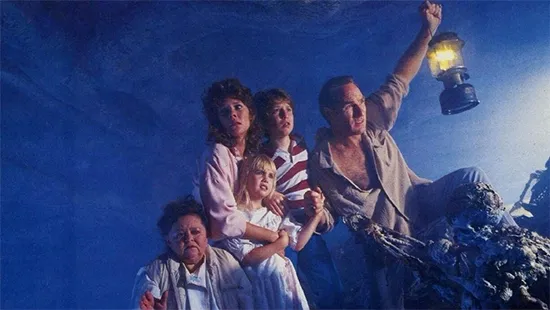
Set a year after the events of the original, Poltergeist II finds the Freeling family – Diane (JoBeth Williams), Steven (Craig T. Nelson), Robbie (Oliver Robins), and the ever-captivating Carol Anne (Heather O’Rourke) – attempting to rebuild their lives. Now living with Diane’s mother, they’re haunted not just by the memories of their spectral ordeal but by literal ghosts who refuse to let go. Their suburban nightmare is far from over.
The first problem with Poltergeist II is its insistence on overexplaining the haunting. The original film thrived on the unsettling ambiguity of its paranormal activity, rooted in a suburban home built atop a desecrated burial ground. Here, the mystery is stripped away in favor of an elaborate backstory involving a deranged preacher, Reverend Kane (a genuinely unsettling Julian Beck), and his fanatical followers. Kane, it seems, led his flock to their doom beneath what became the Freelings’ home. While this adds a certain mythological heft, it also removes the elemental fear of the unknown that made the original so effective.
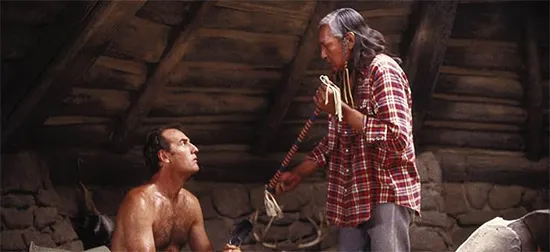
Director Brian Gibson, working from a script by Michael Grais and Mark Victor, leans heavily on the tropes established by the first film. Creepy toys, ominous mirrors, and inexplicable phenomena abound, but the sense of wonder and dread feels mechanical rather than inspired. The plot lumbers along, alternating between contrived family drama and supernatural set pieces. Steven’s descent into alcoholism, punctuated by an absurd possession scene involving a tequila worm, is emblematic of the film’s broader issues—it’s grotesque and memorable but utterly lacking in emotional weight.
The returning cast does their best with the material. JoBeth Williams imbues Diane with a warmth and strength that anchors the film, even when the script reduces her to a worried mother. Craig T. Nelson veers into caricature at times, but his fiery outbursts are undeniably entertaining. Heather O’Rourke remains the heart of the story, her angelic presence lending gravitas to the chaos around her. Meanwhile, Will Sampson’s Native American mystic, Taylor, offers a calming counterbalance, even if his character often feels like a walking stereotype.
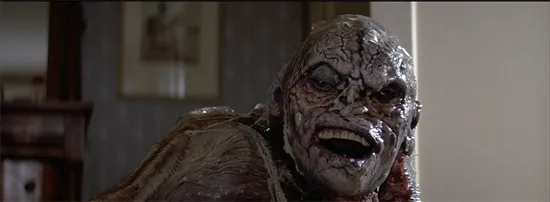
Where Poltergeist II does succeed is in its visual and practical effects. The late H.R. Giger contributed some wonderfully nightmarish designs, most notably the grotesque tequila worm-turned-monster. The effects team crafts sequences that are alternately awe-inspiring and horrifying, even if they lack the polish of modern CGI. However, the film’s climactic showdown on “the other side” is a muddled mess, filled with garish colors and laughable matte lines that undermine any sense of menace.
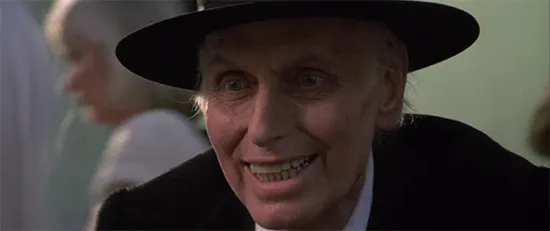
Julian Beck’s performance as Reverend Kane is the film’s standout element. Beck, visibly weakened by terminal cancer during filming, turns his physical frailty into an asset. His gaunt visage and eerily soft-spoken demeanor make Kane one of horror’s most memorable villains, even if the character is underused. His unsettling hymn, delivered with unnerving conviction, lingers in the mind and is often the first thing to come the minds of long-term horror fans when the film is mentioned.
Poltergeist II: The Other Side is a sequel burdened by the weight of its predecessor. It tries to replicate the magic of the original but falters in its attempt to deepen the mythology. By leaning too heavily on exposition and rehashed scares, it loses sight of what made Poltergeist so enduring: its ability to evoke fear while celebrating the resilience of family. It should be said that this isn’t a bad film. It’s competently made and occasionally thrilling, and still has that unmistakeable 80s nostalgic appeal. Sadly though, it never really justifies its existence.
For fans of the original, it’s worth a watch, if only to see Beck’s haunting portrayal and Giger’s monstrous creations.
| Movie Rating: |    |
Poltergeist II: The Other Side trailer