
Last Night in Soho (2021) Review
- Ghosts Horror Film Reviews
 Tom Atkinson
- 0
- 6 minutes read
Edgar Wright’s Last Night in Soho is a kaleidoscopic plunge into the past, drenched in neon hues and haunted by the specters of dreams deferred. The film stars Thomasin McKenzie as Eloise, a young, aspiring fashion designer who leaves the bucolic comfort of Cornwall for the bustling, vibrant chaos of London, only to find herself swept away into the swinging sixties each night. This transportive experience begins as a glamorous escapade but swiftly spirals into a chilling descent, revealing the sinister underbelly of an era often romanticised for its glitz and glamour.

From the outset, Wright establishes his film with a visual bravado that is both mesmerising and unsettling. Eloise’s journey is punctuated by the infectious beats of 60s music, her connection to her late mother palpable in every note. This musical motif is not just a nostalgic flourish but a conduit for Eloise’s temporal voyages, with Cilla Black’s “Anyone Who Had a Heart” serving as the siren call that lures her into the shimmering past. The film’s cinematography, helmed by Chung-hoon Chung, is a masterclass in visual storytelling. His work, known from classics like Oldboy and The Handmaiden, drenches Last Night in Soho with a lush, vivid quality that captures both the allure and the menace of Soho’s nightlife.
The initial sequences where Eloise is introduced to Sandie (Anya Taylor-Joy), an ambitious singer dreaming of stardom, are nothing short of enchanting. Wright employs an impressive array of practical effects and choreography to seamlessly blend the identities of Eloise and Sandie, creating a duality that is as captivating as it is disorienting. Taylor-Joy almost seems to be made for period films and TV shows, easily adopting her look and behaviour to the early 1900s (Peaky Blinders) or 1950s (The Queen’s Gambit) .Here, her timeless visage, embodies the aspirational allure of the 60s, her performance a poignant contrast to the darker, more predatory realities that lie beneath the surface.

As Eloise’s nightly excursions into Sandie’s life grow darker, the film shifts from a vibrant period piece to a psychological thriller with supernatural overtones. Matt Smith delivers a compelling performance as Jack, Sandie’s charming yet increasingly sinister manager, whose transformation from suave impresario to malevolent pimp encapsulates the film’s critique of the exploitation rampant in the entertainment industry. The horrors that Eloise witnesses are not just figments of the past but reflections of ongoing societal ills, making Last Night in Soho a commentary on the cyclical nature of abuse and the objectification of women.
Wright’s screenplay, co-written with Krysty Wilson-Cairns, deftly navigates multiple genres, though not without occasional missteps. The narrative is ambitious, seeking to blend coming-of-age elements with horror, mystery, and supernatural thriller tropes. For the most part, this amalgamation works, thanks to Wright’s assured direction and the film’s impeccable production design. However, the plot’s need for a climactic twist feels somewhat contrived, undermining the otherwise compelling buildup.
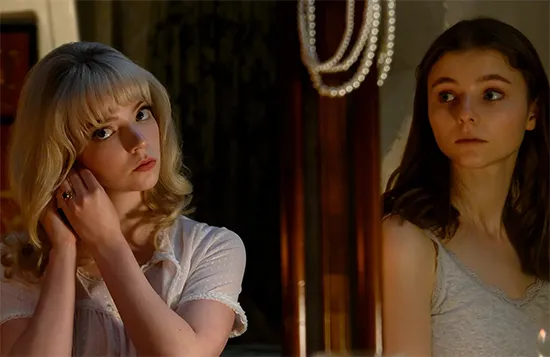
The film’s thematic exploration of the past’s impact on the present is mirrored in its critique of nostalgia. Eloise’s idealised vision of the 60s is gradually dismantled, revealing a reality marred by misogyny and violence. This deconstruction is visually represented through the increasingly fragmented and nightmarish sequences that blur the lines between dream and reality. The use of color, particularly red, evolves from symbolising the seductive allure of Soho to representing danger and bloodshed, a transformation that underscores the film’s dark thematic shift.
In terms of performances, Last Night in Soho is sound. McKenzie and Taylor-Joy are mesmerizing, their performances imbued with a raw emotionality that grounds the film’s more fantastical elements. McKenzie instantly makes a connection with the audience and is perfect at portraying the vulnerable, yet tortured and determined teen. Diana Rigg, in her final role, delivers a standout performance as Ms. Collins, the enigmatic landlady whose past is intricately tied to Sandie’s fate. Rigg’s portrayal adds a layer of gravitas and tragedy to the narrative, her character serving as a bridge between the eras and a poignant reminder of the passage of time.

Last Night in Soho is generally enjoyable and engaging to watch. It’s a part ghost story, part mystery journey back through time. Unfortunately the film’s resolution, while surprising, does feel a little rushed and somewhat disjointed, as if the need for a shocking conclusion took precedence over narrative coherence. This detracts from the otherwise meticulous pacing and character development that precede it. Additionally, the supernatural aspects of Eloise’s visions are not fully fleshed out, leaving certain plot points ambiguous and underexplored.
Last Night in Soho is a visually stunning and thematically rich addition to Edgar Wright’s filmography. It is a film that dazzles with its stylistic flourishes and engages with its psychological depth, even if it occasionally falters in its narrative execution. Wright’s foray into horror is a bold reinvention, showcasing his versatility as a filmmaker while offering a haunting reflection on the perils of nostalgia and the enduring scars of exploitation.
| Movie Rating: |    |
Last Night in Soho trailer