Sweet Violence (2026) Review
- Horror Film Reviews Psychological
 Darren Gaskell
- 0
- 5 minutes read
After twenty years in prison, Esteban González is finally going to be released from prison. He’s always pleaded innocence and looks to build a new, quiet life for himself but a family has been waiting for this day to come so they can track down and murder the man whom they believe is responsible for the death of their daughter…
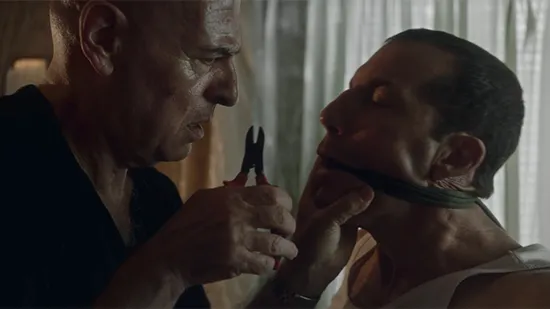
Sweet Violence opens with a young boy fishing in a river who’s approached by a dodgy looking guy called Maldonado who, after a bit of a chat about knives, establishes his unhinged credentials in a slightly unexpected way – not telling you how – and disposing of a gun in the water. We’re then shown the caption “13 DIAS ANTES” and the plot rewinds to almost a fortnight before with no sign of Maldonado. Instead, we’re introduced to a group of men discussing just how and when to make González pay for his crimes, with the overriding mantra of his forthcoming assassination not being about revenge, but about prevention so that he never gets to take another life.
After directing three shorts, Jeremias Segovia makes his feature bow with a thriller which initially hints at a Big Bad Wolves style of premise but avoids making any kind of lengthy, post-capture torture sequence the centre of its gritty universe. Juan Martín Alonso’s screenplay switches between vigilantes, vixens and villains and the overlapping action provides regular reveals which are then explained by means of numerous backward jumps on the timeline. This has the effect of not only causing the viewer to flip flop as to whether González is the killer, but to consistently re-evaluate the information provided regarding the integrity of just about everyone in the piece.
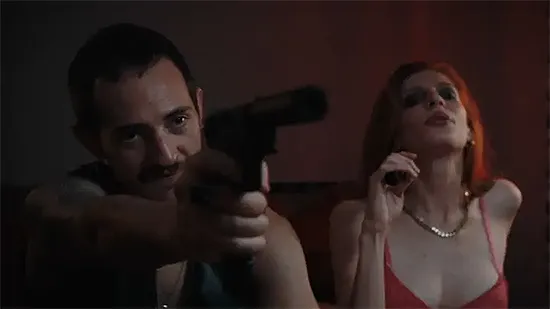
The general tone of Sweet Violence is bleak, epitomised by the subplot involving an adopted dog which is resolved in exactly the way you think, although for anyone worrying about on screen harm it’s only alluded to, albeit in a disturbing way. Characters are undone by their own hubris or naivety, constantly blundering into dire situations of their own making and only managing to make the future look somehow even less rosy for themselves. Almost every decision made is bad at best, catastrophic at worst.
The wider group of players proves a double-edged sword. The different motivations of González’s pursuers muddies the water intriguingly – some want him to die as quickly and painfully as possible, some need answers as to the fate of their loved one – and the question of which approach will win out hangs in the air. This also has the effect of bogging down the second act of the film in particular, which also has to resolve the somewhat Tarantino-esque shenanigans of Maldonado and partner as he looks to be paid what he thinks he is worth for his services. This scene, as well performed and suspenseful as it is, almost feels like it belongs in an entirely different film, despite having its own vicious kicker.
All paths cross in a final, nihilistic twenty minutes which features brutal, unfiltered violence – as to whether it’s sweet depends on each different character – and a sour resolution which is made even more bitter by the very last shot, which is an absolute kick in the pants of a callback, referring to a line of dialogue spoken much earlier in the proceedings which has the throwaway, jokey, cheerfully offensive tone of something to which you need to pay attention.

Sweet Violence is grim fare indeed and its occasional departures into more sympathetic territory are quickly obliterated by its zeal to show a series of awful events perpetrated by a bunch of awful people. In an age of ads for feel good movies, this is a feel bad movie and I’m not entirely sure I wanted to be left so despairing for humanity as the end credits rolled. Still, it’s effectively nasty if you’re in the mood and can lean into the frequent meandering before it reaches its inevitable, ominous point. It doesn’t have enough to separate it from countless other downbeat crime stories but, very much in line with Maldonado’s ethos, there’s a focus on getting the job done.
| Movie Rating: |   |
Sweet Violence trailer