Craig Conway Brings ‘Red Riding’ to FrightFest
- Horror Features
 Jasmine Clarke
- 0
- 7 minutes read
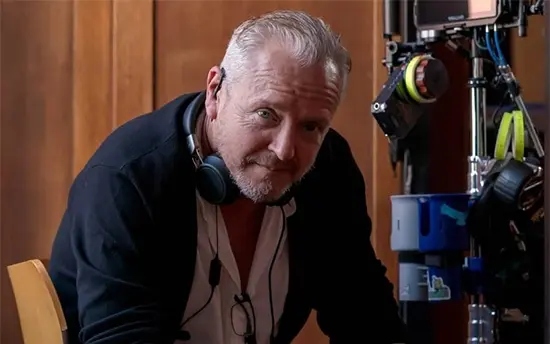
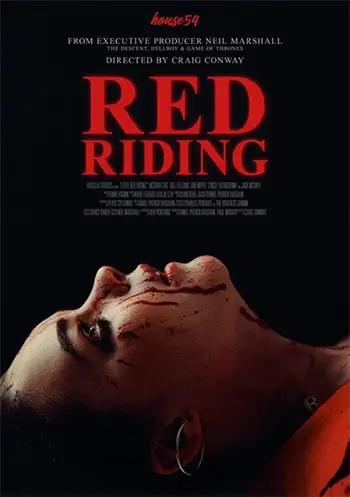
As Red Riding prepares to make its world premiere at FrightFest Glasgow 2026, director Craig Conway stands at a pivotal moment in a career that has quietly but decisively evolved over more than two decades. Best known to genre audiences for his intense screen performances in films such as Dog Soldiers and The Descent, Conway now steps fully behind the camera with a debut feature that refuses comfort, clarity, or easy morality.
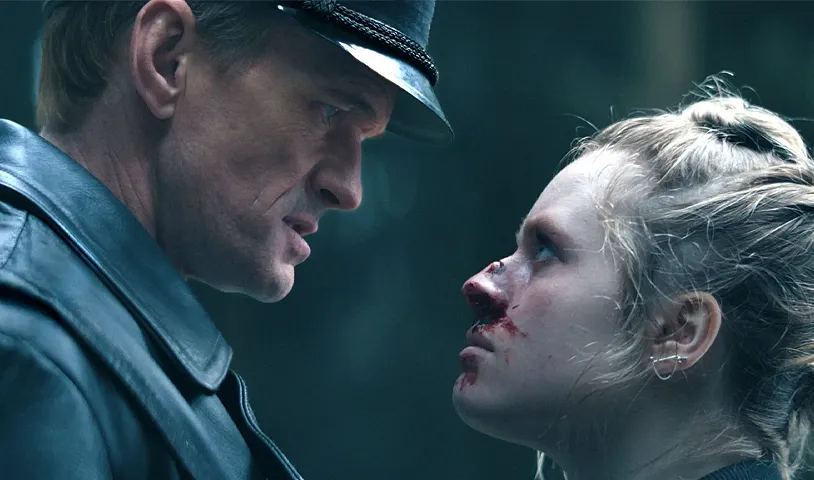
Reimagining the Little Red Riding Hood myth through a contemporary, socially grounded lens, Red Riding follows a teenage girl displaced from London to a remote Scottish estate after her mother’s overdose, only to uncover a legacy of violence, control and buried secrets. For Conway, the fairy tale was never the point. “I wasn’t interested in retelling a fairy tale, I was interested in what the story doesn’t say,” he explains. “Red Riding is about survival, power, and the moment innocence fractures.”
That thematic focus drew him to writer Peter Stylianou’s script, which Conway describes as “exciting” and “truly special, dark but special” after extensive development with producer Daniel Patrick Vaughn. The recognisable framework of folklore became a tool rather than a constraint. “The fairy tale framework gave us permission to explore the themes without softening them,” Conway says, stressing that the film deliberately resists moral binaries. “I’m always drawn to stories that sit in the grey, where there are no clean heroes or villains. This film isn’t about punishment or morality; it’s about what people become when they’re forced to endure.”
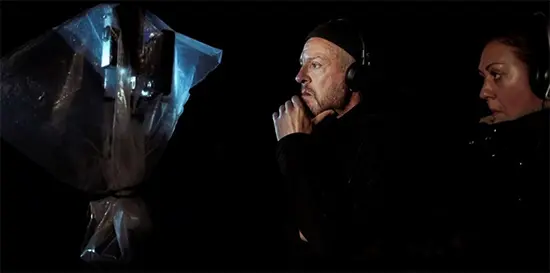
As a first-time feature director, Conway was struck less by technical challenges than by the emotional responsibility of leadership. “Directing a feature taught me that leadership is emotional, not technical,” he reflects. “The job isn’t just about framing shots. It’s about creating an environment where people feel safe enough to take risks.” Coming from an acting background, he was acutely aware of how vulnerable performers can feel on set. “I carried that responsibility seriously,” he says. “If Red Riding works, it’s because everyone involved trusted each other to go to uncomfortable places together.”
That trust was essential in a film that often finds its power in stillness rather than spectacle. Conway singles out the quieter scenes as the most demanding. “There are scenes where nothing ‘happens’ on paper, but everything is happening underneath,” he explains. “Those moments live or die on restraint.” In a genre often driven by escalation, Conway made a conscious decision to pull back. “The most unsettling things are often what you’re left alone with.”
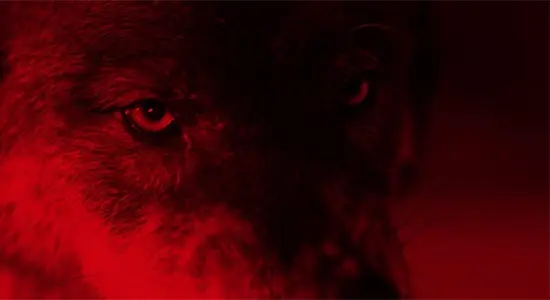
Location plays a crucial role in sustaining that unease. The film opens in the North East of England, where Conway grew up, before moving to a Scottish estate near Nairn. “Atmosphere wasn’t decoration, it was the foundation,” he says. “The landscape needed to feel indifferent, isolating and slightly hostile.” The Scottish locations, in particular, became integral to the storytelling. “It doesn’t flatter you and it doesn’t apologise. That suited the film perfectly and it actually became another character in and of itself.”
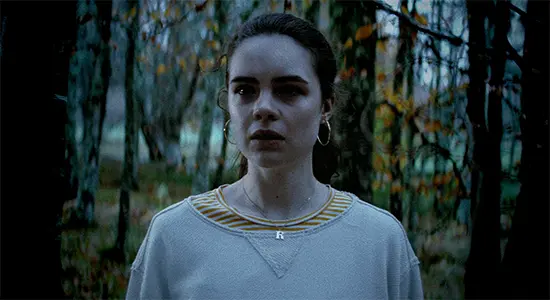
Central to the film’s impact is newcomer Victoria Tait, who makes her screen debut as Redelle. Conway was immediately struck by her presence. “Victoria has an extraordinary stillness,” he says. “She doesn’t signal emotion, she allows it.” He praises her refusal to soften the role. “She didn’t try to make the character likeable or palatable. She trusted the material and committed fully, and that integrity is what makes the performance resonate.”
Although Red Riding marks a significant shift, Conway has no intention of abandoning acting altogether. “Acting will always be part of me,” he says, “but directing feels like a natural evolution.” Horror, too, remains central to his creative language. “I don’t think of it as a genre so much as a language. It’s a way of talking about fear, power and identity without pretending things are neat or safe.”
Support from long-time collaborator Neil Marshall, who executive produces the film, proved invaluable. “His involvement came from trust rather than strategy,” Conway notes. “He understood the film immediately and backed it without trying to reshape it.”
Looking ahead, Conway’s ambitions extend beyond his own projects. Through CM3, his North East-based initiative, he aims to build sustainable infrastructure for regional filmmaking. “Talent shouldn’t have to leave home to be taken seriously,” he says. “Red Riding is proof that ambitious, challenging films can be made outside traditional centres if the support system is there.”
For Conway, that long-term vision matters as much as the film itself. “My aim isn’t just to make films,” he concludes. “It’s to make a future where films can keep being made.”
Red Riding screens at Glasgow Film Theatre on Saturday 7 March at 5.30pm as part of FrightFest Glasgow 2026, with Craig Conway in attendance.
For more info on FrightFest Glasgow, visit: frightfest.co.uk/2026Glasgow/