
Marshmallow (2025) Review
- Horror Film Reviews Slasher
 Tom Atkinson
- 0
- 5 minutes read
Daniel DelPurgatorio’s Marshmallow begins in the way many summer camp horrors do: with wide-eyed kids, slightly overbearing counsellors and the promise of spooky fireside tales. Yet from its earliest moments, it signals something stranger and more ambitious.
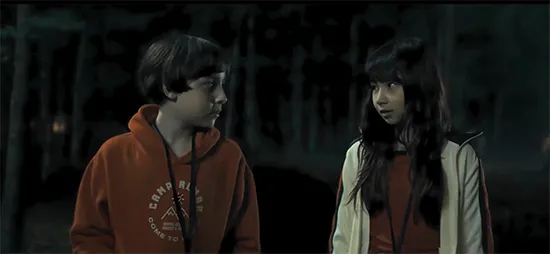
The film opens inside the feverish dream of Morgan (Kue Lawrence), a 12-year-old still grieving the death of his grandfather. Images of drowning and suffocating anxiety establish a note of unease, not least because they’re seen through the lens of childhood fear. Before long, Morgan finds himself shipped off to Camp Almar, where bullies prowl, misfits huddle together for comfort, and the air is thick with urban legends about a figure known only as “The Doctor.”
Early on, it’s easy to think we’re in ‘been here before’ territory. It’s a landscape reminiscent of Friday the 13th or Sleepaway Camp, with prank-pulling counsellors and whispered stories around the campfire. But DelPurgatorio and screenwriter Andy Greskoviak are careful not to retread too much slasher ground. The revelation that the children, rather than the adults, are the ones in real danger immediately changes the dynamic. This pushes the story away from more expected beats and into something far more unsettling.
Marshmallow is immediately engaging, and a lot of that is because of the characters. Morgan is no generic horror protagonist. He’s introverted, fragile, and prone to visions that blur the line between nightmare and reality. Lawrence gives him a quiet determination that makes him easy to root for, especially when paired with Dirk (Max Malas), another outsider nicknamed “Doink” by the crueler campers. Their friendship provides the emotional backbone of the film, lending weight to scenes that could otherwise have felt perfunctory. There’s also room for warmth in Morgan’s budding affection for Pilar (Kai Cech), though the story never lets sentimentality override the creeping dread.
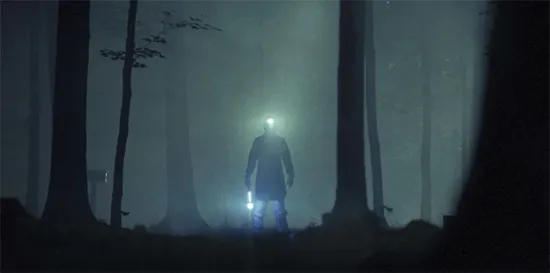
On the style front, there’s more than a touch of Amblin melancholy in the early parts of the film, while the blend of adolescent camaraderie and encroaching menace inevitably invites comparison with Stranger Things. But Marshmallow is far from an exercise in nostalgia. Its setting, loosely pinned to the early 2000s, feels deliberately slippery in order to make the experience more timeless. Rather than inviting us to wallow in retro window-dressing, it taps into more universal childhood anxieties like the fear of isolation, the terror of being disbelieved, and the vulnerability of being far from home.
Where some festival discoveries stumble, Marshmallow manages to shift gears convincingly. Once The Doctor emerges from legend into reality, the film trades in not just scares but ideas. This isn’t a splatter-heavy romp; the violence is there, but it’s sparing, and often laced with an uncanny, almost science-fictional edge. By the final act, we’re in territory that feels closer to The X-Files or Black Mirror than to The Burning. It’s bold, inventive and just a little eccentric.

One small drawback is that the film’s climax comes too late, and the film doesn’t quite have the space to explore its most intriguing concepts. Some audiences may find the final stretch rushed, with revelations arriving thick and fast without the grounding they deserve. But even here, there’s an energy and a willingness to take risks that mark DelPurgatorio as a filmmaker to watch.
Marshmallow is unsettling, occasionally flabby, but never dull. It has a superb young cast and a story that refuses to play by the rules, it turns a tired setting into something memorable.
| Movie Rating: |    |
Marshmallow trailer