
Are Horror Movies Really a Gateway to Hell?
- Horror Features
 Jasmine Clarke
- 1
- 5 minutes read
Could watching horror movies open a genuine gateway to demonic influence? It’s a notion that might seem laughable to some, but actress Candace Cameron Bure is entirely serious.
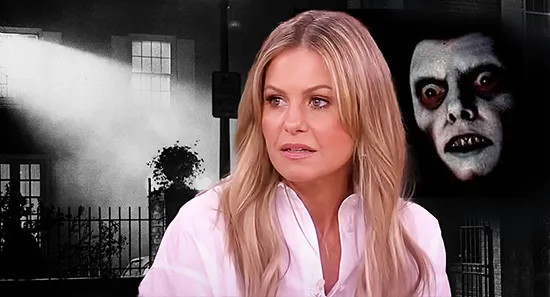
The Full House star made headlines recently by arguing that horror films do more than just frighten audiences – they can open spiritual doorways into viewers’ homes. “If you’re watching [horror], that’s a portal that could let stuff inside,” Bure stated on a recent episode of her podcast, further explaining, “I don’t even want someone watching a scary movie in our house on the TV, because to me, that’s just a portal.”
This isn’t entirely new territory. The concept of films carrying spiritual threats or curses has been around for decades. During the filming of classics like The Exorcist and Poltergeist, strange and tragic events befell cast and crew members, fueling speculation of a supernatural curse around these films. Heather O’Rourke’s tragic death following her role in the Poltergeist films and accidents surrounding the production of The Omen set contributed heavily to this eerie mythology. Wether there was any substance to the claims, or whether they were stories that simply helped promote the film us open to debate.
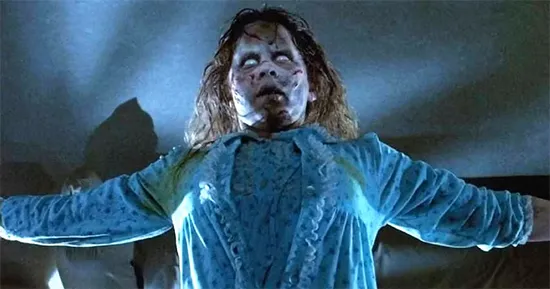
But is there any substance to Bure’s claim, or is this just modern-day superstition?
Back in the 1970s, The Exorcist triggered such intense reactions – fainting, panic attacks, even supposed possessions – that religious leaders felt compelled to publicly denounce the film. Evangelist Billy Graham reportedly claimed that evil “pervaded every frame.” This phenomenon, known among psychologists as “The Exorcist Effect,” demonstrates the genuine power films have to provoke extreme emotional and psychological responses, particularly among viewers predisposed to supernatural beliefs.
That fear intensified into outright panic during the “video nasties” scandal of 1980s Britain, where low-budget horror films on VHS became scapegoats for moral decay. The resulting hysteria saw dozens of films banned or prosecuted, driven by campaigners like Mary Whitehouse, who argued that exposure to graphic horror content would inevitably lead viewers down paths of violence and depravity.
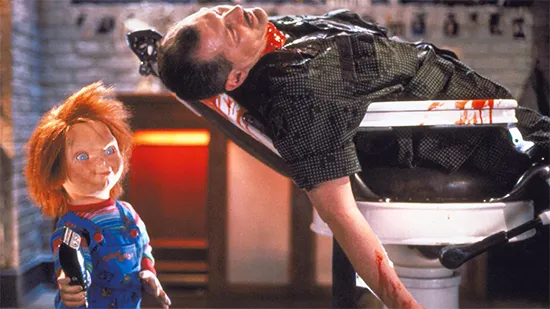
The most alarming incidents, however, have occurred when horror movies have been directly blamed for violent acts. In 1986, Massachusetts teenager Rod Matthews committed murder, later stating that viewing the controversial Faces of Death influenced his actions. Similarly, in Britain, media sensationalism unfairly connected Child’s Play 3 to the notorious James Bulger murder case, despite no solid evidence linking the film to the killers’ actions.
Still, experts mostly dismiss direct causal links between horror films and violent or supernatural outcomes. Clinical psychologists stress that reactions such as panic or paranoia are psychological, not spiritual, phenomena. The American Psychological Association maintains there’s insufficient evidence that violent media directly causes violent behaviour, let alone supernatural interference.
Yet for Candace Cameron Bure, and many others, belief isn’t purely about evidence. Her stance aligns with long-held fears about media as spiritual contagion, echoing centuries-old religious anxieties around “cursed” objects or stories. To her, the symbolic threat horror poses is as real and palpable as any physical danger.
So, while the scientific consensus remains skeptical, the emotional and psychological impact of horror films is undeniable. Whether viewed as portals to hell or simply powerful storytelling, their ability to unsettle is unmatched – and perhaps that ambiguity is precisely why they continue to fascinate and frighten audiences worldwide.
What do you think? Are horror films pure fun, or could they unlock hidden portals to darker realms?




1 Comment
A very interesting topic for discussion. First, I I’d really like to know if Candace Cameron Bure would feel the same way about Universal’s original Frankenstein, or the Creature of Black Lagoon? Or if her opinion only applies to modern horror, which is frequently visceral and sometimes blasphemous?
I can understand her doubts about the latter. I was a kid in the 1970s, and I loved horror. Even then, it wasn’t necessarily bloodless, but movie blood was used sparingly for the big shocks, and often had a sort orangey, unreal quality to it. We knew that it wasn’t real, and that no one was getting hurt. It was a big part of enjoying the scares.
Now, movie blood is absolutely realistic, and in some films, gallons of the stuff seem to be soaking the cast and scenery. Maybe that’s why the appearance of blood alone doesn’t seem to be enough anymore, and we’re now seeing large quantities of limbs, organs, and intestines showing up in horror movies. And maybe this is why there isn’t enough room for a decent plot in many of them, or characters you can actually care about.
I don’t say that every modern horror is like this. But many of them frequently are, and churned out with depressing regularity. Maybe it’s good that the characters are often wooden and hard to care for, since frequently everybody dies at the end anyway. I used to love horror for the thrills, like a good ghost story, but not so much anymore. In fact, I find most of them downright depressing.
I still like horror movies, but I am much more fond of films where horror is largely left up to the imagination (Val Lewton’s movies are a particular favorite).
As far as being a portal to hell, I don’t know about that in the literal sense. I mean, if I watch ann old episode of Full House, I don’t expect that the Olsen Twins to just show up in my living room (thank God). But I would argue that all this gore, all the many scenes of cardboard characters being tortured, maimed, and killed in increasingly explicit and gory ways, might have an effect on deadening people’s empathy. And do we really want to give the nuts out there any new ideas?
I’ll take a good story, characters I can care about and at least some kind of positive ending over all this other stuff any day.