Beetlejuice Beetlejuice (2024) Review
- Comedy Horror Horror Film Reviews
 Tom Atkinson
- 0
- 6 minutes read
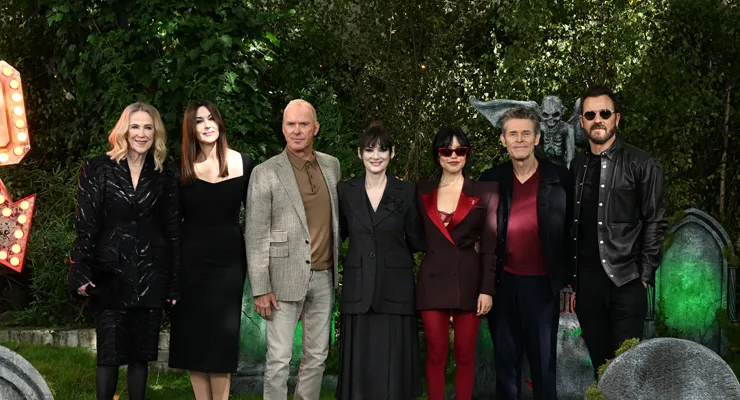
Beetlejuice Beetlejuice, the loooong-awaited sequel to Tim Burton’s beloved 1988 classic, is a bold attempt to recapture the magic of its predecessor. With original stars Michael Keaton, Winona Ryder, and Catherine O’Hara reprising their roles, Burton reunites with his eccentric creation, hoping to evoke the whimsical macabre style that defined his early career. Yet, despite a healthy dose of nostalgia, quirky visual effects, and Danny Elfman’s unmistakable score, Beetlejuice Beetlejuice falls short of its potential, delivering an uneven, overstuffed Halloween romp that’s more style than substance.

The film picks up 36 years after the original, with Lydia Deetz (Winona Ryder) now a famous TV ghost-hunter and mother to rebellious teenager Astrid (Jenna Ortega). Lydia, still haunted by her past encounter with Betelgeuse (Michael Keaton), finds herself drawn back into the Neitherworld when Astrid unwittingly becomes trapped in the afterlife. Astrid, duped by a local boy named Jeremy (Arthur Conti), recites an incantation that revives him, leaving her stuck between the realms of the living and the dead. To save her daughter, Lydia must once again enlist the help of Betelgeuse, who, unsurprisingly, has his own self-serving conditions for assisting her.
Keaton, effortlessly slipping back into the role of the foul-mouthed, wisecracking ghost, remains the film’s brightest spot. His energy is infectious, and his scenes with Ryder rekindle the zany chemistry that made the original such a joy to watch. Betelgeuse’s rough edges haven’t been smoothed out for modern audiences, and the film revels in his crass humor, grotesque antics, and mischievous spirit. For fans of the original, Keaton’s return alone might justify the price of admission.
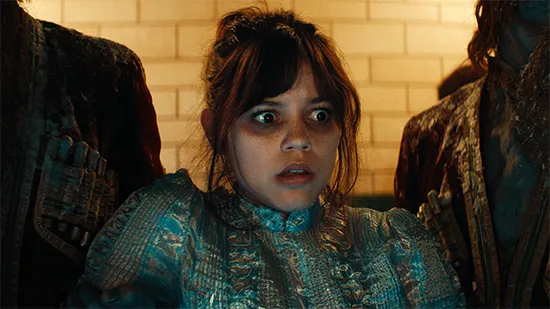
However, Beetlejuice Beetlejuice suffers from an overabundance of subplots and characters that ultimately dilute the core narrative. Jenna Ortega, fresh off her success in Wednesday, delivers a solid performance as Astrid, though her character’s rebellious streak and strained relationship with Lydia feel underdeveloped. The film hints at emotional depth, exploring themes of estrangement and loss, but these moments are glossed over in favor of slapstick humor and elaborate visual set pieces. Lydia and Astrid’s fraught dynamic never fully resonates, robbing the film of the emotional core it so desperately needs.
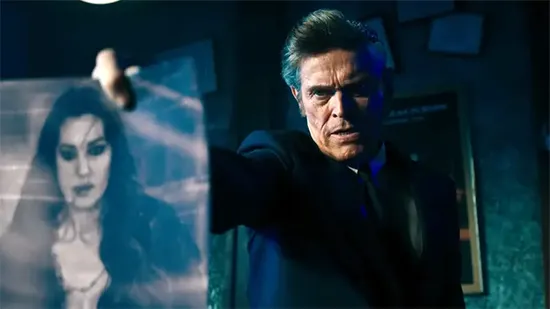
Catherine O’Hara returns as Delia Deetz, once again stealing scenes with her eccentric performance as Lydia’s flamboyant stepmother. Yet, despite her undeniable talent, the script gives her little to do beyond serve as comic relief. Willem Dafoe, playing Wolf Jackson, a ghostly detective, also feels wasted in a role that borders on caricature. The introduction of Monica Bellucci as Betelgeuse’s vengeful ex-wife Delores adds little to the narrative, and her character’s impact is largely superficial, more an excuse for visual gags than a meaningful antagonist.
Visually, Beetlejuice Beetlejuice retains the signature style that has come to define Tim Burton’s work. The film is filled with practical effects, stop-motion animation, and the kind of tactile design that brings the Neitherworld to life. Fans of Burton’s visual artistry will find much to admire here, particularly in the expanded glimpse into the bizarre and bureaucratic afterlife. Colleen Atwood’s costume design is suitably ghoulish, and the miniatures, a key element from the first film, make their return, adding to the film’s charm.
But while the film dazzles visually, it falters narratively. The screenplay, penned by Alfred Gough and Miles Millar, never quite manages to tie its disparate elements into a cohesive whole. The first half is filled with promise, establishing an intriguing setup with Lydia’s TV career and Astrid’s teenage angst. But as the film progresses, the story loses focus, weighed down by too many characters, callbacks, and underdeveloped plot threads. By the time the third act rolls around, the film feels more like a series of chaotic sketches rather than a fully realised story.
One of the film’s greatest missteps is its reliance on nostalgia. Beetlejuice Beetlejuice is packed with references to the original, from the return of the shrunken-head corpses to a new rendition of the infamous “Day-O” musical number. While these moments will undoubtedly elicit cheers from diehard fans, they ultimately feel like distractions, pulling the audience out of the narrative rather than enhancing it. The film’s reliance on past glories makes it feel more like a greatest hits collection than a fresh, standalone sequel.
Beetlejuice Beetlejuice is a film that never quite lives up to its potential. Keaton’s return is a triumph, and Burton’s visual style is as imaginative as ever, but the film’s overstuffed plot, underdeveloped characters, and reliance on nostalgia prevent it from becoming the classic it could have been. For fans of the original, there’s enough here to enjoy, but for everyone else, it may feel like a missed opportunity to truly resurrect the Ghost with the Most.
| Movie Rating: |   |
Beetlejuice Beetlejuice trailer