
Sinful Songs: The creators behind SINPHONY: A Clubhouse Horror Anthology select their favourite Horror Soundtracks
- Interview
 Alex Humphrey
- 0
- 15 minutes read
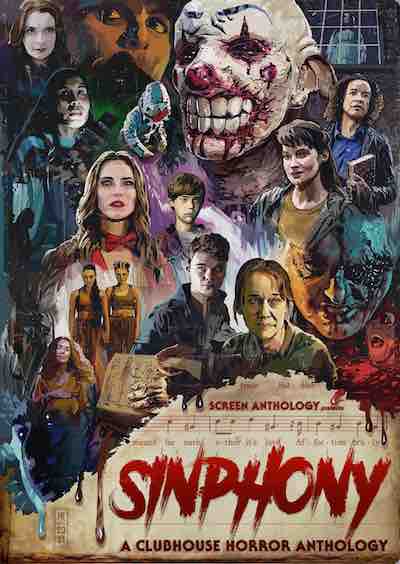 The mad minds behind SINPHONY: A Clubhouse Horror Anthology know all about spooky soundtracks and malevolent movie music so we sat down down with them to discuss their favorite Horror Soundtracks.
Conceived and curated entirely on the popular, audio-based social media platform Clubhouse and produced by Screen Anthology, SINPHONY: A Clubhouse Horror Anthology features a group of international filmmakers each exploring a character dealing with tragedy caused by a supernatural entity.
The directors contributing segments to the film include a new who’s who of horror: Haley Bishop, Jason Ragosta, Sebastien Bazile & Michael Galvan, Mark Pritchard, Kimberley Elizabeth, Jason Wilkinson, Nichole Carlson, Steven Keller and Wes Driver. The large cast includes Haley Bishop, Stella Stocker, Kristine Gerolaga and Alysse Fozmark.
SINPHONY’s shocking stories include: an innkeeper’s growing concern about his secretive new guests; a contractor who inhales mold spores that lead to murder; a couple confronting the fact that one of them is a ghost; a witch protecting her child from a killer; a dance craze that has dire consequences, and much more.

Below we run down each of the Sinphony stories and some of the directors and writers behind these mini horror masterpieces talk about their favorite horror music, soundtrack and song moments.
SYMPHONY OF HORROR
Written by Sebastien Bazile – Directed by Michael Galvan/Sebastien Bazile (Breuckelen, By Dawn)
A parasitic brain infection causes by a cursed song when heard, sends ordinary people into a killing frenzy.
THE KEEPER
Written by Greg Green – Directed by Wes Driver – USA
A small-town innkeeper’s growing concern over domestic abuse between his new guests takes a horrific turn as he stumbles upon their monstrous secret.
GREG GREENE on Wojcieck Kilar’s score for Dracula.
Wojciech Kilar was already a famous film composer in his native Poland and across Europe before his work on Francis Ford Coppola’s 1992 masterpiece Bram Stoker’s Dracula. His seething score came lurching from the crypt like Lucy in her grave clothes: with fangs bared. It began a decade of composing for English-language films by Roman Polanski (The Ninth Gate is a favorite, better than the film itself) and Jane Campion.
Kilar’s score features the dread and tension appropriate to a vampire flick: militant drumming, discordant cellos, jump-scare strings, and a flute & oboe combination that will leave you in its clutches like the stare of the Count himself. Less conventional is the use of implacable waves of choral accusations alongside impish complaints and cackling invocations, before resolving on the high horns of a Love Eternal. The track “Love Remembered” may be the most beautiful love theme in cinema history.
It’s all damnably romantic.

LIMITED EDITION
Writer and Directed by Mark Pritchard (Ground Rules, Wake) – UK
Intent on capturing an original moment in time, a woman faces a deadly battle when the moment fights back.
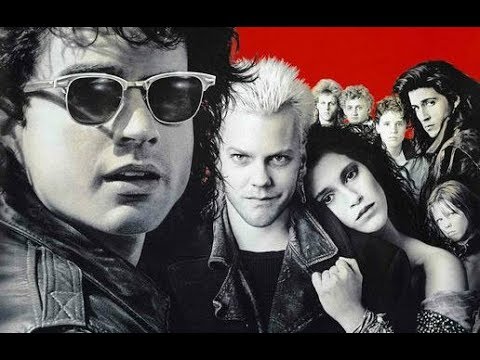
MARK A. PRITCHARD on THE LOST BOYS (1987)
Twenty years ago, whilst working at the BBC I ran a charity quiz on film. To save editing grief I took what I thought was the bold move of playing the soundtrack round on the kazoo – an instrument you will recognise if you hear, even if you don’t know the name. There were about 10 films that if I played out the key riff of on the kazoo, you’d have a decent stabbing at guessing the film, because the melodic signature had become so indelibly interlocked with the film. The two-note variation in JAWS is a riff of type.
THE LOST BOYS claims not just one of these iconic moments… but possibly half a dozen, or more. So phonically quotable is the sonic landscape of Schumacher’s ode to the Santa Caria Vampires, that I would argue its soundtrack is as material to its ongoing affection, as the script or performances that we hold dear to our hearts and close to our bones. If you claim any of your teenage years across the eighties – as I do , dear reader – these are the earworms which take you back.
Let me see what I can trigger for you sonically, through your eyeballs alone, with these black and white notes. Musclebound, waist-stripped saxophonist Tim Capello? You hear him and the crowd, right? The four plucked bass notes intro to ‘People are strange’ from Echo and the Bunnymen. Pass notes from Roger Daltrey covering Elton John (I’ll let you look that up, but it’s true) and INXS sit alongside what I now think of as the bathtub song by Clarence “Frogman” Henry – all add to the wondrous cacophonic soup which is pierced by, what is for me, a literal hairs on the arms raising masterpiece which sews the film together.
Gerard McMAnn is supposed to have written “Cry Little Sister” without seeing a frame from the film. Most of us writer director types don’t talk about the muse too often, lest we scare them away. I can only imagine what dropping the incredible children’s choir, singing the ten commandments as a reflection of the guilt of Michael (“Hey Mikey!”) giving into temptation, felt like in the studio… but it lifted this film into a league that Schumacher could only have dreamt of.
This has been a review from the SINPHONY family of directors. That’s our number on the back. And pray you never need to call us…
MOTHER LOVE
Written and Directed by Jason Ragosta – (ZTV, Boy In the Dark) – USA
A witch must summon the power of her coven to defend her child from a crazed killer.
JASON RAGOSTA on THE MORTUARY COLLECTION Soundtrack by the Mondo Boys
One of my absolute favorite films, which happens to have the best soundtrack I’ve heard in recent memory, is The Mortuary Collection (Available on Shudder), written and directed by Ryan Spindell. The soundtrack, composed of 18 amazing tracks by the Mondo Boys, marries the gorgeous imagery of Ryan’s film to perfection. The music slaps to the point where sometimes I put the film on (in the background, when I’m illustrating) just to hear the music. And while the whole soundtrack is incredible, the stand out track that will haunt your waking hours and demand to be heard again and again, is track 5: FIND ME IN THE FALL which has an amazing needle drop, in one of the most compelling chapters in the anthology, outside of what is essentially the best damn wraparound there has ever been in a horror anthology period. I highly recommend this film, its soundtrack, and and can’t wait to see (and hear) what Ryan Spindell has in store for all of us next.

TABITHA
Written and Directed by Jason Wilkinson – (Killing Time) – USA
After a botched robbery, a young woman bleeds out in her car, while being terrorized by a ghostly figure.
JASON WILKINSON on HALLOWEEN (2018)
The original theme first heard in 1978 was simplistic, strange, unrelenting and ultimately iconic. That word gets thrown around a lot. In this case it’s very much earned. I’d argue the original HALLOWEEN theme crosses over to other genre audiences much like the theme of JAWS or The Good, The Bad, and The Ugly does. And in 2018 one of the coolest things happened… the powers that be hired the Original Composer, and his new team, to revitalize an already solid score. This could have gone horribly wrong, especially since it was under a different writing and directing team.
John Carpenter, Cody Carpenter, and Daniel Davies didn’t take the task lying down. They created new musical techniques and used cross genre instrumentation to bring the overarching feel of this franchise to the next level. I’m a fan of the new films in general, but I do have to say they’d be far less without the amazing work by the Father, Son and Friend trio.
The score itself was critically acclaimed with its modern sounds, matured sense of cinematic vision, and genius level balance toward homage and finding a new sound. Meaning it feels the same and brand new simultaneously. That’s just crazy cool in my opinion. The somewhat controversial decision to bring back the original composer turned out to be a brilliant move by decision makers.
Personally, I bought this score before going to see the film. I lived with it for a couple days. Listening to it over and over for those few days prior. And I truly believe it made my first viewing of the film more enjoyable. I did the same with the sequel, HALLOWEEN KILLS, and I know I’ll be doing it again when the score for HALLOWEEN ENDS is published.

FOREVER YOUNG
Written and Directed by Haley Bishop – (Host) – UK
In a desperate attempt to preserve her youth, a 30 year old woman engages in a social media dance craze that may have dire consequences.
MATERNALLY DAMNED
Written and Directed by Nichole Carlson – USA
The anxiety of a woman unplanned pregnancy intensifies as her body goes through a series of unexplained changes.
NICHOLE CARLSON on JAWS
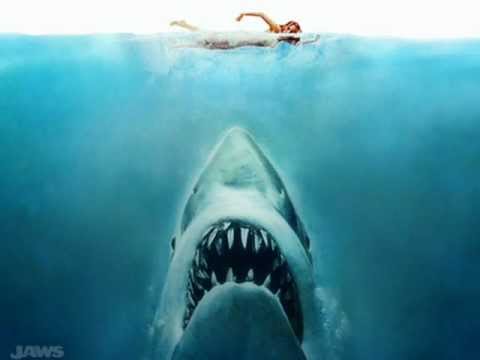
We can’t talk horror soundtracks without talking about Jaws. In only their second film collaboration Steven Spielberg and John Williams created one of the most terrifying musical scores in cinema. Major issues with “Bruce”, the faulty mechanical shark used in production, forced Spielberg to rely heavily on POV shots, Verna Fields’ exceptional editing and John William’s brilliant score. Spielberg laughed the first time Williams played dun-dun dun-dun dun-dun with two fingers on the lower keys, but he came to credit the score with half the success of the film.
These two notes mean danger. The theme is withheld for any red herrings so we become conditioned to sense the shark’s true arrival when we do hear it. This makes attacks out of silence later in the film all the more terrifying. Williams once said the theme “is grinding away at you, just as a shark would do, instinctual, relentless, unstoppable”. Jaws is definitely a favorite and I highly recommend reading up on the fascinating making of the film!
EAR WORM
Written and Directed by Steven Keller (Cherry) – USA
A young contractor hired to remove mold from a house, inhales strange spores, causing hallucinations and murder.
STEVEN KELLER on A QUIET PLACE
When it comes to the sound design of a film nothing quite tops the music for making an impact. From the energetic and eerie synth tracks, to the rush of a grand orchestral score to the emotive cry of a lone violin the right music can make us feel the highest highs and the lowest lows. It can drive terror deep into our hearts with low rumbles and a sharp crescendo, but what about silence? How does that shape our auditory experience?
I remember the first time I watched A Quiet Place in theaters. As the lights dimmed and the film started, people settled in as they usually do, some snacking on popcorn, and sipping drinks, a handful making quick comments to their friends, and others, like myself, totally fixated on the screen. But as the journey began it became apparent that we were a part of the film as well. The film was so quiet that any small rustle sounded like a stampede of wild animals in that theater. Quickly snacks were put aside as we collectively settled in. This was the first time in a long time that I had really felt the cinematic power of silence.
Years ago, I had watched a very unique documentary called The Act of Seeing With One’s Own Eyes, and it is a surreal experience to say the least. If you know Greek you may already realize what the film is about as the title is a literal translation of the word autopsy. Unlike most documentaries there is no narration. There is no one guiding us through this experience. The entire film is silent as we watch cut after cut as the practiced experts do their work. And in that silence we the audience is left to listen to the sound of the room, the sound of our breathing, as actual bodies lay still before us on screen. Every breath punctuates our personal soundtrack. It’s an experience to say the least.
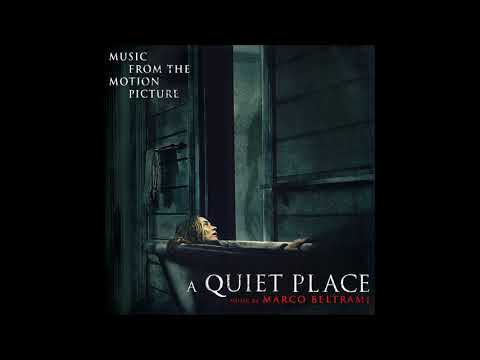
Back in the theater for A Quiet Place my subconscious churns with the tension of the delightfully uncomfortable silence. Every break in the quiet is thrilling and earned. While there is some beautifully executed score by composer Marco Beltrami the one time we really hear music it stands in beautiful contrast to the harsh world we have slowly become accustomed to. After witnessing death and the terror of a family pushed to their limits we have a genuine moment of tenderness as a husband holds his wife close and they both sway listening to “Harvest Moon” by Neil Young. For the briefest of moments there is no danger, no fear, no terror, just love. And that moment is even more poignant as that is all ripped away.
An effective sound design is all about contrast. The contrast of silence on screen with our own breathing, or the contrast to tender and calm music against a world where the slightest noise can get you killed.
DO US PART
Written and directed by Kimberley Elizabeth (Nightmare on Film Street Podcast) – CANADA
A recently separated couple comes to terms with the fact that one of them is a ghost.
KIMBERLEY ELIZABETH on Insidious
Never has a soundscape gotten under my skin more than the opening titles of James Wan’s INSIDIOUS. The sound design in the entire film is a feat of terror, but being in the darkened theatre when the blood red letters INSIDIOUS filled the screen while the swelling violin and orchestral string instruments blazed at full volume made the little hairs stand at the back of my neck.
As a bit of a wuss who’s not afraid to shut her eyes when she can feel a jumpscare coming, there’s something innately terrifying about an all-encompassing soundscape. There’s no escaping it. The titlecard loomed over me for what felt like an eternity, almost subconsciously unlocking my fight or flight response.
Sound is one of those oft underappreciated elements of horror, but integral to crafting a good scare. Whether building tension or putting the exclamation point on a jumpscare, sound (or even a pointed lack thereof) is the frosting to the cake. You could eat the cake without it, but why would you?

Sinphony: A Clubhouse Horror Anthology is out now on VOD/Digital from Dark Sky Films.