Five Raindance Revelations with Mauricio Chernovetzky for ‘Sacrificios’
- Interview
 Peter Campbell
- 0
- 7 minutes read
How much would you sacrifice for someone you love?
It’s the question that sits at the heart of Sacrificios, Mauricio Chernovetzky’s haunting and deeply personal horror drama. Drawing on Aztec mythology, Catholic symbolism and the raw emotional reality of grief, the film explores the lengths a parent might go to when faced with the impossible prospect of getting back what has been lost.
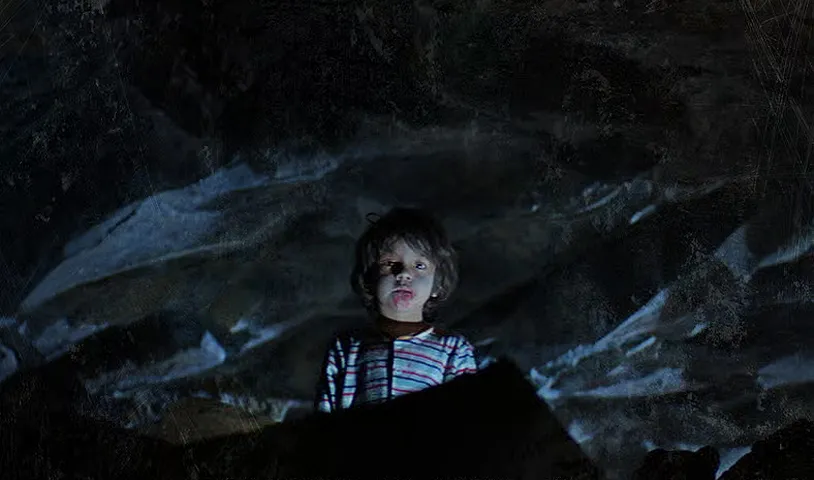
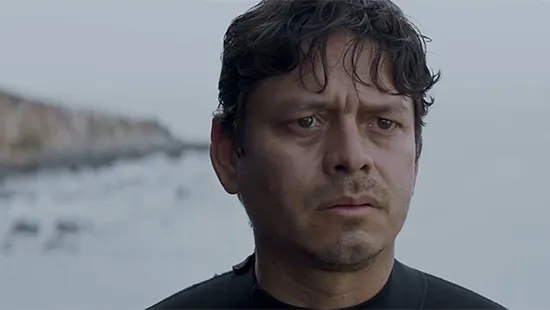
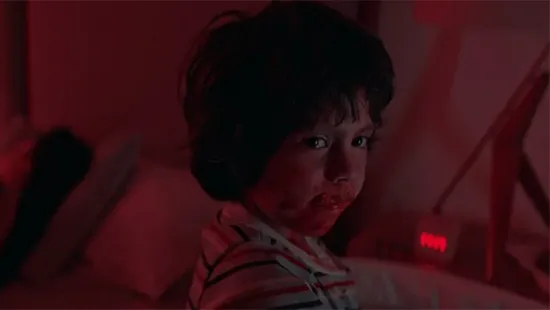
Making its European Premiere at Raindance Film Festival, writer-director Mauricio Chernovetzky’s haunting feature blends psychological horror, magical realism, Aztec mythology and Catholic iconography into a deeply personal exploration of grief. The story follows Juan, a father devastated by loss, whose desperate longing for his son draws him into a world where miracles come at a terrible price.
Shot across striking locations including sacred caves in Mexico and an isolated island off the Baja California coast, Sacrificios feels as much shaped by its landscapes as its characters. Drawing comparisons to films such as The Witch, Antichrist and Let the Right One In, it is a work that prioritises mood, symbolism and emotional truth over conventional genre beats.
Chernovetzky is no stranger to ambitious storytelling. Having studied literature, mysticism and filmmaking across Mexico, the United States and Poland, his work has consistently explored the space between reality, mythology and the unconscious. With Sacrificios, he may have crafted his most personal film yet.
Ahead of the film’s second Raindance screening, we spoke with Mauricio Chernovetzky for the latest edition of Five Raindance Revelations.
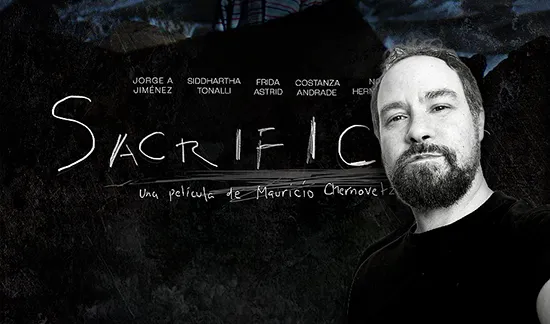
Mauricio Chernovetzky writer-director of ‘Serena’
1. Tell us about your film and why you felt Raindance would be a great place to unleash it on London and the UK.
Sacrificios is a different kind of horror film. It’s closer in spirit to independent cinema that experiments and takes risks than to genre convention — something that unsettles through atmosphere and interiority rather than formula. Raindance has always championed that kind of bold, independent filmmaking, so it felt like exactly the right place to bring the film not just to London and the UK, but to Europe — this is our European premiere, and we’re thrilled to be unleashing it here.
2. What moment made you realise you wanted to create films, not just watch them?
Filmmaking, for me, has always been an adventure — a way to explore the world. We shot Sacrificios on an uninhabited island, in caves where pre-Hispanic rituals still take place, including offerings; my films are in dialogue not just with other films, but with the places where they’re set, places that are usually expressive and challenging from a filmmaking point of view. But it was also a handful of films that made me want to do this. Buñuel’s The Exterminating Angel, which traps a houseful of guests and lets us watch them slowly unravel. Herzog’s Heart of Glass, where the actors perform in a trance and everything feels like a medieval dream. Bergman’s Hour of the Wolf. Nicolas Roeg’s Don’t Look Now. Maya Deren’s Meshes of the Afternoon.
These films are atmospheric, they exist between worlds, and they provoke and confound — they make you feel and think differently about yourself and the world. Seeing them made me want to make films that could have that same effect on someone else, the way they had on me.
3. What’s one film that fundamentally changed the way you think about cinema?
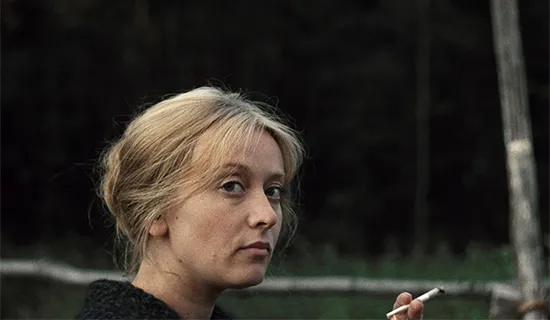
Tarkovsky’s The Mirror.
4. If you could collaborate with anyone in film history, who would unlock the most exciting project for you?
Although I admire so many creative individuals throughout film history, I’d actually choose someone I’m already working with: screenwriter Alexander Iosjpe, co-writer of Sacrificios and the writer on my next projects. Together we co-create entire worlds — we challenge each other’s ideas, push past the obvious choices, and end up somewhere neither of us expected. It’s meaningful and surprising in equal measure, and it’s what makes me excited for the future.
5. What’s something making this film revealed about yourself that you didn’t know before?
Filmmaking is a very rigorous process, but there’s a moment where you have to let go in order to arrive somewhere true. Making Sacrificios taught me to stop trying to control the story and instead let it guide me. There were things I dreamt while editing that ended up altering the film itself — moments where the unconscious took over and I had to trust it.
Chernovetzky paints a picture of a filmmaker drawn to cinema’s more mysterious possibilities. From the dreamlike worlds of Tarkovsky, Herzog and Buñuel to the real-life locations that inspire his own stories, he approaches filmmaking as an act of exploration rather than control.
Perhaps that’s why Sacrificios feels so distinctive. It’s a film born from personal experience, cultural mythology and a willingness to embrace uncertainty, both on screen and behind the camera.
If nothing else, his reflections suggest that the most powerful stories sometimes emerge when filmmakers stop forcing the path forward and allow themselves to follow wherever the journey leads.
Sacrificios trailer