Exclusive interview: DW Medoff on ‘I Will Never Leave You Alone’
- Interview
 Peter Campbell
- 0
- 7 minutes read
There’s no shortage of haunted house films in the horror landscape, but DW Medoff’s I Will Never Leave You Alone carves out a deeply personal, disquieting niche. Described as “a bleak, atmospheric tale of trauma and terror,” the film follows Richard, a mute parolee trapped in a sinister six-night stay at a property plagued by the ghost of a murdered witch. The catch? If he leaves, he goes straight back to prison. And if he stays… well, something worse may be waiting.

Released earlier this year and now available on digital, Medoff’s feature debut has been quietly racking up acclaim at genre festivals including Telluride, Salem Horror Fest, and FrightFest, with reports of walkouts from audience members shaken by its most harrowing sequences. But this isn’t just a movie about ghosts and gore – it’s a story about the suffocating silence of unprocessed pain, and the claustrophobic weight of not knowing how to ask for help.
For Medoff, raised in a superstitious Jewish household “attached to a cemetery,” horror has always been deeply personal. His surreal and award-winning short films (Pollen, Yahrzeit, Visitants) laid the groundwork for the raw, emotionally charged approach on display here. With I Will Never Leave You Alone, he crafts a slow-burning, dread-soaked narrative where internal demons collide with literal ones. And the result is an experience that disturbs, devastates, and, ultimately, reaches out for connection. Below, DW Medoff talks us through building trauma into every frame, writing mute characters who still scream, and why sometimes, making horror is a quiet cry for help.

Love Horror: Your protagonist, Richard, is mute – a bold choice in a genre that often relies on screams and dialogue. What made you decide to strip him of a voice, and how did that shape the way the horror plays out?
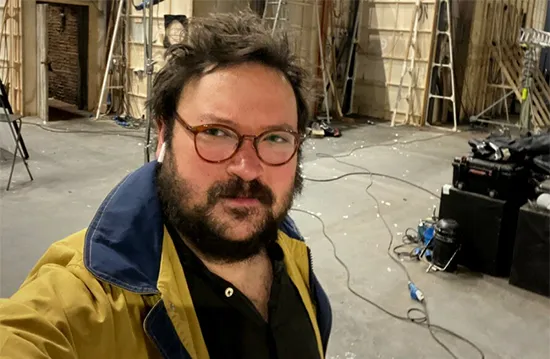
DW Medoff: He’s mute because he’s struggling and doesn’t know how to ask for help. I wanted him to represent someone who needs support but is trapped by his own silence.
The idea of serving parole by staying in a haunted house is genius, like a paranormal probation. How did that premise come to you, and what were you hoping it would let you explore thematically?
Indie-filmmaking with a budget less than a used car requires single locations. I wanted to come up with an idea that was inherently scary and different than the standard no cell-service-at-an-isolated-cabin. So, he’s out of jail, but now stuck in a new prison.

The witch-ghost doesn’t just haunt the house – she digs into Richard’s personal traumas. Were you always interested in telling a story where supernatural horror and psychological torment overlap so directly?
I don’t know if that was the intent as much as what makes me uncomfortable and afraid. Maybe I’m more scared of my own thoughts than wicked tools or monsters of the dark.
You’ve worked extensively in short films and sketch-based formats. What new muscles did you get to flex in I Will Never Leave You Alone as a feature-length narrative?
Sacrifice. Filmmakers have to cut scenes and takes to make the day while still making a coherent movie. Know what to give up and what to fight for.
There’s a disturbing intensity to how the film blends isolation, silence, and guilt. Were there particular horror films or real-world events that influenced the emotional tone of this story?
I was in love with movies like Relic, The Babadook, Lake Mungo, and Under the Skin. They resonated inside me and were influential.
Some scenes have reportedly left viewers shaken or visibly upset. As a filmmaker, how do you walk the line between creating deeply affecting horror and pushing too far?
Two people walked out of our world premiere. At first, I took it as a win since it was disturbing enough make horror fans tap out. Now though, I think about how personal that moment might’ve been for them. It’s a painful scene. I hope they’re okay.
You’ve created some surreal and unsettling shorts before this, but I Will Never Leave You Alone feels especially bleak and grounded. What drew you to such a raw, stripped-back atmosphere?
I love the horror in the mundane. Scared of being alone in a house. Feeling followed. Ruminating on dark thoughts. I wanted to bring those fears out.

At its core, the film is about confronting the ghosts of your past, quite literally. What does that idea mean to you personally, and how much of Richard’s haunted journey reflects something deeper in your own storytelling interests?
I think for a part of me, as much as this movie is about a person who couldn’t ask for help, making this story was me asking for help.
What are you working on next?
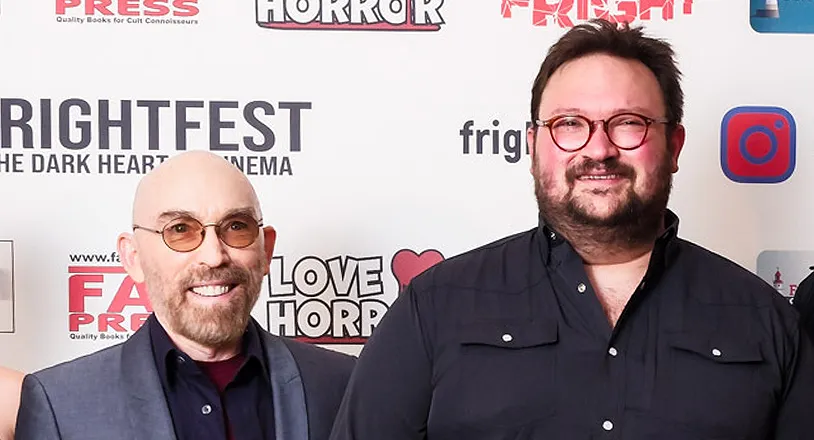
My third feature called Your Host is premiering at FrightFest in the UK and stars Jackie Earl Haley. After that, I have a few depressing horror stories I want to tell. Keep looking forward.
I Will Never Leave You Alone is available now on digital/VOD.