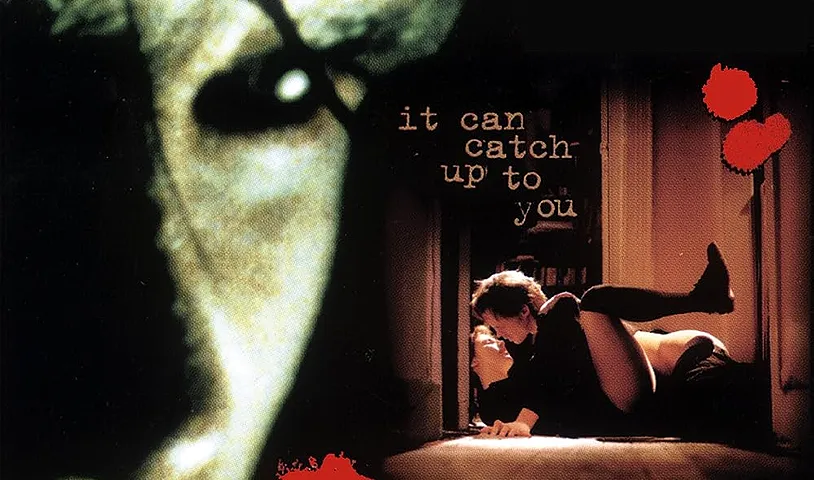

Depraved (2019) Review
- Body horror Horror Film Reviews Psychological
 Darren Gaskell
- 0
- 7 minutes read
Ex-army medic Henry (David Call) is attempting to overcome the extreme anguish of seeing so many soldiers lost on the battlefield by undertaking an experiment to create new life in a Brooklyn loft which houses his laboratory. After assembling various body parts and managing to procure a brain from someone very recently deceased, his creation (Alex Breaux) – given the name Adam – awakes to discover a new, troubling world filled with memories he’s unable to reconcile…

A couple of decades after putting a thoroughly different spin on the vampire mythos in the superb Habit, Larry Fessenden returned to classic monster material with this equally distinct take on the Frankenstein story, filtered here through the lens of fatherhood fails and pharma unfettered. The opening sequence is pure Fessenden, featuring a conversation between a couple about to move in together and already hitting a few bumps in the emotional road as Lucy (Chloë Levine) plans for the future and Alex (Owen Campbell) wants to live in the now. It seems an odd way for the movie to begin but it’s clear this exchange will bring weight to the plot further down the line and so it does.
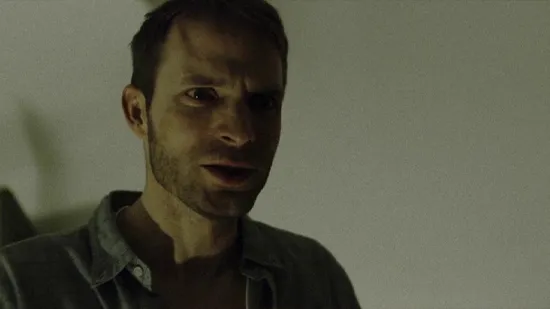
The remainder of the opening half hour – once you’ve got past a brief, bloody attack – is a disarmingly sweet catalogue of Adam learning to walk, talk and play ping with Henry, who’s both excited and protective of his creation but hasn’t revealed his scientific breakthrough to girlfriend Liz (Ana Kayne). She stumbles across a nearly naked Adam by accident on an impromptu visit and from then on provides perspective to Henry’s altruistic ambitions, fuelled by a hefty dose of PTSD that he believes he can address by cheating death in his own way.

Trouble comes in the form of Henry’s benefactor Polidori (Joshua Leonard), a drug company employee and wannabe top table exec who doesn’t appear to impress his wife Georgina (Maria Dizzia) a whole lot and has even less credit with her dad. Polidori is looking to prove himself to his father-in-law with a new product, even if it means using Adam as a means to fast track his otherwise untested medication. Whereas Henry wants to introduce this infant in an adult body to the outside world as slowly as possible, Polidori bulldozes his way through and takes Adam on a field trip to, among other places, a museum and a strip club. It’s during this expedition that the title comes into play, when Polidori is cynically describing the human race: “That’s what we are, Adam. Utterly depraved.”
Contrasting these two approaches to Adam’s learning is effective and it’s important that Call and Leonard’s performances are similarly at odds. The former is a ball of neuroses and unresolved guilt; the latter is a party boy who’s in it for the instant gratification. As with a lot of Fessenden’s other work, the blokes are emotional wrecks and any injection of common sense has to come from the female characters, specifically Liz, whose sobering view of the situation is generally ignored, particularly by Henry. At one point, when Liz is concerned about the well-being of both Adam and Henry, he dismisses it with the line “You’re not gonna fix him, you’re not gonna fix me.” As with the source material, hubris brings about the downfall of the main protagonists with inevitable collateral damage.
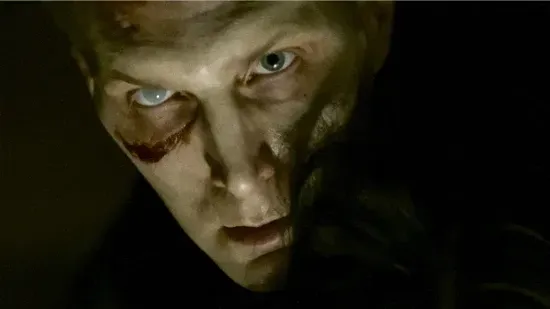
Props must also go to Breaux, who is eye catching – in all senses – as Adam. The make-up, a patchwork of stitches and one permanently milky eye, is fabulously crafted but Breaux’s work sells it as he deals with the information and thought overload of growing up at speed. He’s quiet and tender but there’s always a hint of danger about him and as his experience of life progresses, coupled with those intrusive shards of a past life that’s tantalisingly out of his grasp, the feeling that tragedy will strike is never far away.
If Habit highlighted the shabby chic of New York City, Depraved ups the income bracket and moves into the world of loft apartments and dinner parties as opposed to booze and drug soaked get togethers. Even so, the personal issues are still more or less the same. Ego gets in the way, neither Henry nor Polidori believing their motivations are anything but correct and their versions of parenting Adam are flawed in their own ways, neither of them predicting the blind spot which will lead Adam to a shocking, pivotal moment in the second half.
Of course, everyone’s involved by this point and what remains of the various relationships is threatened with total collapse before ultimate desperation sets in and it’s clear something very bad is going to happen. After a long, careful build up, the sudden lurch into pursuits and violence might seem jarring but the climax hits hard, once again demonstrating Fessenden’s willingness to literally kill his darlings. The resolution is unwaveringly unsentimental but I can’t quite see how anyone would watch the first hour of this and think that a resounding happy ever after is coming.
Depraved may head towards the two hour mark (as did Habit) but the detail assigned to each of the players is vital and very little feels wasted. Even potential sidebars such as a final act confrontation between Liz and Georgina aren’t just window dressing for supporting players. Every interaction across the piece slots into place to set up the bloody finale. Gore wise, the numerous severed body parts – there’s an entire freezer of them at one juncture – are less gruesome than you’d perhaps expect them to be and much of the violence is either brief or suggested while still making the impact it should.
As writer, director, producer and editor, Larry Fessenden has a firm hand on the tiller and once again his idiosyncratic vision is to the fore, respecting Mary Shelley’s original but transforming it into an intensely modern portrait of corporate bro culture and the catastrophic effects of trauma on the fragile male psyche. As a picture of a certain cross-section of society, it’s as illuminating as the frequent flashes of lightning which punctuate the visuals.
| Movie Rating: |   |
Depraved trailer