

Motherwitch (2026) Review
- Horror Film Reviews Monsters Witchcraft
 Holly Marie
- 2
- 5 minutes read
Folk horror is a genre that has, admittedly, mostly passed me by. I find comfort in the familiar formula of the slasher, and delight in films that venture into the darker, atmospheric corners of the paranormal and supernatural. Yet the genre’s resurgence over the past decade has made it increasingly difficult to ignore.
Much like the slasher, folk horror is built around a familiar set of tropes: rural and communal isolation, folklore, and tradition. Rather than centring on a masked killer or conventional ‘monster’, however, folk horror finds its threat within the community itself, and the rituals and beliefs that become increasingly sinister when an outsider refuses to conform. And given the current climate, it is understandable why the genre continues to resonate. Folk horror taps into anxieties about belonging, identity, and the consequences of social rejection – concerns that feel more relevant perhaps now more than ever. It also reminds us that, however much we progress, we cannot escape our history, nor the folklore and traditions that continue to bind our communities together.
For folk horror to truly succeed, it needs to feel authentic. The genre is deeply rooted in place and identity, meaning its settings, landscapes, and communities must feel lived-in, its customs and traditions believable. This sense of authenticity can be traced back to what has come to be regarded as the ‘Holy Trinity’ of folk horror: Witchfinder General (1968), The Blood on Satan’s Claw (1971), and The Wicker Man (1973). It’s also central to why more recent films such as The Witch (2015) and Midsommar (2019) are so effective, grounding their stories in carefully constructed worlds where history, ritual, and tradition feel genuinely real.

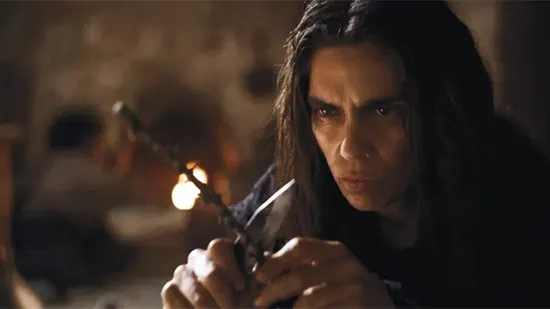
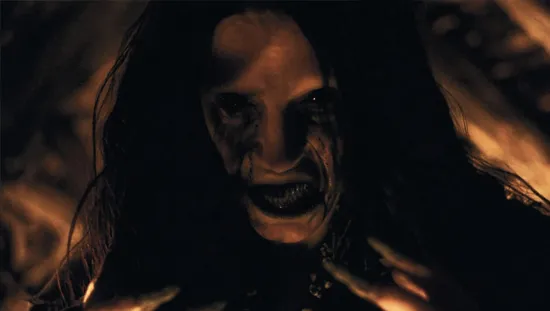
And Motherwitch establishes itself within the genre for these very reasons. Written, directed and produced by Minos Papas, the 104-minute film is set in Cyprus in 1882, during British rule. At its centre is Eleni (Margarita Zachariou), a painter and grieving mother whose three children were killed in a tragic accident. With the help of a local boy, Michalakis (Sifis Katsoulakis), she turns to art in the hope of bringing them back, only to unwittingly summon the ‘Kalikantzari’ – a cruel, impish creature from Cypriot folklore said to appear between Christmas and Epiphany. The film had its world premiere at the International Film Festival Rotterdam in 2026 and is a co-production between Macedonia, the USA and Cyprus.
The plot is, arguably, not entirely seamless and as other critics have also pointed out, the British soldiers and colonial subplot does feel somewhat redundant. What ultimately distinguishes Motherwitch, however, is the same quality that defines its folk-horror predecessors: a striking sense of authenticity. Filmed entirely on location in an abandoned fifteenth-century Cypriot settlement, the film treats the landscape as an essential part of its story, instilling within it a haunting sense of cultural memory. Jack McDonald’s cinematography captures the setting’s austere beauty and the community’s isolation, using a visual stillness to enhance the notion that grief, folklore, and the supernatural are deeply woven into the landscape itself.
And the portrayal of grief, superstition, and horror experienced by Eleni and the wider community feels equally authentic, due in large part to Papas’s writing. Papas allegedly undertook extensive research into Cypriot folklore and the experiences of bereaved parents, working with the Cameron Kravitt Foundation and the Pattern Veterans Project to explore how cultural beliefs in the supernatural can shape experiences of grief, and it certainly pays off here.
Perhaps the most poignant aspect of Motherwitch, however, is the relationship that gradually develops between Eleni and Michalakis, forged through their shared suffering and mutual longing for human connection. Their bond gives the story its emotional heart, suggesting that art is not simply a means of preserving or recreating what has been lost, but a way of confronting loss and finding meaning within it. Ultimately, they come together to restore art to what it should be: an expression of lived experience, rather than an attempt at resurrection.
| Movie Rating: |   |
Motherwitch trailer





2 Comments
Really good point that folk horror lives or dies on authenticity, and that the threat comes from the community and its rituals rather than a masked killer. That’s why Witchfinder General and The Wicker Man still feel nastier than most slashers: the horror is the belief system, not the monster. Shooting Motherwitch in an actual abandoned fifteenth-century settlement sounds like exactly the right instinct, and a Kalikantzaros summoned through grief and painting is a lovely, bleak hook. I hadn’t heard of that bit of Cypriot folklore before.
Here in southern Sweden that history isn’t far away either. The 17th-century witch trials hang over a lot of our folklore, and it’s the kind of thing that fed our Halloween album, especially the Swedish-language witch song Häxblood: https://www.youtube.com/watch?v=GfCDYnZeITM (we’re Venomous Sin, a two-person horror/gothic metal project; we write all the lyrics ourselves and Suno performs the music). Adding Motherwitch to the October list, colonial subplot and all. – Xavi
[…] Grieve, while Best Actress was shared between Ariana Osborne for Marama and Margarita Zachariou for Motherwitch. Toby Stephens took Best Supporting Actor for Marama, with Adrienne Barbeau and Asia Argento […]